


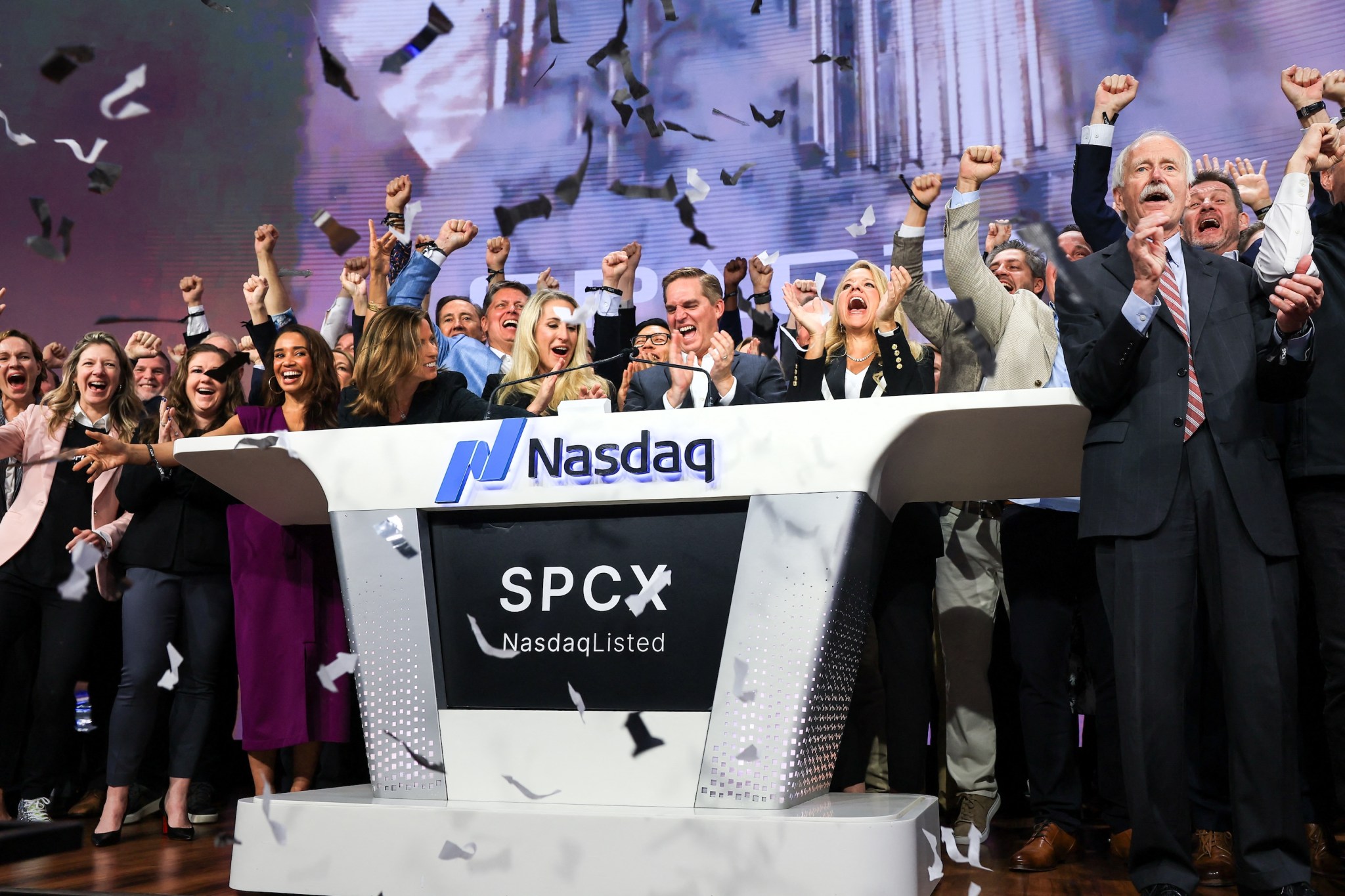
 After a first half of 2026 dominated by blockbuster AI, semiconductor, and space IPOs, the market is entering a new phase. Strategists say the back half is shaping up as a rebalancing: mid-cap and overlooked sectors are preparing to test investor appetite as money moves beyond a handful of crowded mega-cap AI and chip trades.
SpaceX, which went public on June 12 on the Nasdaq Global Select Market under the ticker SPCX, has been the defining deal of the year. The Elon Musk-led company raised roughly $86 billion in its IPO, giving it a market value of nearly $1.8 trillion at listing and making it the largest IPO in financial market history. Excluding that offering, it still would have been the strongest U.S. IPO quarter since 2021, driven by billion-dollar listings in software, semiconductors, and fintech, according to Renaissance Capital.
Momentum is now building. EY’s Global IPO Trends Q2 2026 report says U.S. IPO proceeds reached approximately $115.6 billion through the first half of 2026, a dramatic increase from the prior year, driven largely by a handful of mega-IPOs. The firm says that, if current pipelines convert and market conditions remain supportive, the second half of 2026 could rank among the strongest IPO periods on record, with investor interest spanning areas such as AI infrastructure and other strategic growth sectors.
“Investor sentiment in the near term is likely to be shaped by the outcome of several anticipated mega IPOs, with capital and attention expected to concentrate around these transactions,” according to Rachel Gerring, EY Americas IPO leader. “In this environment, issuers should remain flexible around timing to successfully access the market.”
Across industrial markets, AI adoption is accelerating, defense spending is increasing, and private capital continues funding category-leading companies at high valuations. Those trends are creating favorable conditions for IPOs and restructurings, according to a June 25 J.P. Morgan note, which says investors are increasingly willing to back growth tied to automation, software, and smart manufacturing while favoring businesses with clearer earnings visibility and infrastructure-like cash flows.
That demand is not limited to domestic names. South Korean memory chip maker SK Hynix, a key Nvidia supplier, priced its American depositary receipts at $149 each on Thursday; they opened Friday at $170 on the Nasdaq. The company offered 177.9 million ADRs, raising about $26.5 billion in what would rank among the largest U.S. share sales by a foreign issuer.
Late 2026 is also the target for marquee tech and AI IPOs such as Anthropic, which is reportedly eyeing a valuation of around $1 trillion after a recent funding round valued it at nearly $965 billion post-money.
Several crypto and fintech firms, including Kraken, Blockchain.com, ConsenSys, and Dataiku, are also viewed as potential candidates. OpenAI has confidentially filed IPO paperwork with the SEC but has not set a listing date or final share price and is reportedly considering a 2027 debut.
General Atlantic’s recent note on the “2026 IPO comeback” highlights the second half as the period when discounts narrow toward normal, mid-cap and underrepresented sectors emerge, and investors redeploy gains from mega deals into less crowded areas.
With U.S. IPO proceeds already surging on the back of a few outsized offerings, the test for the rest of 2026 will be whether momentum broadens into a more balanced calendar led by advanced manufacturing, defense, energy, and AI infrastructure.

