


If you’re a PC gamer of a certain age, you may fondly remember Impressions Games. Over two years between 1998 and 2000, the studio released three games that would go on to become classics in the city-building genre: Caesar III, Pharaoh and Zeus: Master of Olympus. SimCity might have established the formula that all city builders have followed since, but if you ask me, those three games made that formula their own in a way few others have done since.
More than two decades later, people are still playing those games, with fan projects like Augustus helping smooth out some of the bugs and rough edges that Impressions never got a chance to fix. In 2025, one of my favorite games of the year, The Wandering Village, took the Impressions formula and applied to a Studio Ghibli-inspired setting. Now, another studio is dipping into that same well of inspiration, with a project titled Theos: Cities of Myth.
The new game is the latest effort from Triskell Interactive, a developer best known for its work on 2023’s Pharaoh: A New Era, which was a HD remake of the original Pharaoh and 2000 expansion Cleopatra: Queen of the Nile. In a press briefing held by French publisher Dotemu, the team at Triskell said they wanted to make a spiritual successor to Pharaoh’s sequel, Zeus: Master of Olympus, rather than a direct remake. I didn’t get a chance to ask Dotemu if it had trouble securing the licensing rights for the Zeus name or if those rights were simply too expensive for a small project like Theos. What I can say is the new game is clearly meant to invoke its predecessor and feel familiar to anyone has played the old Impressions catalog.
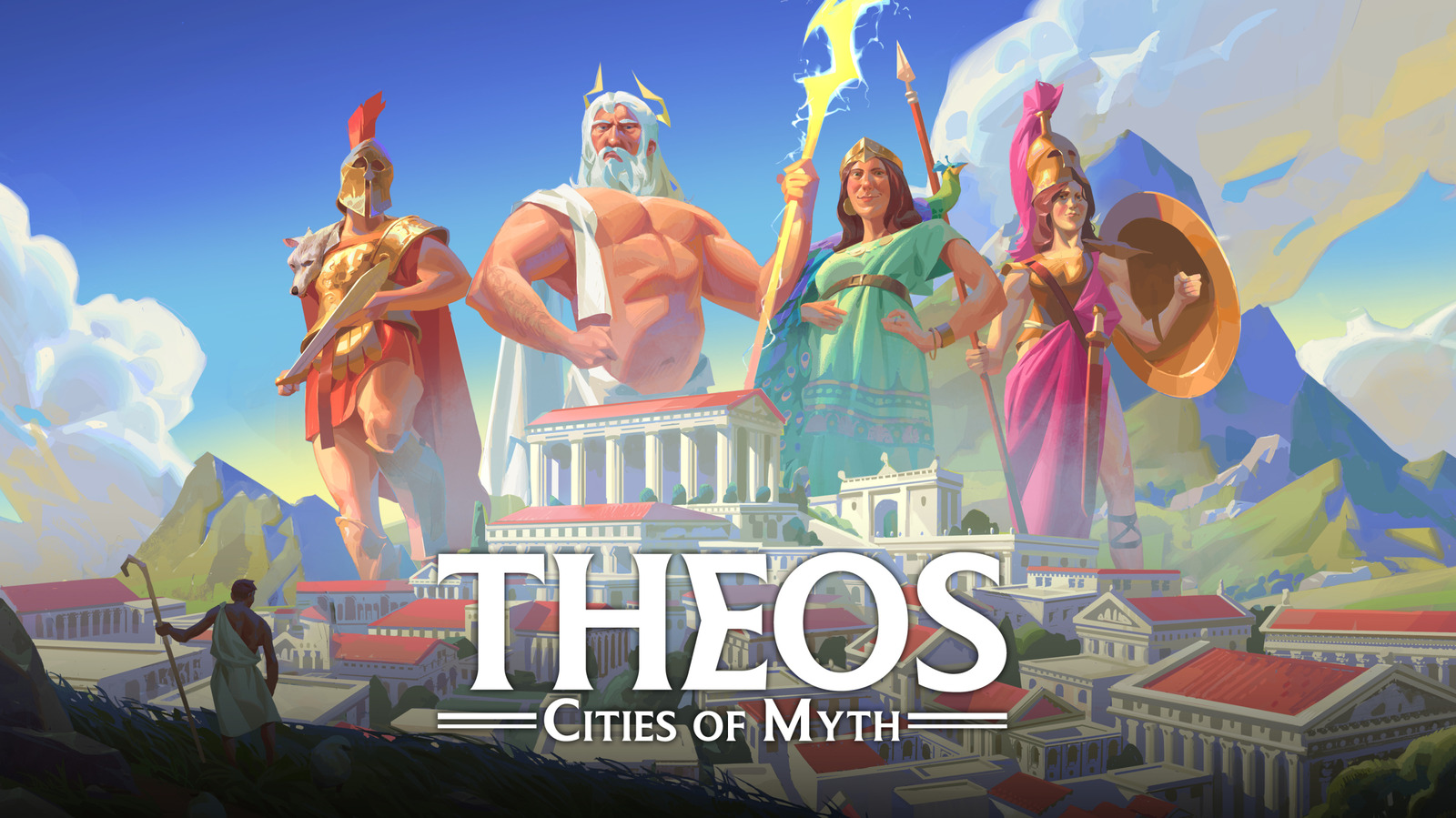
Like Zeus before it, Theos is a isometric city-builder where Greek mythology and its pantheon of gods inform both how you design your cities and the objectives you need to complete to move a scenario forward. In the very early build I played, only the Athens campaign was ready for playtesting, and even then most of the game’s tooltips and assets were populated by placeholders.
I began my campaign by placing the foundation for what would later become the city’s sanctuary to Athena. But before I could undertake that project, I had to first build housing so that migrants would move into my fledgling town, and then provide them with food and water, so that those people would then build better homes that would in turn attract even more people to my version of Athens. All of this will be familiar if you’ve ever played an Impressions game before. Gameplay is built around designing efficient supply chains that provide your city’s inhabitants with all the things they need to build well-stocked homes. Each building you place down — be it a water well, agora or gymnasium — sends outs an NPC known as a walker that delivers the goods or services associated with their structure. Your settlement will remain a city of huts if you can’t ensure your citizens have uninterrupted access to all the perks of civilization.
In the Impressions games, the challenge of building of an ever larger city came from the fact that you couldn’t directly control the routes of walkers. You had to design your city’s roads to accommodate their often buggy pathing AI. This meant that the cities you built never quite felt like a real place. Theos tries to solve that frustration by giving the player full control of walkers, allowing you to draw the route you want them to take through your city. The Triskell team said this will allow players to design their cities in nearly any way they want. At least that’s the idea.
In the build I played, drawing walker routes felt like it added a lot of micromanaging to the experience. When I went to place my first set of buildings, the game took care of the routing for me, but as I grew my city and added new housing blocks, it didn’t adjust those routes automatically. Each time, I had to go back to the structures I built to either tell the game to draw a new delivery route or sketch it out myself. Here’s the thing, the logic the game used often left parts of my city underserved, and doing the work myself felt a bit janky, with an interface that didn’t do a good job of communicating how far out I could send each walker. Again, I played a very early version of the game, so a lack of polish is to be expected.
It was also hard to judge the game’s art style. Zeus: Master of Olympus had simple but colorful isometric graphics that did a great job of communicating the warmth and vibrance of its setting. One of the criticisms of Triskell’s Pharaoh remaster is that the studio botched the art design of the original game. There was an incongruity between different elements. The buildings and landscape looked faithful to their original inspiration, while the NPCs all looked like they were pulled from a completely different game. It was one of the reasons I never ended up buying the remake, even though I love the source material. As far I can tell, the studio doesn’t seem to have listened to that criticism. The NPCs still feel out of step with the rest of the game’s art design.
Even with those hang ups, I still had fun playing Theos. Triskell isn’t reinventing the genre here like say Manor Lords or Frostpunk, but that’s okay. There’s something comforting about revisiting a formula you enjoyed in the past and seeing it executed reasonably well. Theos: Cities of Myth will arrive on PC sometime later this year.

