


Fusion is always “x years away,” or so goes the old joke. I tried (unsuccessfully) to find where this saying even came from.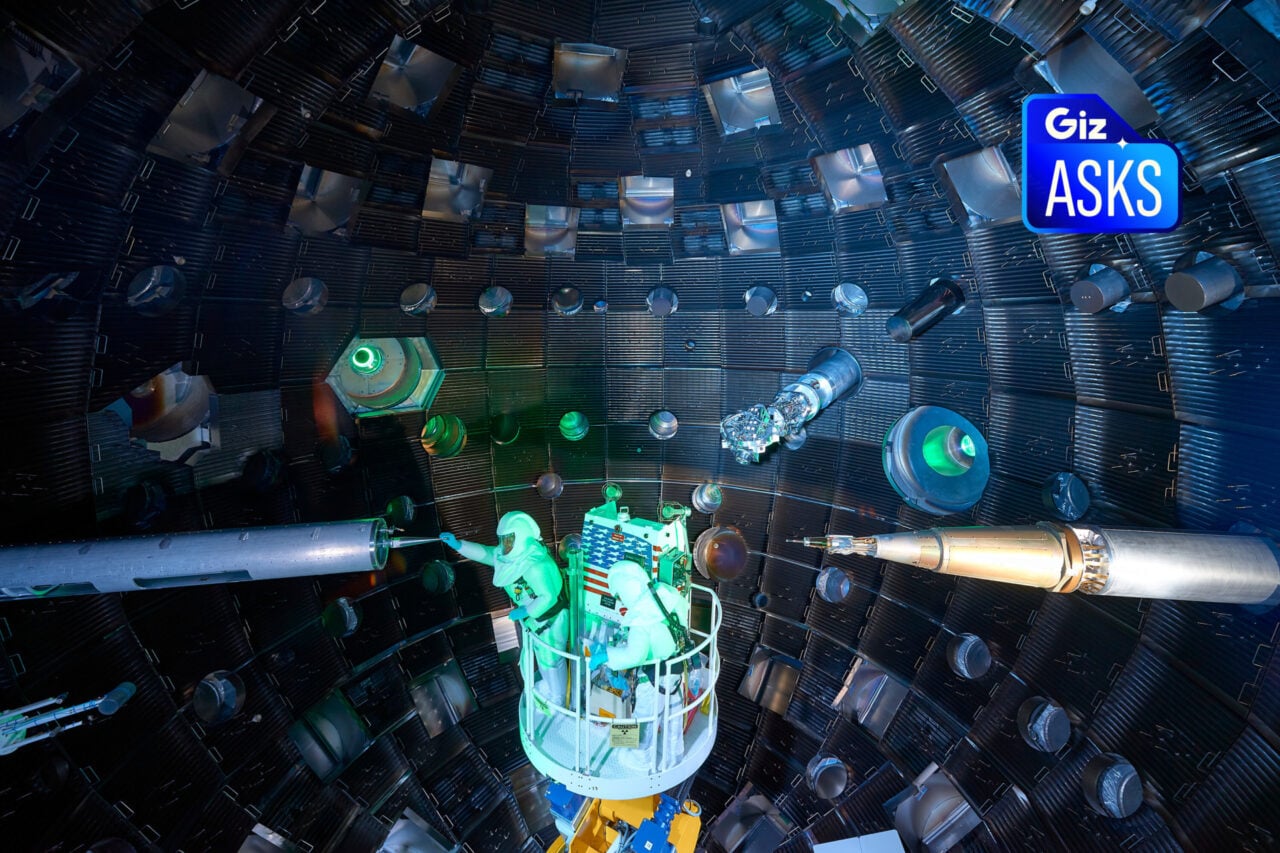
For what it’s worth, one researcher’s testimonial dates back to the 1960s, whereas another 1986 conference panel mentioned something similar. Both accounts say fusion power is 50 and between 25 and 30 years away, respectively, so that adds up to around the 2010s.
Clearly, we’re well past this so-called deadline and still getting headlines about how fusion energy is 30 years away or 50 years away or, for the mathematically minded, maybe 17.8 years away. So the joke quips at the apparently sluggish pace at which fusion energy is arriving to commercial grids. But this comes with important caveats. In the past couple of decades, there have been huge strides in fusion research, leading to increased energy outputs, improved hardware, and a wide range of experimental and theoretical developments—coming from big and small stakeholders from around the world, too. And scientists have achieved fusion ignition in labs.
The question isn’t so much whether humans can recreate how stars fuel themselves on Earth, but more the question of how we can do that consistently, continuously, and efficiently.
We posed the latter question to experts for this Giz Asks. No need to take a shot at guessing when fusion energy will arrive. No need to justify the value of fusion research. But if fusion energy isn’t here yet, there has to be a reason (or two or three). And we should probably get on top of that, right? So, what are these reasons? If one had to pick the greatest obstacles for fusion power, what would that be? And, most importantly, are there any easy solutions?
The following responses may have been lightly edited and condensed for clarity.
Tammy Ma
Director, Livermore Institute for Fusion Technology, Lawrence Livermore National Laboratory (LLNL)
There is still a tremendous amount of science and technology development ahead of us. While the National Ignition Facility (NIF) at LLNL has achieved fusion ignition ten times and counting, we still have much to learn about harnessing and applying those fusion reactions. It’s important to note that NIF was designed to produce data for national security experiments rather than efficiently produce the gains needed for commercial fusion energy. And so far, no other facility or approach has come close to NIF on energy gain, burning plasma, or any other pivotal metric taken seriously by the fusion community.
Fusion is hard. It demands creating and controlling plasma and material conditions more extreme than anything else on the planet and often beyond what we find in the core of stars. It demands pushing the limits of our scientific and engineering prowess.
Despite what I see as a long road ahead, I remain optimistic that humanity will get there. Tremendous scientific and technical progress is being made every day, and the potential benefits would transform our world. Whether it takes us a decade or five, fusion energy is worth pursuing. Ultimately, progress is going to be made in proportion to resources and funding. More government and investor support will shorten that timeline.
Arianna Gleason
Deputy Director, High Energy Density Science Division, SLAC National Accelerator Laboratory
[The biggest obstacle to fusion is] materials science. Fusion essentially asks: can we build something that survives the conditions inside a star — here on Earth — for years on end? Many in the fusion community agree that reactor components that must handle extreme radiation and heat are a top hurdle. Tritium breeding blankets? Materials. Plasma-facing tokamak walls? Materials. Inertial fusion targets that need to be designed, fabricated to incredible tolerances and mass-produced—flawlessly spherical and microscopically pure? Materials. High-temperature superconducting tape for the magnets? Materials. Even the laser optics that need to survive 10 shots per second instead of 3 per day? Materials. What’s gating us from 24/7 fusion electrons on the grid is whether we can engineer materials that won’t degrade, won’t fail, and realize a robust supply chain for the fusion industry.
There are significant technology hurdles between us and bottling a star. Four cornerstone challenges across MFE [magnetic fusion energy] and IFE [inertial fusion energy]: sustaining and stabilizing a burning plasma, boosting energy gain (while not trading efficiency to maintain low costs), building components that survive brutal radiation and heat, and breeding/recycling tritium fuel. For inertial fusion specifically, we check-boxed scientific gain with the tremendous success of the NIF achieving ignition. However, the NIF lasers fire ~1-3 times per day. A power plant needs ~10 shots per second. That’s a wild jump in repetition rate, target manufacturing, and debris management. This is where SLAC is focusing effort to innovate IFE technologies supported by DOE, FES programs and public-private partnerships through FIRE Collaboratives.
Scientists still need a deeper understanding of how plasmas behave once they reach self-heating, ignition-relevant conditions—including turbulence, instabilities, energy transport, and alpha-particle dynamics. Predictive models for either fusion concept (magnetic or inertial) are in sore need of measurement innovation and diagnostics at the appropriate length and time scales to validate models used across academia/National Labs and private industry. Understanding of sustained burning plasmas (e.g., MFE concepts) and implosion symmetry/hydrodynamic instabilities in compressed fuel pellets (e.g., IFE concepts) remain incomplete. Aspects of the tritium fuel cycle science also remain poorly constrained.
But we are making strides through the DOE FIRE Collaborative efforts across the DOE National Lab ecosystem and within public-private partnerships/programs. A commercial fusion plant must breed, extract, process, and recycle tritium at rates and efficiencies that have never been demonstrated—here we need dedicated test stands to perform this initial work—current projects underway in the DOE National Lab ecosystem (fusion blanket test facilities) are a brilliant first step.
Carlos Romero Talamás
Founder and CEO, Terra Fusion, a Maryland-based nuclear energy startup.
For almost a century, we’ve known of the possibility of extracting enormous amounts of energy from fusion reactions. Throughout this time, different ways to achieve net energy from fusion have been proposed. But making it a commercial reality has turned out to be one of the engineering grand challenges of our time. Many of these concepts have now seen partial experimental verification, and there is high confidence that the physics of net energy will work for at least some of these concepts. Physics models, diagnostics, and computational tools have improved enormously throughout the years, but it is really the lack of adequate levels of funding that have crippled the practical deployment of fusion energy.
The optimism of having energy from fusion only a few years away implies that there would be adequate and sustained funding. Until recently, however, investment to develop and test fusion systems was almost exclusively from governments and it was never enough. Even at these limited levels, funding went through cycles that were dictated more by political winds than scientific developments. During some of the dry spells, many colleagues changed their research focus to other areas, and even when funding returned, many did not return to the fusion space. This in turn led to a big loss of practical experience for the entire community.
We are now in a different era of funding for fusion, where private capital is the biggest contributor (at least in western countries), and funding levels continue to increase year by year. There are now over 50 private companies pursuing fusion, most of which did not exist 10 years ago. Of course, there is a range of expertise, achievements, and credibility within these companies. Many will disappear or merge with other companies within the next decade, but there are a few poised to make big announcements in the next few years.
In particular, the so-called “Scientific Q > 1” milestone, which demonstrates the system produces more energy output than is put into the plasma without taking engineering inefficiencies into account. The NIF announced this milestone in December 2022 for inertial confinement fusion. Some magnetic fusion concepts will announce their version of this milestone in the next few years. After that, the next big milestone is “Engineering Q > 1”, which takes into account all equipment inefficiencies and is necessary for sustainable commercial deployment. This is likely to occur within the next 10 years. Large-scale deployment will follow. Energy from fusion is now truly on the horizon.

