


Spring has a way of exposing the gaps in a wardrobe. Heavy coats are packed away, thick knitwear is folded into storage, and suddenly you’re standing in front of your closet trying to figure out what actually works for a season that can’t quite make up its mind. Too warm for a proper jacket, too cool for just a T-shirt—that in-between window is where most outerwear fails, and where the Harrington jacket has been quietly excelling for the better part of a century.
The Harrington jacket is, without question, one of the smartest pieces you can reach for this spring. It was essentially built for exactly this kind of weather, the kind that starts cool in the morning, opens up by noon, and then reminds you why you brought a layer by early evening. It handles that range better than almost anything else on the market, and it does so while looking consistently good. That’s a harder combination to pull off than it sounds.
A Jacket That Earned Its Place in History

Before getting into why the Harrington jacket belongs in your Spring 2026 rotation, it’s worth understanding where it came from, because the history is part of what makes it so compelling. The original blueprint came from Baracuta, a Manchester-based label that introduced the G9 in the late 1930s. The design was rooted in practicality: a water-resistant shell, a signature Fraser tartan lining, ribbed cuffs and hem, and the now-iconic umbrella back yoke, a cleverly shaped rear panel that sheds rain while allowing airflow.
What followed was less predictable. By the mid-20th century, the jacket had found its way onto some of the most visible figures in popular culture. Elvis Presley wore one. James Dean wore one. Steve McQueen made it feel like the only logical choice for a man with taste and somewhere to be. Later, The Clash pulled it into punk culture, giving a jacket born on British golf courses a completely different kind of edge. That kind of cultural reach, from fairways to front rows, doesn’t happen by accident. It happens because the garment is fundamentally good.
Why Spring 2026 Is the Right Moment
Transitional dressing has become a central conversation in menswear over the past few seasons, and Spring 2026 is no exception. As style continues to shift away from maximalism and toward considered, functional pieces that reward repeat wear, the Harrington jacket sits in an ideal position. It is, by definition, a transitional garment, designed for the exact conditions that define a spring morning or a cool April evening.
The broader direction of menswear this season also works in its favor. Tailoring has loosened, proportions have relaxed, and there’s renewed interest in pieces with genuine heritage rather than manufactured nostalgia. The Harrington jacket offers all of that and more. It doesn’t borrow credibility; it built its own over decades, across subcultures that rarely agreed on anything else.
What Makes It Work on the Body
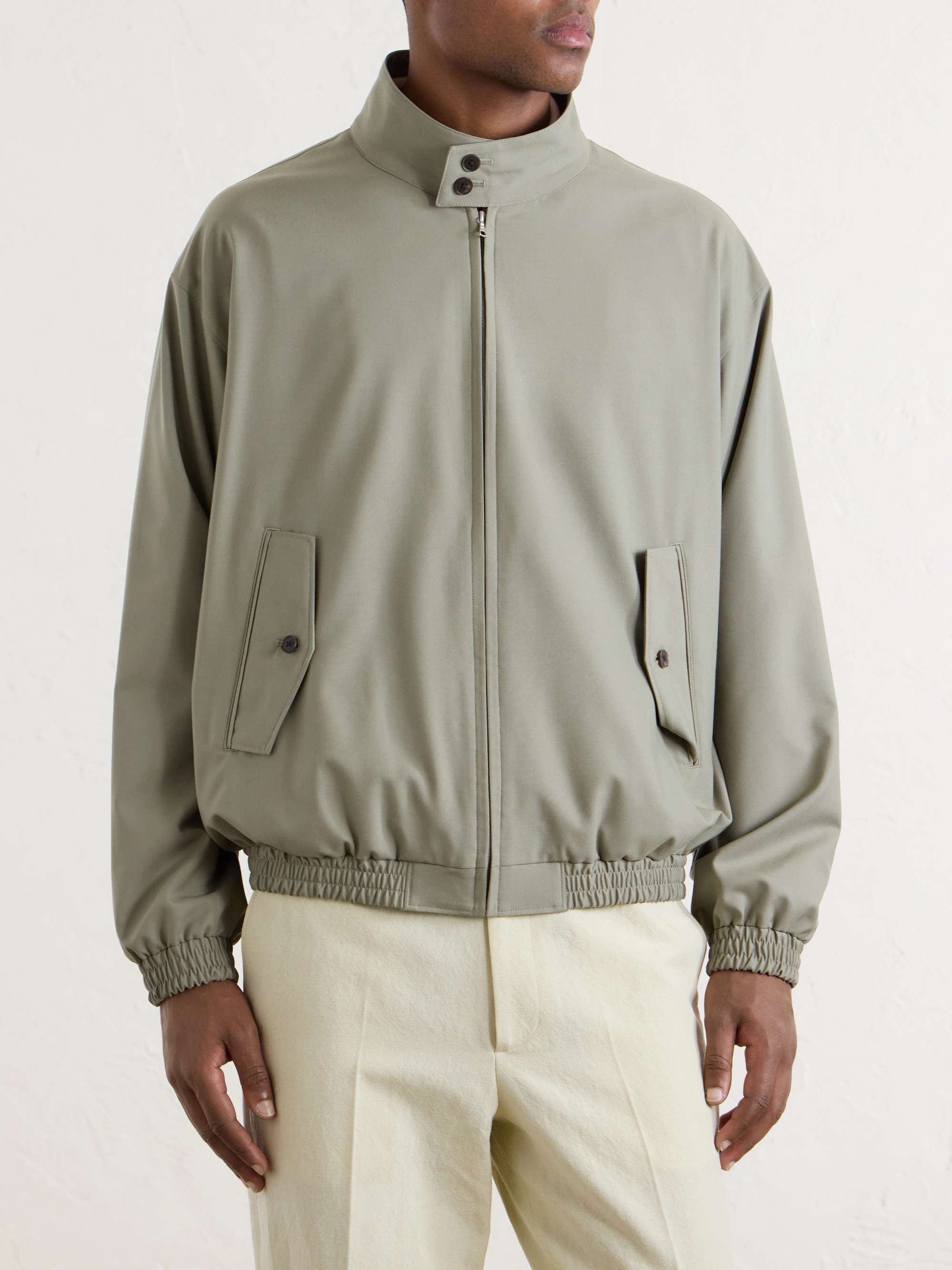
Part of the Harrington jacket’s enduring appeal is structural. Its slightly cropped length, hitting at or just below the hip, creates a clean, balanced line that works across a wide range of body types and outfits. It doesn’t overwhelm the look the way longer coats can, and it doesn’t leave you underprotected like more aggressively cropped styles. It occupies that considered middle ground where most great menswear lives.
The full-zip front and stand collar give you practical control as temperatures shift throughout the day. Pockets are deep and functional. Better versions include a water-resistant finish, meaning a light spring shower won’t derail your plans. Ribbed cuffs and hems keep the wind out without adding bulk. For something that looks this relaxed, it’s remarkably well thought through.
How to Wear It This Season
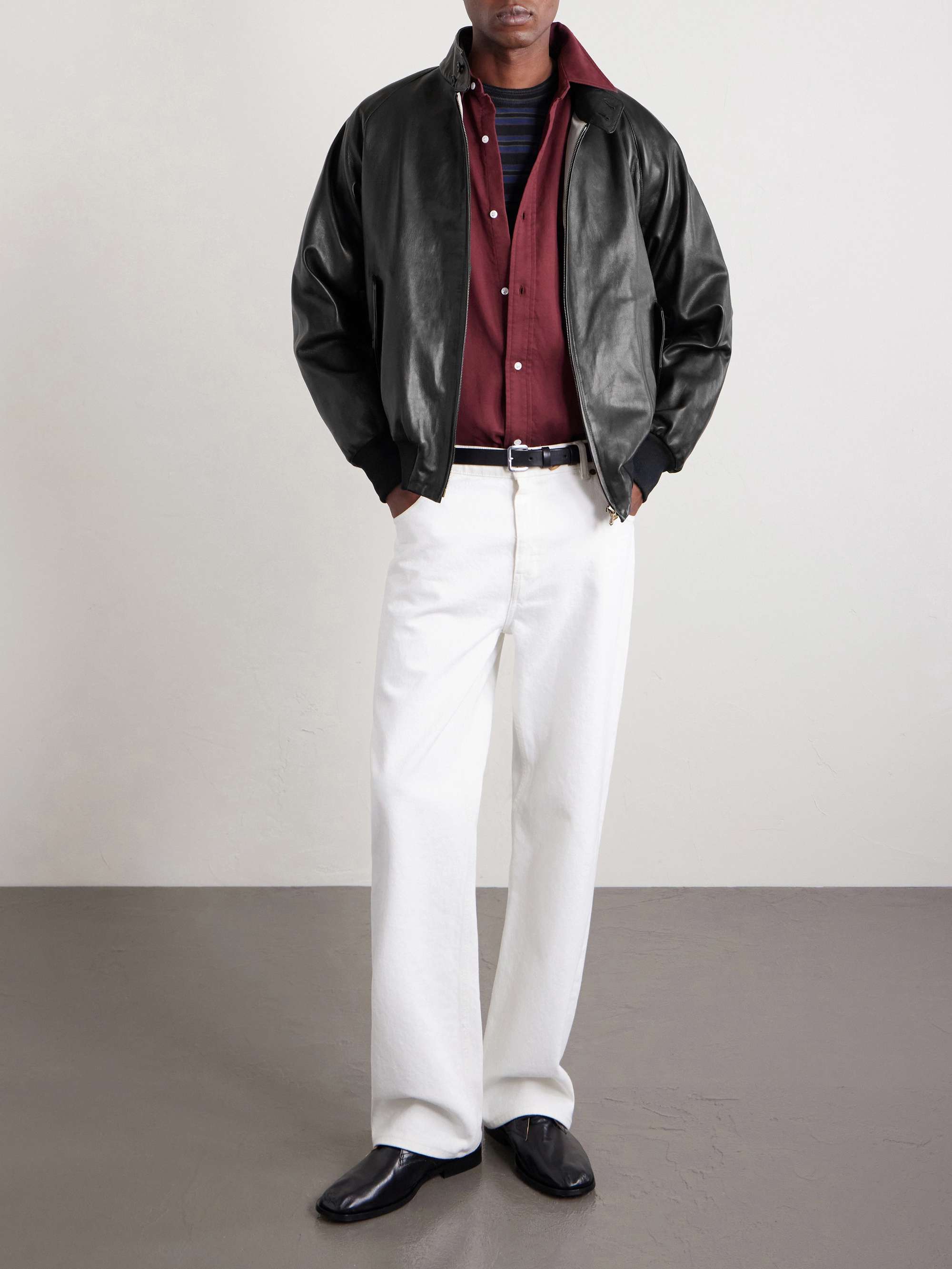
Spring 2026 offers plenty of flexibility when it comes to styling a Harrington jacket. The cleanest approach right now is pairing it with relaxed-fit trousers—linen, cotton twill, or lightweight chinos—and a simple crewneck or collarless shirt. The jacket provides enough structure to keep the look sharp without tipping into stiffness.
For something more casual, dark denim, a plain white or washed tee, and low-profile sneakers allow the jacket to carry the outfit on its own terms. If you want to push it slightly dressier, layer it over a lightweight turtleneck with slim tailored trousers and loafers. That contrast, between the jacket’s sporty origins and more polished pieces, is exactly what makes the outfit work.
When it comes to color, the classics (navy, olive, khaki, and black) remain the most versatile. They pair easily with the earthy, muted palette dominating Spring 2026 collections. That said, richer tones are gaining traction this season, and the Harrington’s clean silhouette can handle bolder color without feeling excessive.
Still the Original, Still the Best Argument

Nearly a century after Baracuta introduced the G9, the core design of the Harrington jacket remains largely unchanged, and that’s perhaps the most honest endorsement any garment can receive. The tartan lining, umbrella yoke, zip-front collar, and ribbed hem haven’t required major reinvention because they were never flawed to begin with. What has evolved is the range of interpretations, from heritage originals to minimalist updates to luxury versions in leather and suede.
Whatever version you choose this spring, you’re investing in something that has already proven itself across generations, subcultures, and seasons. In a market full of garments chasing relevance, that kind of quiet confidence is rare, and in Spring 2026, it’s exactly what a wardrobe needs.
Featured image: Todd Snyder

