


Something deeply strange is happening with the Michael Jackson biopic. Antoine Fuqua’s “Michael”, the first official, authorized account of the King of Pop’s life, opened to a 27% Rotten Tomatoes rating that inched up to 35% across 95 reviews, generating headlines about critical disappointment and divided reactions. Meanwhile, audiences are voting with their wallets in a completely different direction. The film is currently tracking to open between $85 million and $105 million domestically this weekend, a figure that would surpass Oppenheimer’s $82 million opening to make “Michael” the highest-grossing biopic debut of all time. That is not the box office performance of a bad film. That is the performance of a cultural event that critics have fundamentally misread.
The disconnect here is not subtle, and it is worth examining honestly. The “Michael” movie reviews in their current form are not painting an accurate picture of what audiences will experience when they sit down in the theater. By multiple accounts, including those buried in the same negative reviews, Jaafar Jackson delivers a genuinely extraordinary performance that brings his uncle back to life with an authenticity that no outside actor could have replicated. The film is beautifully shot, thoughtfully directed, well-performed, and built around some of the greatest music ever recorded. These are not minor footnotes. These are the core criteria by which films are supposed to be judged. Perhaps the problem isn’t the movie itself, but that something has gone wrong in the critical conversation, and it deserves a direct response.
Michael Movie Reviews Are Judging the Wrong Film
The most fundamental problem with many of the critical responses is a misalignment between the film that was made and the film critics apparently wanted to see. “Michael” covers the period from 1966 to 1988, Jackson’s childhood through the Motown era, his transformation into a solo artist, and his ascent to global icon status. That timeline is the entire scope and purpose of the film.
The allegations that have defined so much of the public discourse around Jackson’s legacy did not emerge during this period. They did not exist in the era the film depicts. Criticizing a 1966-to-1988 narrative for not addressing events from the 1990s and beyond is not film criticism. It is the application of a contemporary lens to a story deliberately set before that chapter began.
The Guardian’s complaint that the film “can’t quite bring itself to show that Michael was an abuse victim, brutalised by his father and robbed of his childhood” is particularly revealing. The film does engage with Joseph Jackson’s abusive control over his children, this is part of the story and part of the period covered. What the review appears to want is something heavier and more unrelenting in its framing of trauma. That is a legitimate aesthetic preference, but it is not an objective criticism. A film can acknowledge darkness without making darkness its entire identity, especially when the story it is telling covers the most triumphant musical period of its subject’s life.
What the Film Actually Gets Right

Strip away the ideological noise and focus on craft, and the picture changes considerably. Fuqua, the director behind “Training Day” and “Southpaw,” brings genuine visual intelligence to this material. The musical sequences are not merely recreated; they are felt. Jaafar Jackson’s performance has drawn near-universal praise even from critics who dislike the film overall, with multiple reviewers acknowledging that he brought something irreplaceable to the role. Tribune News Service, despite calling the film “uncomfortably problematic,” conceded that “the music is great” and that “Jaafar Jackson is a star.” Patrick McDonald wrote that the performance “brought his uncle back to life.” These are not the words critics use about bad films.
There is also a context point the reviews largely ignore: this is almost certainly the first part of a larger story. A film that takes Jackson from 1966 to 1988 is, by design, a foundation, not a complete portrait. The commercial infrastructure surrounding this release, Lionsgate’s backing, Graham King’s production, the secured music rights, suggests a sequel is not just possible but planned. Judging “Michael” as if it is the only film that will ever be made about this subject misses how the project appears to be structured from the ground up.
The Bigger Picture Critics Are Overlooking
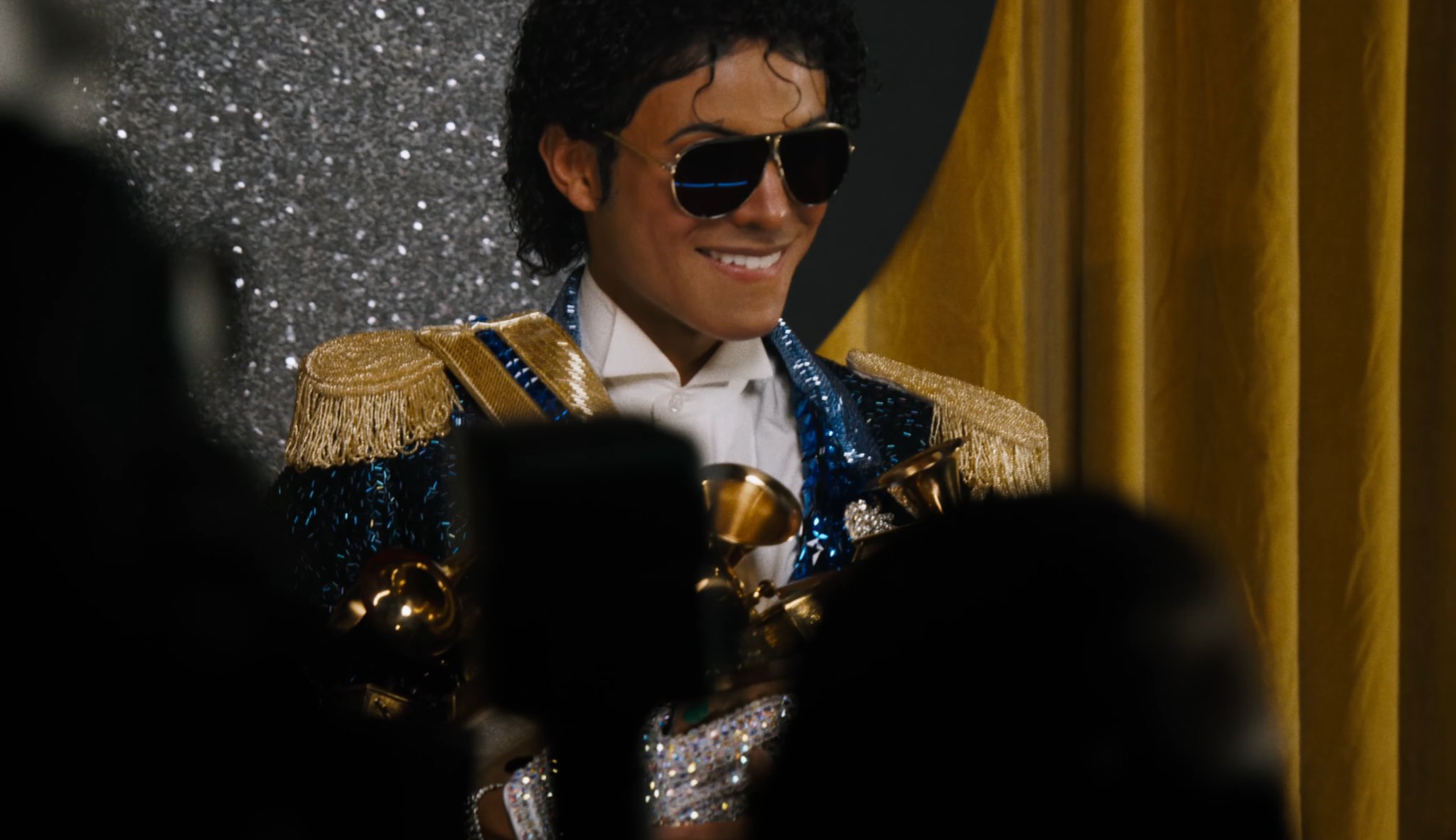
There is a broader issue worth naming plainly. Film criticism serves a purpose: to help audiences understand what they are about to experience and whether it delivers on its intentions. By that standard, a 27% Rotten Tomatoes score for a film tracking toward a record-breaking $85-105 million opening weekend represents a significant failure of the critical apparatus. Audiences are not wrong in large numbers. When the gap between critical consensus and audience response is this wide, the question worth asking is not why audiences are going to see the film. It is why the critical conversation has drifted so far from the actual cinematic experience being offered.
“Michael” is a film about a singular, complicated, world-changing human being, told through the lens of his most musically transformative years. Jaafar Jackson’s performance alone makes it worth seeing. The visuals, the sound design, the musical sequences, and the emotional ambition of what Fuqua attempted here all deserve serious engagement. We can do better than a 35% score for a film that is, by multiple measures, doing exactly what a quality biopic is supposed to do. The audience already knows it. The reviews are simply catching up.
Featured image: Lionsgate


