


The modern man no longer simply arrives somewhere; he makes an entrance. Airports have quietly become one of menswear’s most revealing stages, where soft tailoring, considered luggage, and effortless layering say as much as a passport stamp. Whether you’re catching a short domestic flight or crossing continents, travel dressing has evolved beyond comfort into a language of practicality, confidence, and personal style.
The best travel wardrobes balance movement with intention. They borrow from relaxed tailoring, performance fabrics, and timeless design to create outfits that survive security lines, changing temperatures, long flights, and spontaneous dinner plans after landing. After all, the journey has become part of the destination, and every departure lounge offers another opportunity to define your signature travel uniform.
The Modern Airport Uniform
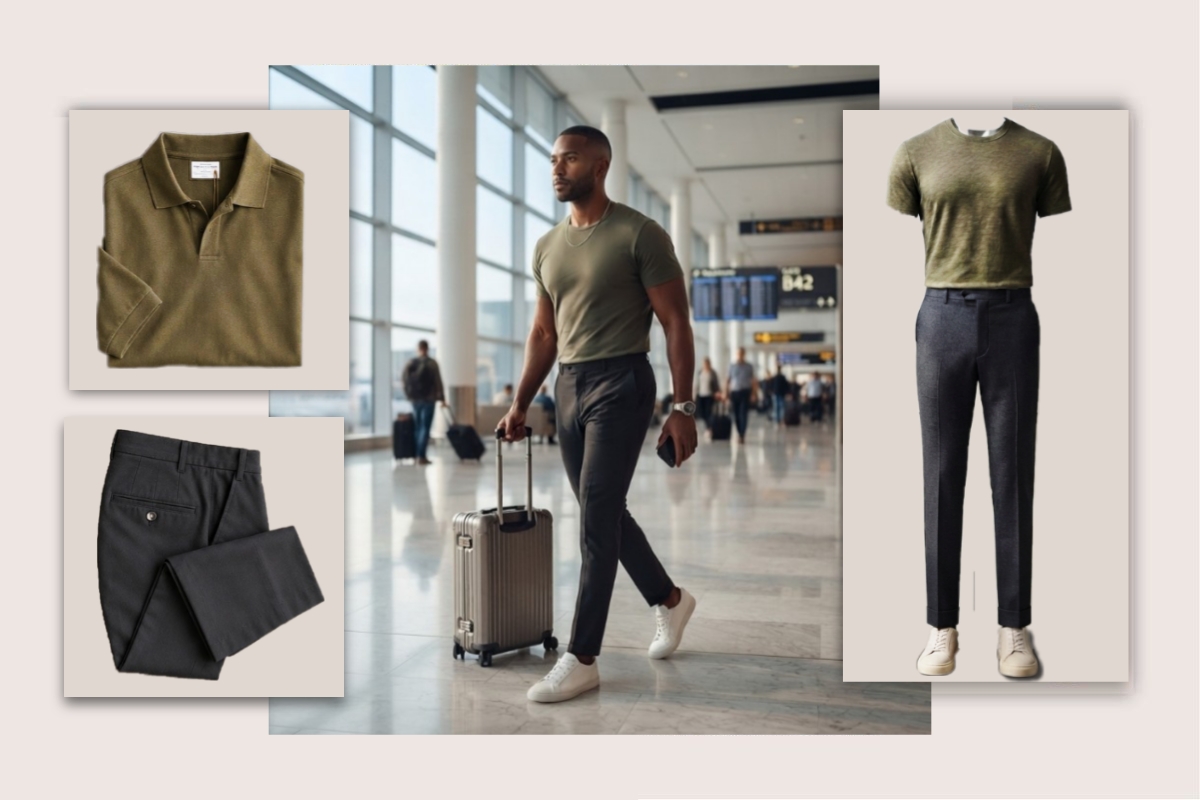 Photo: Style Rave Studios/AI-generated Visual
A decade ago, the standard travel outfit leaned heavily toward sweatpants and surrender. Today, however, frequent flyers understand the value of an outfit curated with intention and style. The trick is avoiding the trap of looking as though you dressed for a photograph rather than a twelve-hour journey. Getting it right comes down to a few key considerations.
Transit Tailoring
Long before you reach your destination, your outfit has already started working. It carries you through early alarms, crowded terminals, security checks, delayed departures, and the familiar search for an empty charging socket near your gate. The best airport outfit isn’t built around fashion trends alone. It’s built around movement.
The modern airport uniform borrows heavily from relaxed tailoring, one of menswear’s defining shifts over the past decade. Designers have steadily moved away from rigid silhouettes in favor of softer construction, stretch fabrics, and pieces that hold their shape without restricting the body. Fortunately, you don’t need a designer wardrobe to benefit from the same principles.
A lightweight overshirt worn over a premium T-shirt or knitted polo creates structure without feeling overly formal. Meanwhile, tapered drawstring trousers or well-cut chinos strike the sweet spot between comfort and polish. They feel noticeably more refined than traditional sweatpants while offering enough flexibility for hours of sitting.
Imagine stepping off a six-hour flight and heading straight to lunch with friends or an afternoon meeting. The right outfit shouldn’t require an immediate wardrobe change. Instead, it should transition naturally between environments, allowing you to feel appropriately dressed from departure to arrival.
Yet beneath even the most carefully curated outfit lies one final detail that carries you through every stage of the journey: your footwear.
Choosing Travel Shoes That Go the Distance
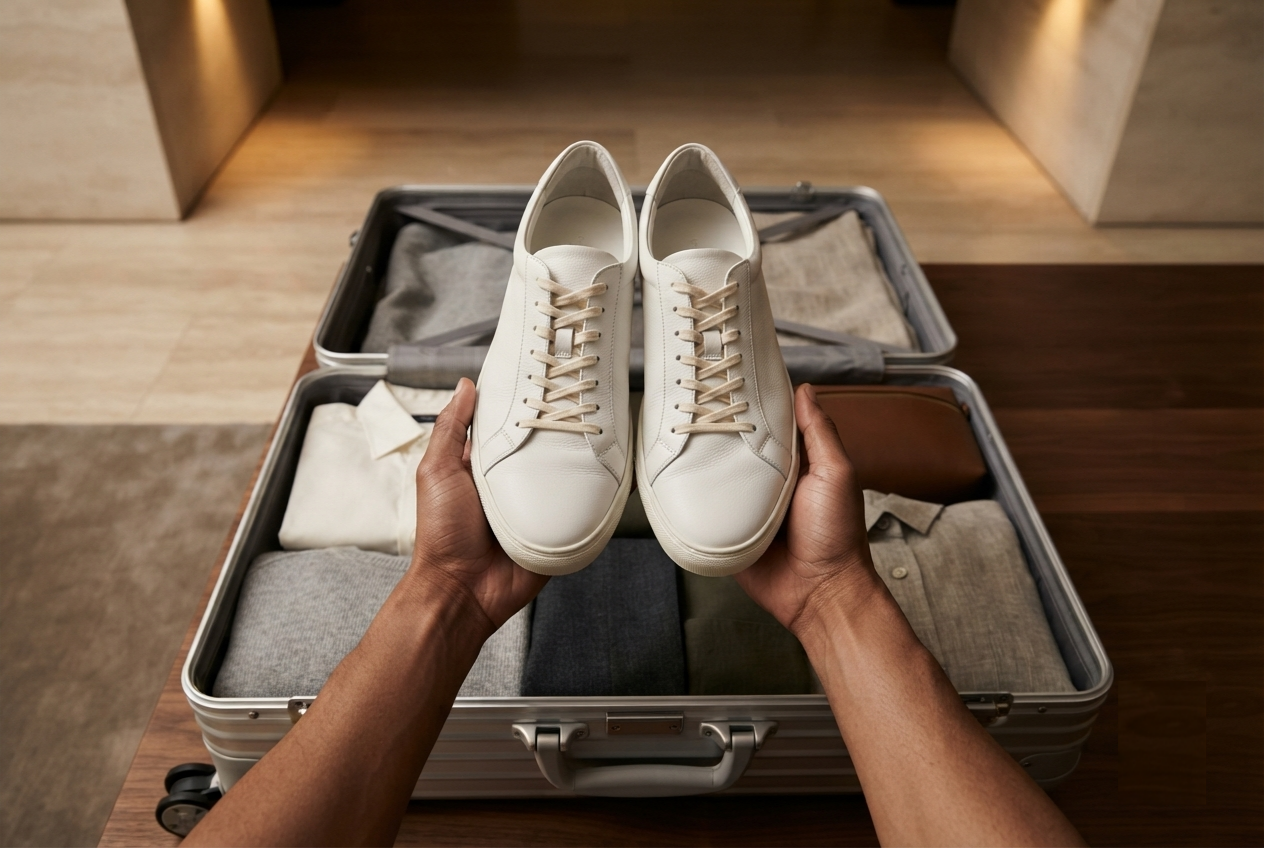 Photo: Style Rave Studios/AI-generated Visual
Footwear Mechanics
Shoes often determine whether a journey feels effortless or exhausting. After several hours on your feet, even the sharpest outfit loses its appeal if every step becomes uncomfortable. Airport footwear demands a careful balance; it must survive security lines, terminal marathons, unexpected weather, and the unforgiving scrutiny of someone sitting across from you in the lounge. Fortunately, practicality doesn’t require sacrificing style in the name of comfort.
The mistake many travelers make is choosing shoes that belong entirely to one category. Running sneakers may feel perfect on a long flight, yet they often undermine an otherwise sophisticated outfit. Formal leather shoes may look excellent, but they can become a punishment after hours of walking.
The sweet spot lies between those extremes. Minimal leather sneakers, flexible loafers, and refined travel boots create a visual bridge between comfort and polish. Your footwear should communicate that you appreciate thoughtful design, not that you packed specifically for an airport photograph.
Clean leather sneakers remain one of the smartest travel investments because they bridge multiple dress codes with ease. They pair effortlessly with tailored trousers, denim, or shorts while offering enough support for long walks through sprawling terminals and unfamiliar cities. Meanwhile, lightweight trainers with responsive cushioning make excellent companions for travelers who expect to cover serious ground after landing.
Airport security introduces another practical consideration. Footwear that slips on and off without a struggle saves time and frustration, particularly during busy travel periods. Small conveniences often become the details you’ll appreciate most after several connecting flights. Once your shoes are sorted, the next element of great travel style is preparing for the changing temperatures that come with modern travel.
The Outerwear Layer
Outside of footwear, effective layering allows a travel outfit to adapt throughout the day. Aircraft cabins rarely match the weather outside. You might leave behind summer heat, spend several hours in aggressively air-conditioned cabins, then arrive somewhere noticeably cooler or warmer. For that reason, a well-chosen outer layer becomes one of the most practical pieces you can pack—or wear.
A lightweight overshirt, unstructured chore jacket, or packable bomber offers enough warmth without adding unnecessary bulk. These pieces also work just as well once you’ve landed, making them far more versatile than heavy hoodies or oversized coats that spend most of the trip draped over your arm.
Here, fabric matters just as much as silhouette. Breathable cotton twill, lightweight wool blends, and modern technical materials regulate temperature more effectively than thick synthetic fleece alone. As a result, you’ll remain comfortable across changing environments while maintaining a cleaner, more intentional appearance.
When these elements come together—relaxed tailoring, versatile footwear, and thoughtful layering—you end up with a travel uniform that works long after boarding is complete. The strongest airport outfits rarely look as though they were assembled specifically for flying. Instead, they resemble the clothes you’d happily wear anywhere. That’s the quiet secret behind great travel style: it doesn’t announce that you’re traveling. It simply proves that good style moves as well as you do.
Yet beneath every well-balanced travel outfit lies an element that’s far less visible than the cut of a jacket or the color of a pair of trousers. Fabric ultimately determines how your clothes breathe, recover, regulate temperature, and perform after hours in transit. Before building a smarter travel wardrobe, it’s worth understanding why the material itself is often the most important style decision you’ll make.
Choosing the Right Travel Fabrics
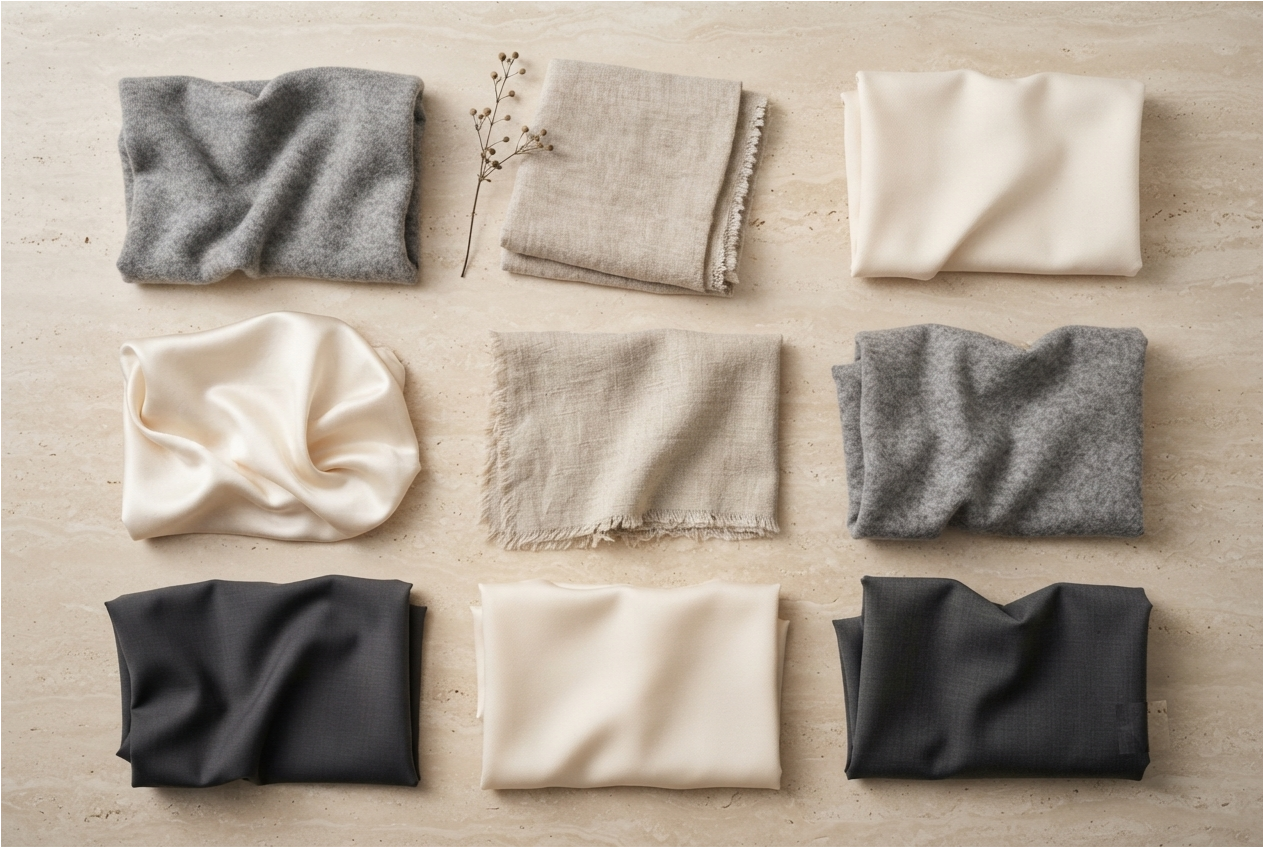 Photo: Style Rave Studios/AI-generated Visual
Why Fabric Matters More Than You Think
A great travel outfit often begins with a decision most people overlook. Before color, before fit, and certainly before accessories, fabric determines how your clothes will perform once the journey begins. Choosing the right materials can mean the difference between arriving fresh and feeling like you’ve spent the last eight hours folded into an overhead compartment.
Think about the moments that define travel. You rush to catch a train, wait on a crowded platform, sit through a chilly flight, then step into warm afternoon sunshine. Your clothing needs to respond to each change without becoming uncomfortable. That’s why experienced travelers pay close attention to what their garments are made from rather than simply how they look on a hanger.
Natural fibers continue to earn their reputation for good reason. Cotton feels soft and breathable, making it ideal for shorter trips and moderate climates. However, heavyweight cotton absorbs moisture and takes time to dry, which can become uncomfortable during humid weather or long travel days.
On the other hand, Merino wool has quietly become one of the smartest choices for frequent travelers. Unlike traditional wool, its fine fibers regulate body temperature exceptionally well. It keeps you warm in cool environments, remains breathable when temperatures rise, and naturally resists odors. That means a well-made Merino T-shirt or lightweight sweater can often be worn multiple times before needing a wash, freeing up valuable space in your luggage
The Final Boarding Call
Travel has always promised more than a change of scenery. It offers the chance to see familiar things differently, discover new routines, and carry a little of every destination home with you. The clothes you wear simply support that experience. They should move easily, adapt effortlessly, and help you feel prepared for whatever the day brings, whether that’s navigating a bustling airport, wandering quiet side streets, or accepting an invitation you never expected.
The best travel style isn’t measured by designer labels, overflowing suitcases, or perfectly curated social media photos. It’s measured by confidence, versatility, and thoughtful choices that make every journey smoother. When your wardrobe fits well, your fabrics suit the climate, your shoes keep you comfortable, and your packing reflects intention rather than impulse, getting dressed becomes one less thing to think about.
Ultimately, the goal isn’t to look like a seasoned traveler—it’s to become one. Build a wardrobe that earns its passport one trip at a time, invest in pieces that improve with every journey, and let your style evolve alongside the places you explore. The destination may be the reason you booked the ticket, but the journey is where your personal style truly finds its stride.
Featured image: @thedappergents.zm/Instagram
See More

