


Two scoops to start: First, France’s Tikehau Capital has secured €400mn in backing from two of the secretive founding families of beer giant Anheuser-Busch InBev to help fuel the next stage of the €38bn alternatives manager’s international expansion.
Next, Iranian-American billionaire Jahm Najafi is preparing a blockbuster $3.75bn takeover bid for Tottenham Hotspur, the Premier League football club, said two people with direct knowledge of the plans.
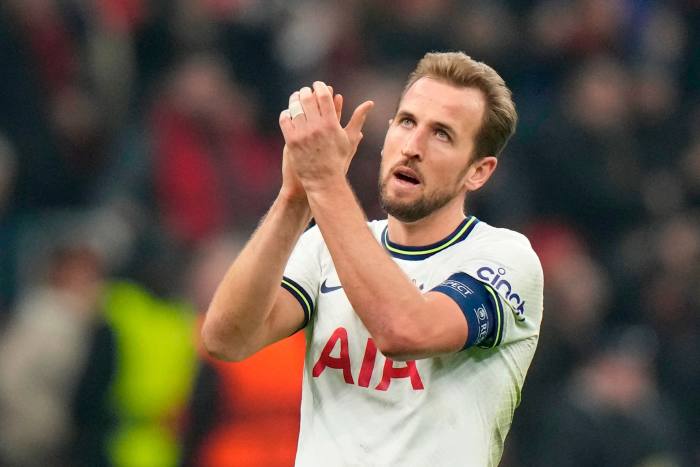
And one invitation: Dissect the game further at FT’s Business of Football Summit, March 1-2 at The Biltmore Mayfair in London. Register here to join us in person or digitally.
Welcome to Due Diligence, your briefing on dealmaking, private equity and corporate finance. This article is an on-site version of the newsletter. Sign up here to get the newsletter sent to your inbox every Tuesday to Friday. Get in touch with us anytime: Due.Diligence@ft.com
In today’s newsletter:
-
Inside the Trafigura scandal
-
Buffett walks back on a merger arb bet
-
The credit fund caught in a Wall Street divide
Trafigura gets nicked
Eight weeks ago, Trafigura’s top traders and shareholders were celebrating. They’d just been awarded a $1.7bn payout as profits boomed at the Swiss-based commodities group during the energy crisis.
But something disastrous was brewing in the background. The company last week said it had been the victim of a “systematic fraud” and faces a $577mn writedown after discovering shipments of nickel that it purchased didn’t contain . . . nickel.
The FT’s Harry Dempsey and DD’s Rob Smith have dug into the scandal. At the centre of the saga is Prateek Gupta, the 43-year-old Dubai-based businessman, who has worked with Trafigura since he took over trading group TMT Metals in 2016.

Trafigura and TMT had a simple arrangement: Trafigura would provide “transit finance” to TMT and other companies controlled by Gupta, buying nickel from them then selling it back to these companies or into the open market at a later date. For this service, it charged interest for the duration of the transportation.
TMT had been a reliable partner for years, but in 2021 the relationship between them and Trafigura started deteriorating. Some shipments took more than 300 days, many times more than necessary for any global shipping route, according to one person familiar with the matter. The amount of nickel being traded inflated, too.
Last July, authorities in New Delhi accused Gupta of defrauding the State Bank of India and four other lenders. And those weren’t the first red flags surrounding Gupta and his companies.
Trafigura continued to trade with Gupta even after the incident with the Indian authorities. It wasn’t until October, when Citigroup moved to stop financing the trades that the company increased its investigation.
That’s when more details came to light. For example, an “informant” told Trafigura in November that some containers held metals other than nickel. Trafigura inspectors found carbon steel, a low-value metal worth less than $1,000 per tonne versus roughly $26,500 for nickel.
Trafigura has since secured a $625mn freezing order against Gupta and his companies as it continues to pursue its fraud claim. A further hearing is due to take place where Gupta and his companies are expected to defend themselves.
Barclays, where Gupta’s companies held accounts that received Trafigura funds, is no doubt paying close attention.
Trafigura has a long way to go in tracking down its lost cash: “I’m not sure they will get much money back from litigation as there’s not much to go after,” said Ian Milne, who was responsible for trying to recover debt from Gupta’s UD Trading for trade finance fund TransAsia Private Capital. “Sure, Gupta has a lot of money out there, but most of it is not in his name.”
Berkshire unwinds its merger arb bet
Billionaire Warren Buffett is often thought of as the ultimate investor of long-term capital.
But every now and then, the chief executive of Berkshire Hathaway likes to get his hands dirty with a trade that might make the company a quick buck. Last year, he thought he found one that could net the sprawling conglomerate more than $750mn.
At Buffett’s direction, Berkshire hoovered up roughly 54mn shares in Activision Blizzard, the video game maker Microsoft had agreed to buy for $95 a share. The bet came weeks after one of Berkshire’s investment deputies had bought nearly 15mn shares in the company behind World of Warcraft.

It was a classic merger arbitrage play with the thesis that Activision shares would rally towards that $95 a share price as the deal — Microsoft’s largest ever — inched its way towards completion. Unfortunately for the 92-year-old investor, regulators across the globe have sunk their teeth into the transaction and shares of Activision have languished.
Following the US Federal Trade Commission’s suit to block the deal in December, the UK’s Competition and Markets Authority issued a separate blow to Microsoft’s $75bn bid last week. (DD has more on that here.)
As the deal prospects have soured, Berkshire has been slowly unwinding its trade. The company sold 7.4mn shares, or 12 per cent of its position, in Activision in the fourth quarter, reducing its stake to about $4bn. That came just a quarter after Berkshire dumped 8.3mn shares.
“If the deal goes through we make some money, and if the deal doesn’t go through who knows what happens,” Buffett told investors at its annual meeting last year. Although in the same breath he warned investors of one outcome: “if the deal blows up you may have a stock that’s at $40”.
Merger arb plays aren’t for the faint of heart. Look no further than the gut-wrenching ride funds holding Twitter stock went on last year as Elon Musk tried to walk away from the deal.
The trades can be hugely profitable if a deal gets over the line. But an investor needs the stomach for it. Berkshire shareholders may have to wait for Buffett’s annual letter — out later this month — or the company’s annual meeting in May to know if it has that appetite.
The fund on both sides of the distressed debt debate
“The test of a first-rate intelligence is the ability to hold two opposing ideas in mind at the same time and still retain the ability to function,” according to the early 20th-century writer, F. Scott Fitzgerald.
By that standard, Ryan Mollett, another alumnus of Fitzgerald’s alma mater Princeton, is thriving. Mollett runs distressed debt investing at Angelo Gordon, a $50bn credit manager based in New York.
The firm is in the midst of two similar bankruptcy fights at Revlon and Serta Simmons, respectively. Each company raised hundreds of millions in rescue loans early in the pandemic in 2020 when a slim majority of lenders provided the cash in exchange for getting privileged access to each company’s assets as collateral. Those left out of each deal had their existing loans collapse in value having been sent to the back of the line.
The term that has become the catchphrase in the hedge fund community is “creditor-on-creditor violence”, and Angelo Gordon is perpetrator and victim in Revlon and Serta, respectively.
At Revlon, Angelo Gordon is poised to take control of the company out of Chapter 11 bankruptcy. At Serta, having been stranded, it may just get pennies on the dollar. In the litigation that has ensued, it insists that it is on the side of angels in both.
Critics say Angelo Gordon is simply being too cute-by-a-half by asserting a difference in Revlon and Serta transactions. The 2020 financings at the two companies are known as “uptiers” and “dropdowns” and the differences are indeed highly technical. DD’s Sujeet Indap dives into the details.
Job moves
-
Oaktree has appointed Mansco Perry to its board of directors. Perry retired as chief investment officer of US pension fund Minnesota State Board of Investment last year.
-
Blackstone has named Anushka Sunder as head of its North American healthcare private equity team, per PE Hub.
-
Jasper Masemann has joined Cherry Ventures as an investment partner in Berlin. He joins from HV Capital.
-
Boutique investment bank Alantra has launched an energy transition group co-chaired by former French energy transition minister François de Rugy and Nemesio Fernandez-Cuesta, the former Spanish energy secretary and Eolia Renovables chair.
Smart reads
Flying private After more than a year of secret talks, Tata Group-owned Air India pulled off the largest ever deal by one airline. The order of 500 jets from Airbus and Boeing underscores a new class of private airline owners transforming the sector in India, Reuters reports.
Get me Risa! From Eliot Spitzer to Harvey Weinstein to the parents of Sam Bankman-Fried, powerful people in crisis mode know to call Risa Heller. New York Magazine profiles the famous flack.
And one smart listen: Brussels is typically thought of as the centre of antitrust in the EU. But when it comes to clamping down on Big Tech, Germany is leading the charge. DD’s Javier Espinoza explains its regulatory rise on the FT’s Behind the Money podcast.
News round-up
Deutsche Bank cuts ties with Selfridges co-owner René Benko (FT)
KPMG is first Big Four firm to cut staff in US as economy slows (FT)
AMC Networks owner James Dolan finds a new CEO: his spouse (Wall Street Journal
EU set to investigate Amazon’s $1.7bn purchase of Roomba-maker (FT)
Allen & Overy introduces AI chatbot to lawyers in search of efficiencies (FT)
Barclays’ guidance disappoints as bank cuts bonus pool (FT)
Moët Hennessy buys Château Minuty in big bet on luxury rosé (Bloomberg)
Capricorn terminates NewMed merger after activist pressure (FT)
Bonus cap blues (Alphaville)
Recommended newsletters for you
Cryptofinance — Scott Chipolina filters out the noise of the global cryptocurrency industry. Sign up here
Scoreboard — Key news and analysis behind the business decisions in sport. Sign up here

