


CES has always been about what’s next. But every once in a while, a company shows up not just with new products, but with a new point of view. At CES 2026, that company was Dreame.
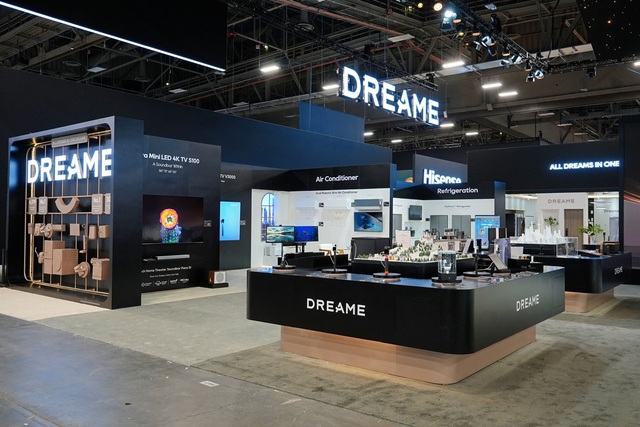
Image Credits: Viva100
What began years ago as a brand synonymous with high-performance cleaning quietly stepped onto the world’s biggest tech stage and revealed something far more audacious: a unified vision of intelligent living that stretches from robot vacuums that think, to AI-powered personal devices that adapt, all the way to a carbon-fiber electric supercar capable of humiliating hypercars.
Dreame didn’t come to Las Vegas to win a category.
It came to redefine what a consumer technology company can be.
Across robotics, smart home infrastructure, personal AI devices, imaging, outdoor automation, and mobility, Dreame unveiled an ecosystem that feels less like a product lineup and more like a blueprint. Every device shares the same philosophy: adaptive intelligence, mechanical ambition, and design that treats homes, people, and machines as a single, connected system.
This wasn’t incremental innovation.
This was Dreame declaring its second act.
From robots that climb stairs and pick up clutter, to AI wearables that see and respond in real time, to a 1,876-horsepower electric supercar that signals serious intent beyond the living room, Dreame’s CES 2026 presence made one thing clear:
The company once known for cleaning floors is now engineering the future of intelligent life.
And this is the story of how Dreame became one of the most important brands at CES 2026.
The Foundation: Robots That Understand the Physical World
Dreame’s rise has always been anchored in robotics, and CES 2026 made it clear that this remains the company’s intellectual core. But what Dreame showed this year wasn’t just about cleaning better; it was about teaching machines how to reason in physical space.
X60 Max Ultra Complete: Solving the Problems Everyone Else Avoided
At first glance, the X60 Max Ultra Complete looks like a refinement of the robot vacuum formula. In reality, it tackles the three hardest problems in home robotics head-on: height, speed, and thresholds.
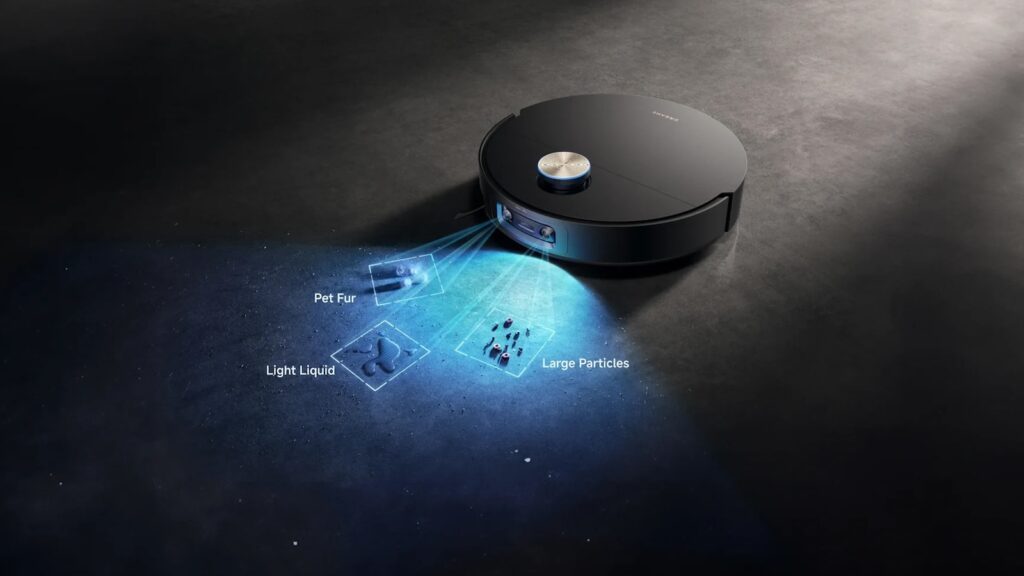
The ultra-thin 7.95 cm body, made possible by a retractable LiDAR tower, allows the robot to map environments up to 200 percent faster while reaching under furniture that has traditionally been off-limits. Combined with 35,000 Pa of suction and a fully automated dock that washes mop pads at 100°C, the X60 delivers both raw power and sustained autonomy.
The real breakthrough, however, is mechanical. Dreame’s FlexiAdapt chassis doesn’t dodge obstacles like thresholds and steps. It climbs them. Retractable legs physically lift the robot over multi-layer transitions, reframing how robots move through real homes instead of idealized floor plans.
This is a theme that repeats throughout Dreame’s CES presence: machines adapting to homes, not the other way around.
Matrix 10 Ultra: Room-Specific Cleaning Intelligence
The Matrix 10 Ultra introduces a triple-mop system that treats different rooms as distinct environments. Thermal pads handle living areas, nylon pads target kitchens, and sponge pads address bathrooms. The robot automatically switches between pads based on room type and dries them via a dual-duct docking system.
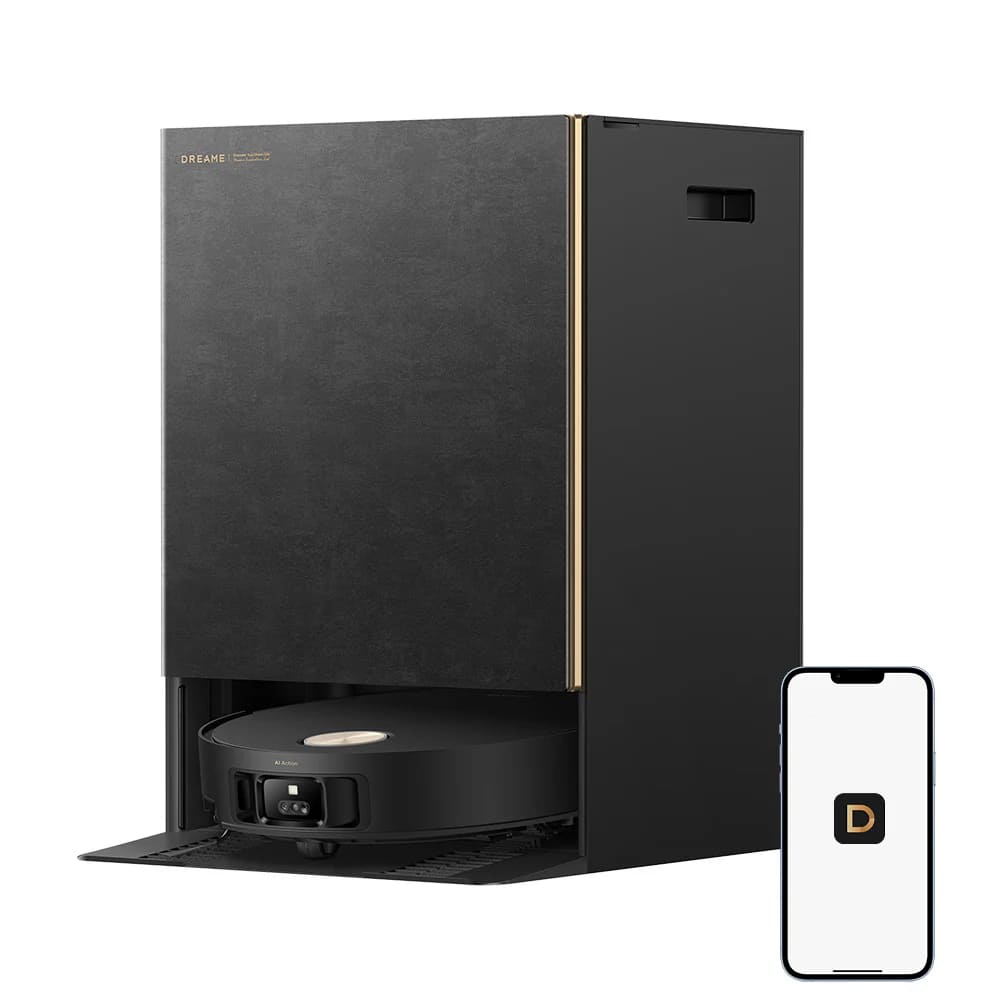
Image Credits: Dreame
This approach acknowledges that homes are complex spaces with varied cleaning needs, and it places Dreame ahead of competitors still relying on uniform solutions.

