


Instant cameras have become a popular category for one simple reason: they’re fun. You can whip one out at a party or event and take a snap, then a couple of minutes later you have a real, physical, instant photo that everyone can touch, feel and enjoy instead of staring at a screen. It’s also a lot cooler than a smartphone shot thanks to the retro, nostalgic vibes of analog photography.
Given the large number of camera brands on the market, choosing one can be tricky. That’s why we’ve put together this buying guide that will help you choose the best instant camera for you based on factors like price, instant film size, photo quality and more.
Best instant cameras for 2026
Fujifilm
Wireless connectivity: Bluetooth | Camera weight: 436g (without batteries, strap, and film)
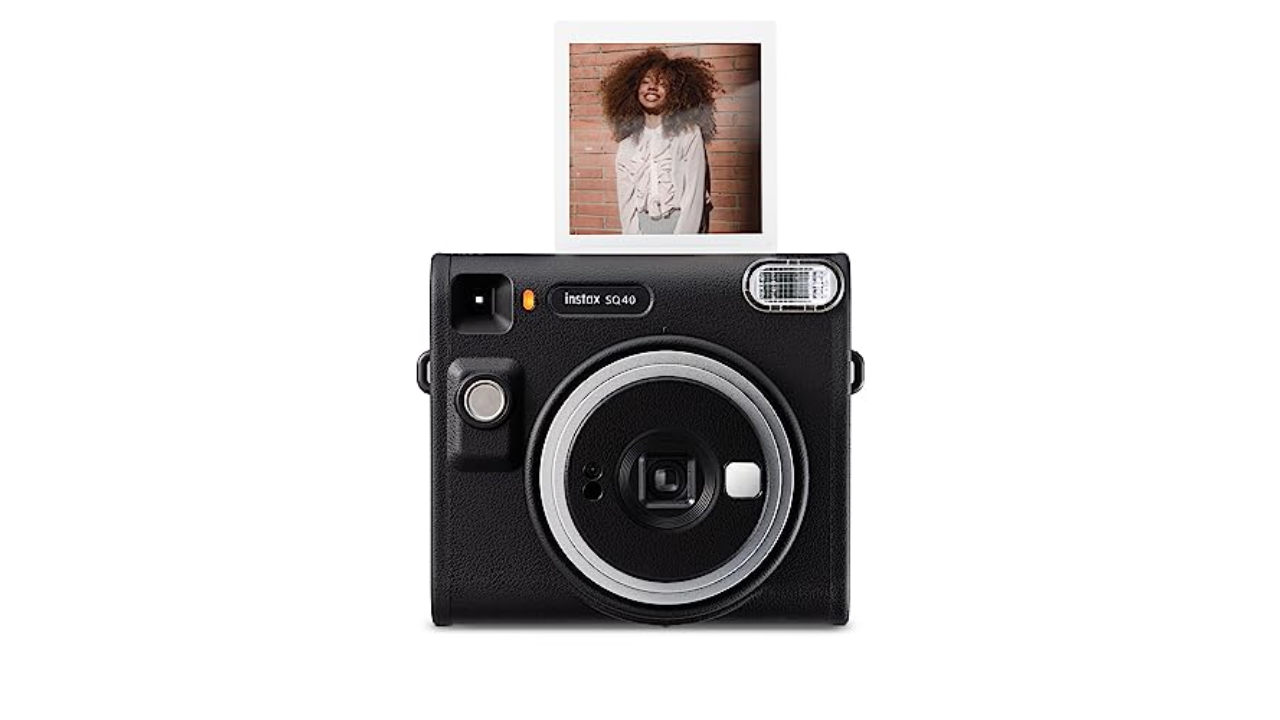
The best instant camera is the Fujifilm Instax Square SQ40. It looks great thanks to the leatherette details and retro design, while offering minimal controls for ease of use. It takes 3.39 x 2.83-inch Instax Square prints that fully deliver on the retro vibes. You also get a flash, selfie mirror, front shutter release and hand strap, plus it’s relatively light and easy to carry around. The camera alone is priced at $150, but you’ll need to budget for film as well.
Fujifilm
Wireless connectivity: Bluetooth | Camera weight: 306g (without batteries, strap, and film)
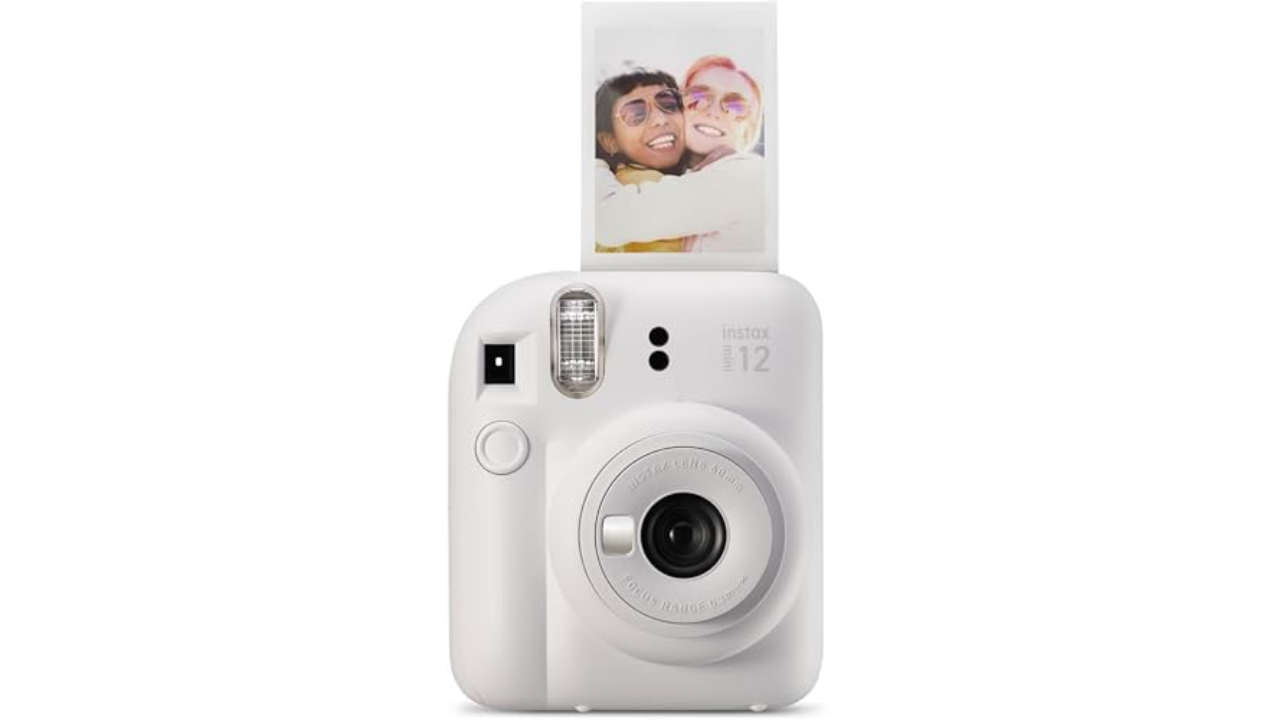
If you’d rather spend less on both camera and film, take a look at Fujifilm’s Instax Mini 12. It’s a basic instant camera ideal for newbies that lets you get started shooting in just a couple of minutes. The controls couldn’t be simpler as well, as you just need to twist the lens into the “on” or “off” position. It’s also small and thin, so can be slipped into a pocket and fits nicely into the small hands of fledgeling young photographers.

Fujifilm
Wireless connectivity: Bluetooth | Camera weight: 12 ounces (without batteries, strap, and film)
Where the Instax Mini 12 is cheap and cheerful, the Instax Mini 99 offers far more control and features. The best feature is the four-colored LEDs inside the camera that can be enabled to produce in-camera “looks,” like “Faded Green” and “Light Leak,” that produces a glow simulating a broken camera. At the same time, unlike other models, you can turn the flash off completely for a more natural look. Other nice features are a rear display and sports mode, with the one downside being the lack of a selfie mirror.

Polaroid
Wireless connectivity: Bluetooth | Camera weight: 240g (without batteries and film)
The Polaroid Go might be basic and relatively cheap, but it offers a lot. You get a self-timer and double-exposure modes, along with Polaroid’s square Go format film that delivers that nostalgic feel. It’s also pretty small and light, so it’s an easy choice to bring it along to any occasion. The main drawback is the autofocus, which delivers spotty results unless you’re a good way from the subject.
Polaroid
Wireless connectivity: Bluetooth | Camera weight: 451.5g (without film)
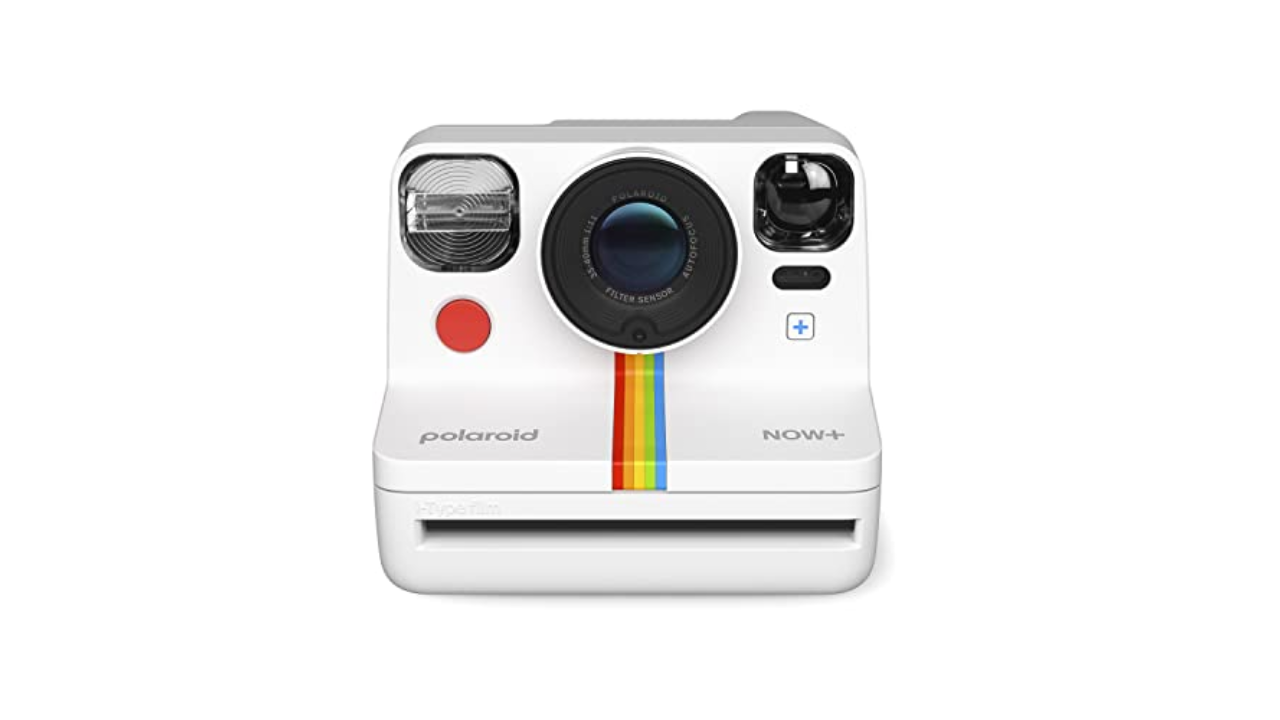
Polaroid is a name synonymous with instant cameras, and its Now+ model is the best choice for larger film. Though the prints are slightly smaller than those produced by Fujifilm’s Instax Wide 400, I prefer the square format that evokes old school Polaroid photos. It also offers a host of features like an updated app with creative shooting modes including manual modes, a self-timer, double exposure, light painting and an aperture priority option for depth of field.
Though the 2nd-generation model suffered from occasional exposure issues, the new model has largely corrected that and added a tripod mount to boot, along with some new colors. The main downside is the relatively high price of Polaroid’s i-Type film.
Fujifilm
See More
What to consider before buying an instant camera
The main factor for most people is the size of the film. When most people think of retro instant cameras, they think of a square image size. That’s why Instagram, which used to have a Polaroid-like app icon, only supported square images for years. If that’s what you want, then Fuji’s Square or either of Polaroid’s formats are best.
However, if you want as large an image as possible, Fujifilm’s Instax wide is the way to go. For those who prefer a smaller size to pin on their fridge or slip in an envelope (or the cheaper film), Fujifilim’s Instax Mini or Polaroid’s Go format are best.
With that in mind, here are the choices. Fujifilm’s Instax alone offers three formats: Mini, Square and Wide, with film sizes of 3.4 x 2.1 inches, 3.4 x 2.8 inches and 3.4 x 4.3 inches. The corresponding image sizes are 2.44 x 1.81 inches, 2.44 x 2.44 inches and 2.44 x 3.9 inches.
Leica’s Sofort 2 and Lomography models also uses Fujifilm’s Mini format, while Polaroid’s smaller Go format is 2.64 x 2.13 inches (1.81 x 1.83-inch image) and its i-Type size is 3.46 x 4.21 inches, with a square image size of 3.11 x 3.11 inches.
As for prices, Fujifilm’s Instax films are generally around $1 – $1.20 per shot for square or wide color film and $.60 – $.75 for mini color film. Those prices go up a bit if you choose custom models with colorful or patterned borders, and down if you buy in bulk. Polaroid’s i-Type film is a bit more at about $2.00 per shot or $1.00 – $1.35 per shot for Go color film.
Image quality isn’t really the point with instant cameras of course, as they’re always going to be fuzzy compared to digital photos. However, some models (notably Fujifilm and Polaroid models) are a bit better than others.
And in terms of pricing for the cameras themselves, models with larger film are generally more expensive. It also increases if you add hybrid features like USB-C connectivity, smartphone sharing, the ability to print out photos and more, along with niceties like a selfie mirror. The best, most feature-laden cameras can cost upwards of $200 and basic versions can be well under $100.
