


Three boxes, one spot under your TV, and a price climate that turns every purchase into a small act of courage. The Steam Machine, the PlayStation 5, and the Xbox Series X all want that space, and none of them is a dud. You aren’t being dim for stalling on the decision, because each one leads with a different promise.
Valve offers an open PC that happens to wear a console costume. Sony counters with exclusives and a controller nobody else matches. Microsoft answers with a back catalogue stretching to the original Xbox and a subscription that still embarrasses its rivals on sheer volume. Your money picks a philosophy here, not a spec sheet.
Quick verdict
Most people who just want to sink into great games tonight shouldn’t overthink—just get the PlayStation 5. Value hunters who live in Game Pass and want decades of old favorites are better served by the Xbox Series X.
The Steam Machine earns its place with tinkerers who want a living-room PC, mods, emulation, and Valve’s whole library on a TV, and who can stomach paying the most to get it.
Price and long-term cost
Start with the sticker. The Xbox Series X runs about $574 to $650 for the 1 TB model, the PS5 Slim Digital hovers near $500 with the disc edition higher, and the Steam Machine opens at $1,049 before you add the $79 controller.
Valve has been candid that a memory and storage crunch wrecked its original pricing, and the cube never drops in seasonal sales the way the consoles do. Over a few years the gap narrows once you weigh subscription fees, yet on day one the Xbox is the easiest on your wallet.
Raw performance
On raw graphics the pecking order is clear in 2026. The Xbox Series X still leads with its 52-compute-unit GPU, the standard PS5 follows close behind, and the Steam Machine settles roughly alongside it despite newer Zen 4 cores and an RDNA 3 chip.
Valve’s 8 GB of dedicated VRAM is the ceiling that holds it back, so heavy modern titles often lean on FSR upscaling to reach 4K at a smooth frame rate. Where Valve’s box pulls ahead is CPU-bound work, since those faster cores stretch their legs in simulation-heavy games. For pure pixel-pushing muscle out of the box, the Xbox Series X wears the crown.
Game library and exclusives

Games break the tie more than benchmarks do. PlayStation guards the system-sellers, with Ghost of Yotei, the upcoming Marvel’s Wolverine, and the Spider-Man titles staying on Sony hardware. Bloomberg has reported that Sony is pulling its big single-player releases back from PC, which leaves the PS5 as the only place to play them.
GTA 6 sharpens the point. The biggest release of the year arrives November 19 on PS5 and Xbox, skipping PC at launch, so the Steam Machine cannot run it on day one. I expect Rockstar to bring it to Steam eventually, the way GTA 5 made the jump, yet anyone who wants to be in Vice City on day one is choosing a console whether they like it or not.
Xbox went the opposite way, scattering its catalogue across PlayStation, PC, and cloud, so a Series X buys you access more than exclusivity. Valve’s machine opens the entire Steam catalogue along with early-access oddities that never touch a console. But for games you cannot play anywhere else, PlayStation is still hard to beat.
Openness, mods, and the PC question
One machine here is a full computer, and that shifts the whole calculation. The Steam Machine boots into a Linux desktop, takes a keyboard and mouse, runs a browser, and lets you mod games or build emulators the way any PC would.
Patience is the price, since Linux can fight you on anti-cheat multiplayer and on the fiddlier mods. The consoles stay locked gardens by design, which means less freedom and far less hassle. Anyone itching to tinker should look straight at Valve’s box.
Living-room fit, size, and noise
The shelf test matters more than people admit. Valve’s six-inch cube runs cool and quiet, small enough to tuck under a TV without a fight.
Microsoft’s Series X is a tall, heavy monolith near 10 pounds, and Sony’s PS5 is bigger still, awkward in plenty of media units. None of these boxes is loud the way older hardware was, so noise barely separates them. On pure living-room manners, the Steam Machine takes it.
Subscriptions and the cost of playing online
Online play carries a hidden tax on two of these three. PlayStation Plus starts at $80 a year, and Xbox gates online behind its Game Pass tiers, so the console you buy keeps billing you. Valve’s machine asks for nothing extra to play online, and many of its multiplayer games skip subscription fees.
Game Pass still counters with staggering value for anyone who plays a lot of different titles, since hundreds of games arrive for one monthly fee. Pure online cost favors the Steam Machine, though Game Pass makes Xbox the smartest pick for variety on a budget.
Where the PlayStation 5 wins

Image Credit: Sony
Sony PlayStation 5 Digital Edition—825 GB
Buy the PS5 if your evenings are short and you want a machine that respects them. You hit the power button, you’re gaming within a minute, and the DualSense controller adds a layer of feel through its triggers and haptics that the rivals cannot copy.
The exclusive library is the main draw, though, since Sony’s biggest games live nowhere else now. Backwards compatibility covers a vast PS4 collection too, so an upgrade from last generation loses nothing along the way.
Openness is the trade-off. You take what Sony ships, on the platform’s terms, with PS Plus as the toll for online matches. For a reader who values polish over freedom, that bargain is an easy yes.
Where the Xbox Series X wins
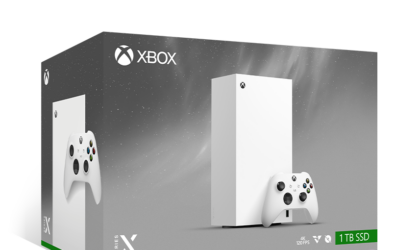
Image Credit: Microsoft
Microsoft Xbox Series X All-Digital Robot White—1 TB
Pick the Series X when value and your back catalogue matter most. Game Pass remains the loudest argument in its favour, handing you hundreds of titles for a single monthly fee, which suits anyone who jumps between games rather than marrying one.
Backwards compatibility goes deeper here than anywhere, reaching original Xbox discs with Auto HDR and frame-rate boosts layered on top. Quick Resume lets you hop between several titles and return exactly where you stopped, a small luxury you miss once it’s gone. Dolby Vision and DTS:X support also make it the stronger movie machine.
The catch is identity, since Microsoft now ships its own games almost everywhere, which weakens the case for owning the hardware.
Where the Steam Machine wins
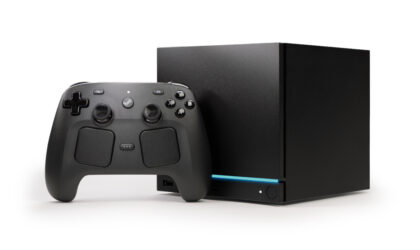
Image Credit: Valve
Valve Steam Machine with Controller—512 GB
Go for the Steam Machine when you want a PC wearing a console costume. It puts the whole Steam library on your TV, plays early-access titles absent from PlayStation and Xbox, and skips the online fees consoles still charge.
Drop into desktop mode and you have a browser, a keyboard, mods, and emulators, all in a cube that barely makes a sound. The faster Zen 4 cores give it an edge in CPU-heavy games, even where its GPU only matches a PS5.
Related: Valve Steam Machine preview: I’m excited and nervous about Valve’s big comeback
You pay for every bit of that, though, both at checkout and in patience, because Linux can be finicky and the cube never goes on sale. Tinkerers will forgive the quirks—everyone else should think hard.
My final verdict
The PlayStation 5 is the one I would buy. It costs far less than the Steam Machine and runs every major game beautifully, with exclusives the other two cannot offer.
The Xbox Series X is the sharper choice if Game Pass and a deep back catalogue match your habits, and it stays the cheapest of the trio up front. Reserve the Steam Machine for the tinkerer who wants a true living-room PC and accepts the premium attached to it. The one move to avoid is overpaying for Valve’s cube when a console would cover everything you need.

