


It’s a strange thing to see whenever a new Star Trek series or character is announced and revealed to have some form of current social commentary in it, that there’s inevitably a comment from some disgruntled person. Such comments come in various phrasing, but often amount to someone saying they’re no longer going to watch Star Trek because it’s gotten so political.
The original series (known as TOS-era Trek) came out during the 1960s, a time of upheaval in the cultural fabric of the United States. Campus kids protested the war in Vietnam, hippies were expanding their minds with all sorts of new drugs, and America was in an uproar over the burgeoning Civil Rights movement. Star Trek was birthed into this world. Like all great sci-fi, it was a reflection of its time, not just simple speculation about the future.

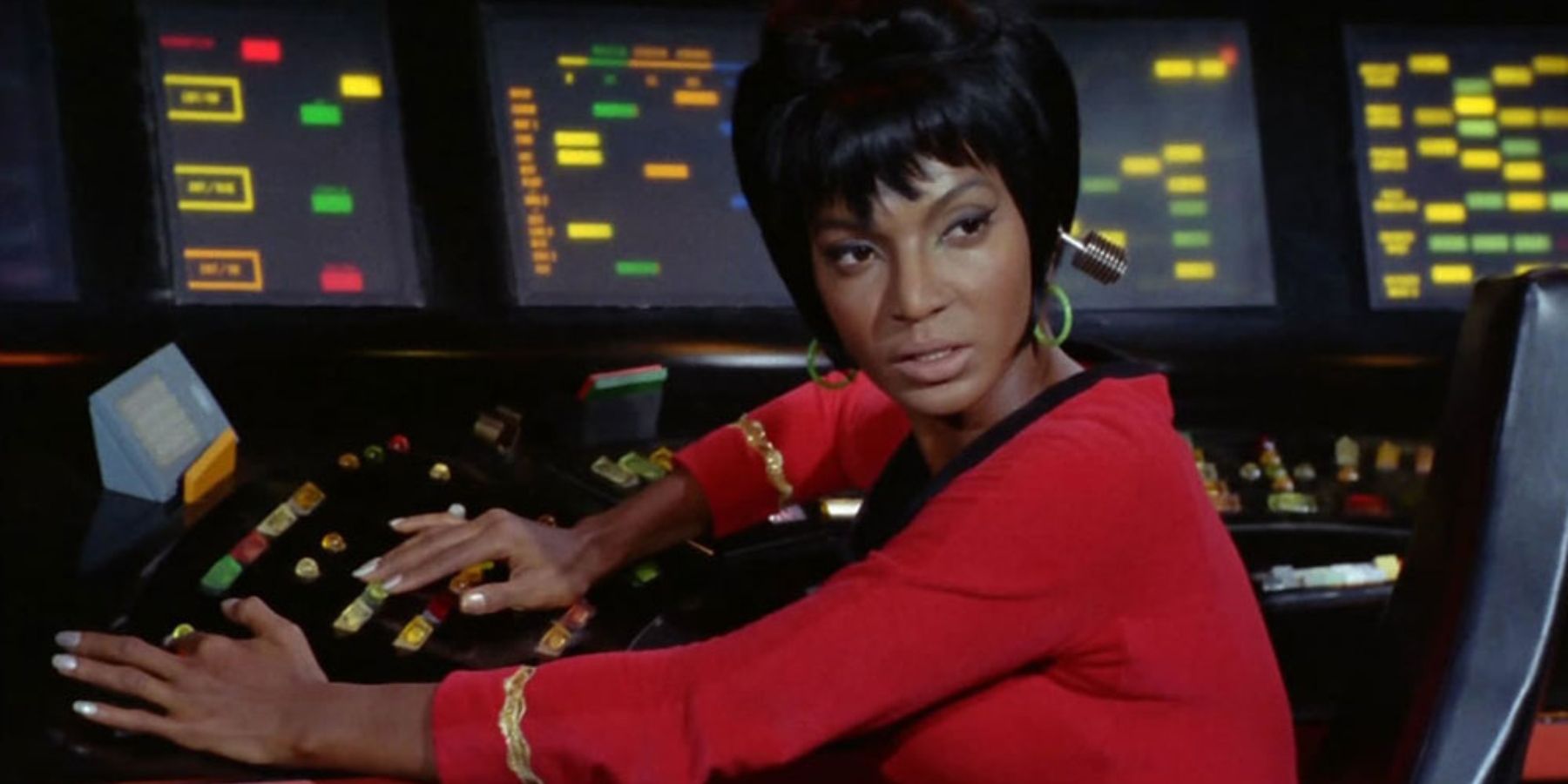 Gender was portrayed just as equally as race. Women were not only part of the main bridge crew, but they served all over the ship and never took back seats to the male cast members. Nurse Chapel (Majel Barrett) is just as memorable a character as Dr. “Bones” McCoy (DeForest Kelley). Even the costumes worn by the crew were revolutionary. While the go-go boots and miniskirts of the women’s uniforms might seem backwards today, they were bold for the time according to stars like Grace Lee Whitney, who played Yeoman Janice Rand (famous for her woven beehive hairdo). The year the show came out, 1966, was still eight years before a woman was able to get a credit card without a man cosigning one for her. Feminism was in its infancy. Women on TV wore big flouncy skirts, making them into model-perfect housewives. At a time like that, Star Trek allowed women to dress in a vastly modern way, and one that was reflective of the youth of the time, rather than the matriarchy of the war years. It also didn’t have the women sexualized by the male characters because of how they dressed, which was absolutely forward-thinking for the time. In the particular case of Uhura, her Blackness, on top of being a woman, was of utmost importance. Nichelle Nichols relates a story in which she was at a party, speaking to no other than Martin Luther King, Jr. himself, (a man who, with his 1968 assassination, wouldn’t live to see Star Trek‘s cancellation in 1969), and expressed that Star Trek wasn’t doing much for her, and she was thinking of moving on. King, according to Nichols, braced her and told her that she was playing a character who was only not judged for being a woman, but not judged for being black; that unlike every other pop culture woman, she’d broken the mold of being a maid on TV and must continue. Taking him at his word, she did, to the audience’s delight and history’s lasting gratitude. NASA would eventually use her image to advertise for women volunteers.
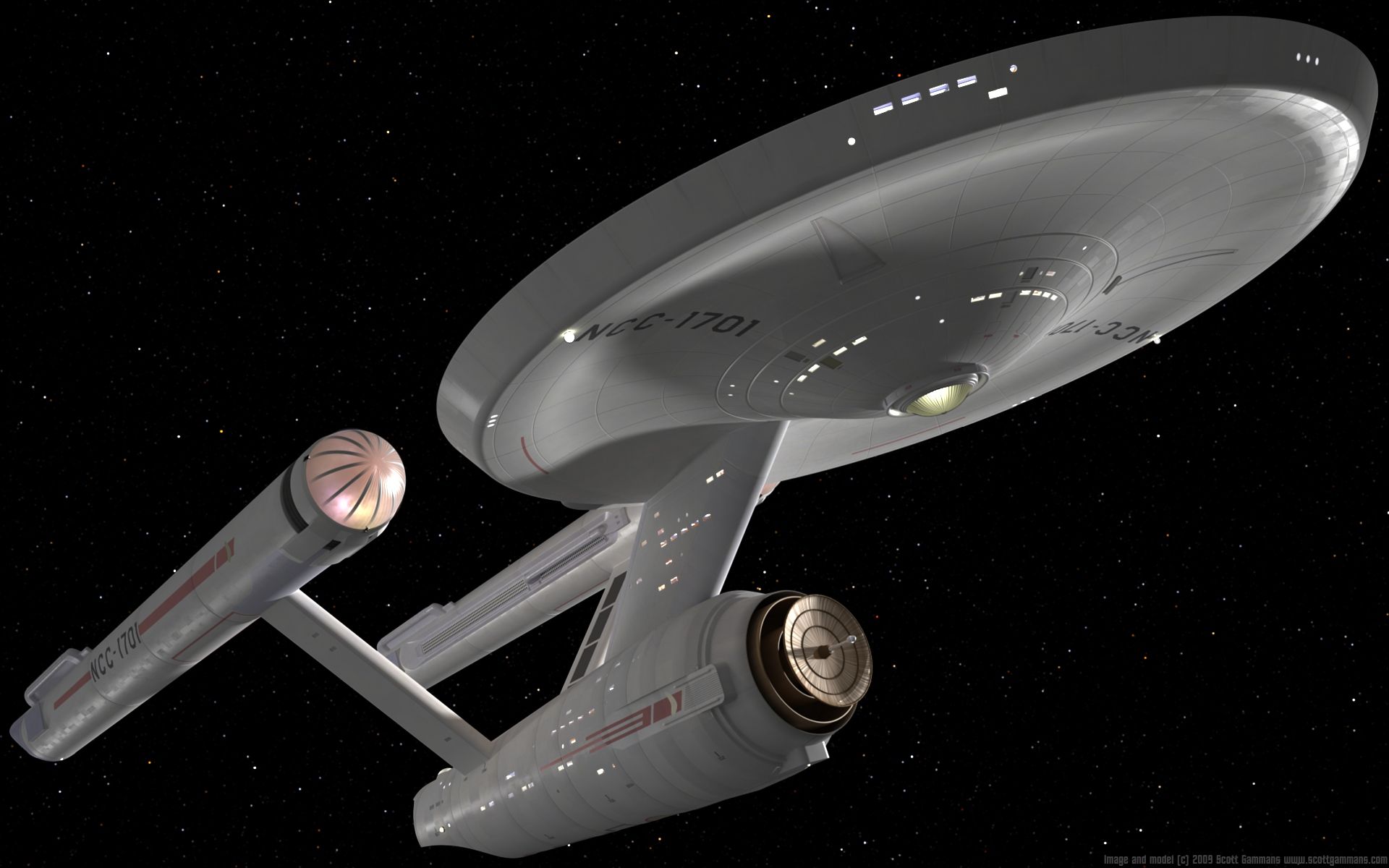 Though Roddenberry hoped for his series to make it the five years necessary to hit syndication at for the era, the show only ran for three before the animated revival in the 1970s and the subsequent movies, when Paramount tried to compete with Star Wars’ unheralded success. From the beginning, the show featured luminaries of great sci-fi, from Robert Bloch (whose career dated back to the days of H.P. Lovecraft and hit big with Hitchcock’s Psycho) to Harlan Ellison writing episodes. These big names took what could have been a goofy little pulp show and brought gravitas and drama to it, and won Emmy awards for doing so. The stories themselves can be pulpy; Kirk fighting the primative Gorn is one of the more famous. Equally famous are the episodes where Kirk and company fight supercomputers mentally controlling their populations in episodes like “The Return of the Archons.” In others, Kirk and crew go after old friends Kirk knew from Starfleet that have become actual space Hitlers, as in “Patterns of Force.” And in case anyone still couldn’t grasp that Star Trek was political — even after seeing episodes about free thinking without centralized control, or how Nazism was bad — couldn’t deny stories like “Let That Be Your Last Battlefield.” It’s plain to see that statements are being made in this episode, which features literal, split-down-the-middle, half black/half white aliens, fighting a half white/half black alien to the death. All the while, the Enterprise crew tries to encourage peace since they’re basically the same. Anyone who couldn’t see the political statements here could never see it. Refusing to understand what’s being said here is simply ignorant. Star Trek, and science fiction at large, is and always was political from its conception. The vast contributions by the casts and crews over the years has only cemented that; moreover, Star Trek is best when it’s boldly political. It’s never been of its time, but of all times: the goals of harmony amongst the peoples of Earth, of exploration, of striving to be better transcend generations and hold out a beacon for humanity itself. It’s only up to viewers to reach for those stars. MORE: William Shatner reveals Why He Has Never Watched ‘Star Trek Read Next About The Author Andrew Robert McRae (6 Articles Published) More From Andrew Robert McRae Source link
