


Justin Bieber did not simply headline Coachella 2026; he rewrote what a festival performance can mean for a fashion business. Across two weekends in the California desert, his independent clothing label SKYLRK generated a staggering $15 million USD in total merchandise sales, shattering the festival’s previous record of $1.7 million USD by nearly nine times over. The figures position SKYLRK as one of the most commercially successful independent artist-led labels in recent memory. This achievement arrives just eleven months after the brand’s founding in July 2025, making the scale of the accomplishment all the more remarkable.
The Coachella merchandise record set by SKYLRK at the just concluded 2026 Coachella edition did not happen by accident. Bieber’s team executed a carefully structured, multi-pronged retail strategy that separated the label from every other act selling merchandise at the festival. Rather than operating a standard merch tent, SKYLRK launched a dedicated “SKYLRK Shop” adjacent to a purpose-built “SKYLRK Oasis,” a branded experiential space offering festival attendees shade, cooling mist, and a genuine brand environment. The approach positioned SKYLRK not as a tour souvenir operation but as a legitimate fashion label using the Coachella main stage as its runway. Bieber also contributed to the financial record in other ways, becoming the highest-paid artist in Coachella history at $10 million USD, driving peak ticket demand, and making his performance the most Googled in the festival’s history.
A Sales Strategy Built on Momentum
Justin Bieber is on pace to earn as much as his Coachella payment from SKYLRK merch sales alone, after reportedly generating $5 million in the first weekend.
His total gross for a single festival edition could reach $20 million. pic.twitter.com/6rG7q3nCdH
— PopNews (@popnewx) April 18, 2026
The $15 million total breaks down across a decisive two-stage approach. Weekend one produced $5.04 million USD through on-site sales alone, driven by immediate physical demand on festival grounds. Weekend two then generated an additional $10 million USD as SKYLRK expanded access online, capturing a global audience that had watched the performance from home and wanted in. This pivot between weekends proved critical, turning early sell-outs from a potential frustration into a demand signal that translated directly to digital revenue.
Bieber’s personal role in the strategy was deliberate and effective. During his weekend one set, he debuted unreleased SKYLRK apparel on stage, including an “Apple” green double-reverse fleece hoodie zip-up, a “Smudge” fleece open-neck tee, and black Speed Demon Sunglasses, before the pieces were commercially available. Weekend two saw him wearing SKYLRK denim shorts and accessories, reinforcing the same formula. Wearing product before it drops has become one of contemporary fashion’s most reliable hype mechanisms, and Bieber deployed it with the kind of audience reach that few artists can match.
Shop editor’s picks
SKYLRK: The Brand Behind the Numbers
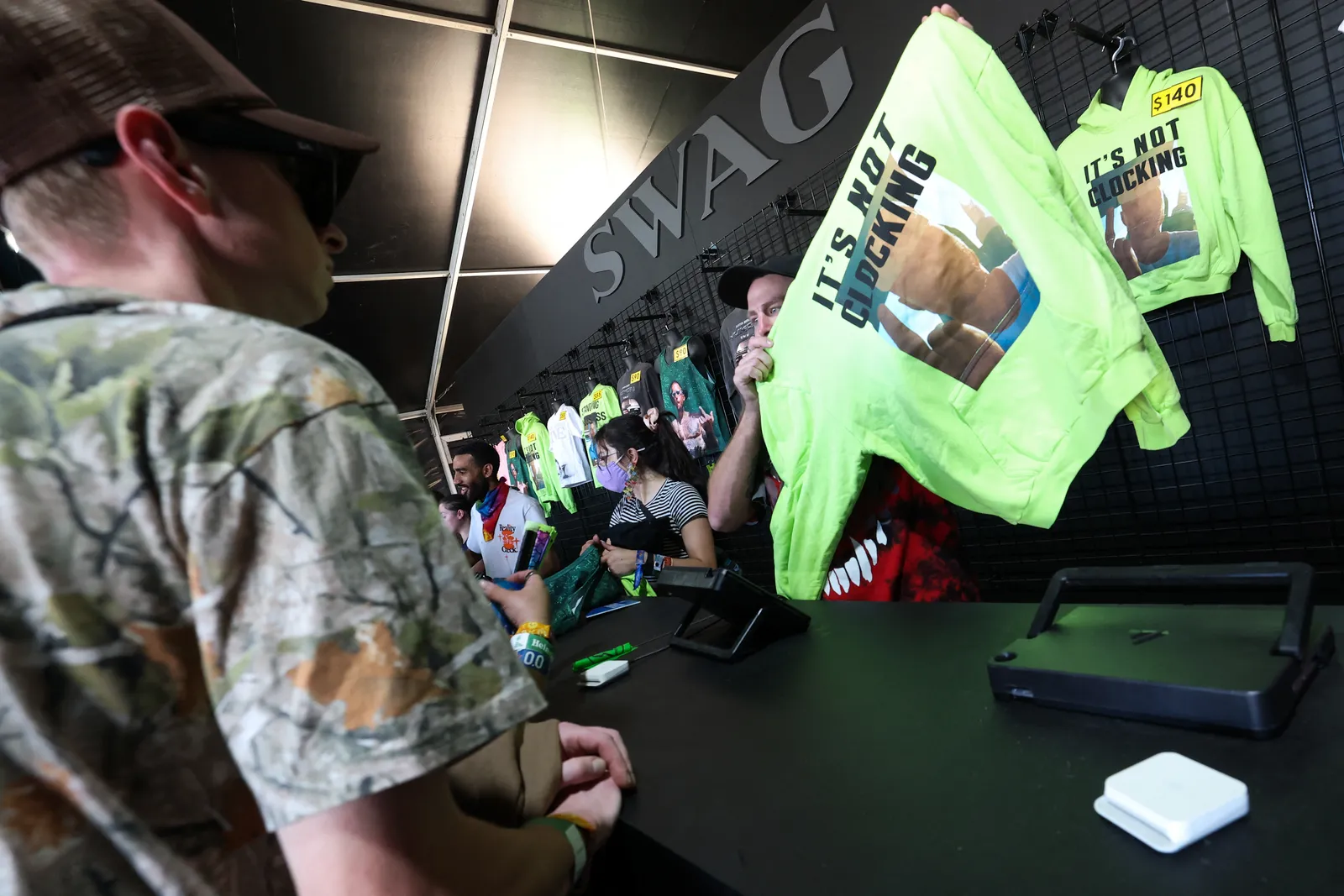
SKYLRK operates with Bieber at the helm of full creative control, alongside creative director Neima Khaila and designer Finn Rush-Taylor. The label’s approach prioritises premium quality and distinct brand identity over the disposable aesthetic that has long defined festival merchandise, a positioning that clearly resonated with buyers willing to treat SKYLRK pieces as genuine wardrobe additions rather than event souvenirs.
According to Launchmetrics, the brand generated $2.3 million USD in Media Impact Value following weekend one, while its social media following grew by 3.09% in the immediate aftermath. Bieber is only the second major artist to independently develop and produce festival merchandise under their own label, meaning there is limited precedent for what comes next. The fashion and music industries are watching closely to see how SKYLRK builds on this momentum now that “Bieberchella” has concluded and pre-orders have closed.
What This Means for Artist-Led Fashion
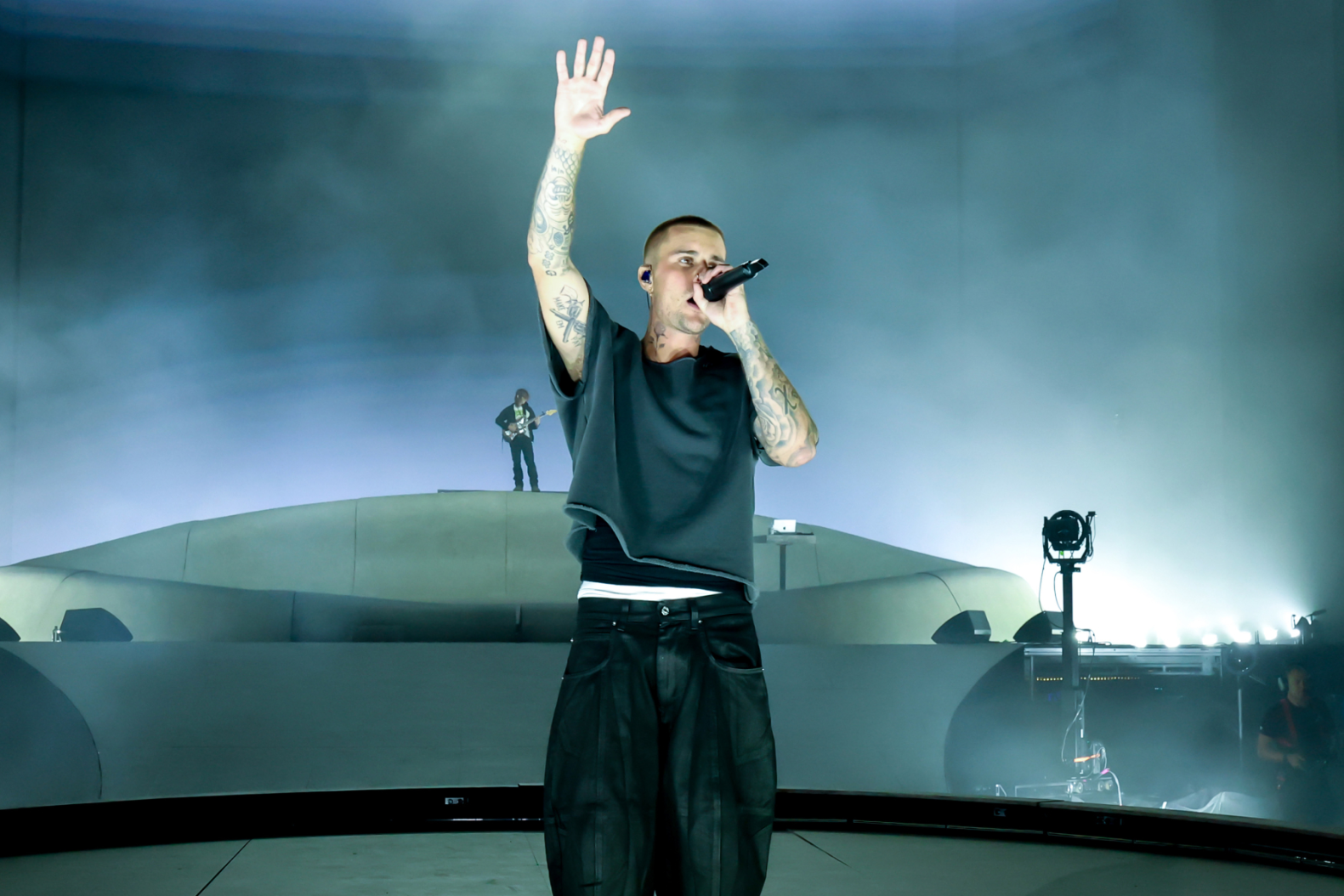
The merchandise record set by SKYLRK carries implications well beyond Bieber’s personal brand. It demonstrates that an artist with sufficient cultural reach and commercial discipline can transform a festival performance into a genuine fashion business moment, one that generates revenue comparable to a major retail launch rather than a standard tour merch cycle. The $1.7 million previous record had stood as a benchmark for what festival merchandise could achieve. SKYLRK did not edge past it; the label obliterated it.
For other artists watching from the sidelines, the lesson is both inspiring and instructive. Control over creative direction, a premium product standard, an experiential retail environment, and a staged online release strategy all contributed to this outcome. No single element explains the $15 million figure, the result came from every piece of the strategy working in concert. Whether any artist can replicate this in future Coachella cycles will depend on reaching the rare convergence of cultural moment, business infrastructure, and fanbase that Bieber managed to marshal across two weekends in the desert.
Featured image: Valerie Macon/Getty Images


