


I love my robot vacuum. It runs while I’m at work, it empties itself, and I usually never think about it. But robots are bad at one specific job: the moment right after your kid drops a bowl of cereal and someone’s arriving in twenty minutes. That’s a job for something you push yourself.
iRobot
After years of creating only robot vacuums, iRobot just built one of those machines. It’s meant to fill the gap when your floors need a quick clean, but the robot’s not scheduled for another hour. Dyson, for its part, has had a similar vacuum on the market since 2024. So, in the Roomba Electro Plus vs Dyson WashG1 debate, which one is the better buy in 2026?
Can iRobot’s first swing at a cordless floor washer beat the machine that basically defined the category?
I made it my mission to find out.
Quick Verdict
Roomba Electro Plus wins if disinfecting is your priority—pets, kids, allergy concerns—and it costs less at $399.99. Dyson WashG1 wins on stain removal and bigger-room coverage, especially if you catch it on sale. Neither replaces your robot vacuum; both are backups for messes it can’t get to in time.
Why iRobot Just Built Its First Non-Robot Floor Cleaner
iRobot has made robots since day one. The Roomba Electro Plus announcement on July 7, 2026, is the company’s admission that some jobs need a human holding the handle. It’s a $399.99 cordless machine you push yourself, and it launched alongside five new Roomba robots—but the Electro Plus is the actual news here—it’s the first non-robot product iRobot has ever sold.
That puts iRobot two years behind Dyson, whose WashG1 launched in May 2024 as Dyson’s first dedicated wet floor cleaner.
Roomba Electro Plus vs Dyson WashG1: How Each One Cleans
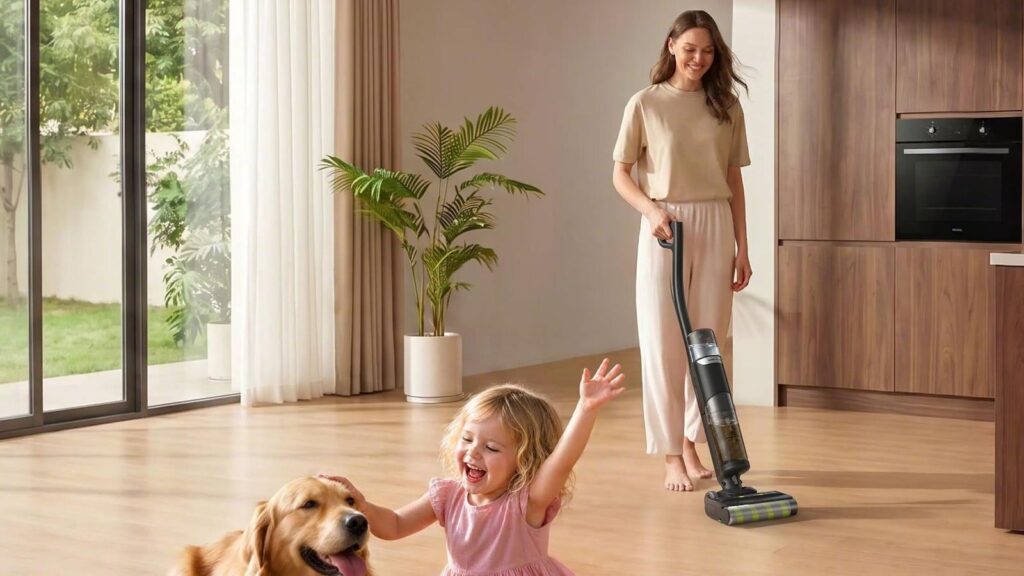
Both machines are cordless and vacuum/wash hard floors in one pass. The way they do that, though, is different.
Roomba Electro Plus Interestingly, the Roomba Electro Plus relies on electrolyzed water technology. It converts plain tap water into a disinfecting solution, then applies it through a self-cleaning roller mop. The Dirt Detect technology adjusts cleaning intensity based on how messy a patch of floor is, and an anti-hair wrap system keeps the roller from clogging. You don’t add any chemicals, and there’s no steam. So it’s one of the safest cleaning options out there.
Dyson WashG1 uses two individually powered, counter-rotating microfiber rollers packed with 64,800 filaments per square centimeter. A pulse-modulated pump feeds water through 26 hydration points across each roller, and a separation system splits wet and dry debris the moment it’s picked up, so dirty water and solid dirt never mix. The clean water tank holds enough to cover roughly 3,100 square feet per fill.
My verdict: Roomba focuses on sanitizing. Dyson absorbs and separates. You choose the method that makes the most sense for you.
Which One Actually Disinfects Your Floors?
This is the biggest difference between them—and the whole reason Roomba Electro Plus exists. iRobot says the electrolyzed water it generates kills 99.99% of bacteria, viruses, fungi, and germs. And there’s no bleach, disinfectant cartridges, or steam doing the work. That’s huge.
So, how does it work? The vacuum creates electrolyzed water by passing an electric current through water containing a trace of salt. This produces hypochlorous acid — the same compound your immune system uses to fight off pathogens. Peer-reviewed research on electrolyzed water as a disinfection technology has found it effective against a broad range of bacteria, enveloped and non-enveloped viruses, and fungi. Of course, its effectiveness depends on concentration, pH, and contact time.
Dyson WashG1 doesn’t make a disinfection claim. It removes spills, dried-on stains, and debris—hygienically, thanks to its separation system—but doesn’t sanitize your floors. If you want your floor to look and feel clean, WashG1 does that. If you want a documented kill rate on germs, only the Electro Plus offers one.
My verdict: As a scientist’s daughter, I’m calling it for Roomba here. Germs on my floor are a deal breaker.
Which Handles Spills and Dried-On Stains Better?
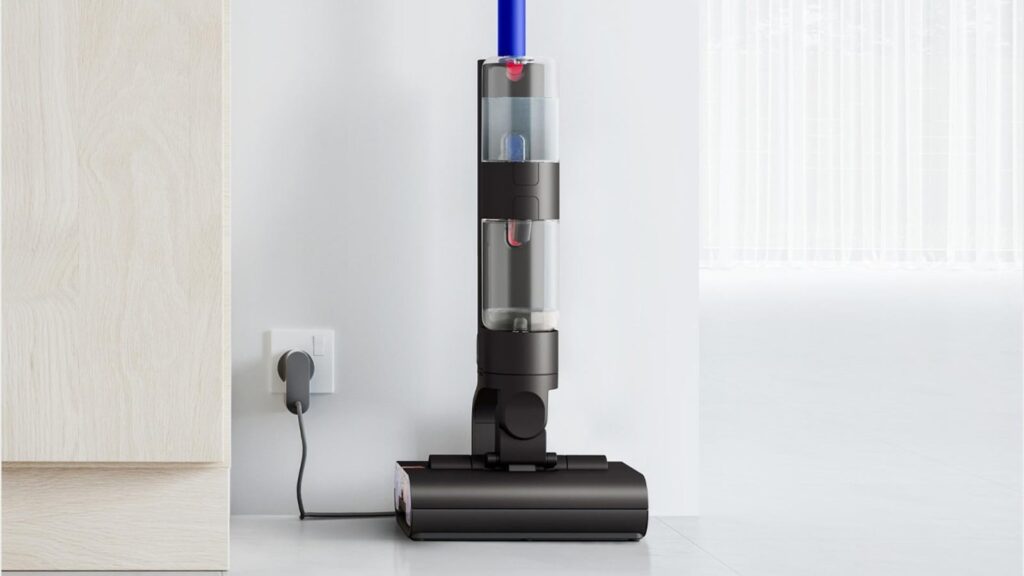
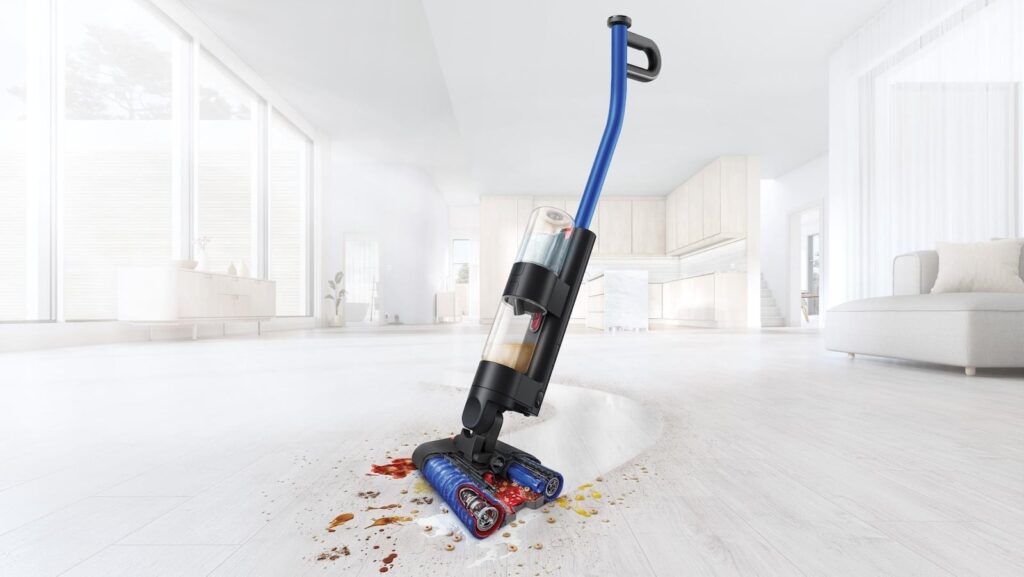
The Dyson WashG1 is a stain removal expert. The two rollers sit at the front and back of the machine, which gives dried-on messes two passes of contact time instead of one. You can dial in low, medium, or high hydration depending on how bad the mess is, plus a dedicated boost mode that floods the rollers for stubborn, crusted-on stains. In my house, this would definitely get a lot of use.
For it’s part, the Roomba Electro Plus leans on Dirt Detect to sense mess level and adjust cleaning intensity automatically, rather than making you pick a setting. It’s less hands-on, but you also lose the manual control WashG1 gives you over exactly how much water hits a bad spot.
My verdict: For a dried-on mess, like last night’s toothpaste spill, WashG1’s manual boost mode gives you more control.
Roomba Electro Plus vs Dyson WashG1: Which Self-Cleaning Dock Does More of theWork?
This is an important one. No one wants to spend their Saturday afternoon cleaning a vacuum. So, when we’re comparing Roomba Electro Plus vs Dyson WashG, which one does more of the maintenance?
For starters, Roomba’s ThermaClean dock washes, sanitizes, and dries the roller after every single use, automatically. You dock it, walk away, and the machine handles its own cleanup and disinfection between sessions. You don’t even have to think about it.
Dyson’s version is a self-cleaning mode you trigger yourself: it saturates both rollers with clean water at max hydration to flush the whole system. The debris tray uses a 500-micron mesh to keep large dry debris separated from dirty water, so emptying it is a no-touch job, and several components are dishwasher safe.
My verdict: The Roomba Electro Plus wins when it comes to cleanup, since it’s closer to fully automatic. Dyson’s system asks a little more of you but it has dishwasher-safe parts.
Roomba Electro Plus vs Dyson WashG1: Price Compared
Roomba Electro Plus is $399.99 MSRP, and it’s available to order on iRobot’s site and Amazon.
Dyson WashG1 is currently on sale for $428 on Amazon; that’s 44% off its regular price, $769.99. It has dipped as low as $399.99 during sales, according to Consumer Reports’ testing. At full price, Roomba undercuts WashG1 by roughly $370.
My verdict: Electro Plus is more affordable by a wide margin. If you can catch WashG1 on sale, that gap closes fast. So check current pricing before you decide based on list price alone.
Do You Need a Robot Vacuum or a Cordless Floor Washer?
Neither of these replaces your robot vacuum, and neither one should. A robot handles the daily grind while you’re not thinking about your floors at all. What Electro Plus and WashG1 both solve is the moment your floor needs attention right now — a spill, muddy paws, guests arriving in twenty minutes — and a robot simply can’t respond fast enough.
Between the two, I’d pick based on what you’re actually cleaning up. If disinfecting matters more than stain removal — pets, toddlers, allergy-prone households — Electro Plus is doing a job WashG1 was never designed to do, and it costs less at full price. If you’re mostly fighting dried-on stains across a bigger floor plan, WashG1’s dual-roller dwell time and 3,100-square-foot tank capacity are built for exactly that.
My verdict: Keep the robot for daily maintenance. Add Electro Plus if germs are the priority, or WashG1 if stains are the priority. Either way, you’re not choosing a replacement for your robot — you’re choosing its backup for the messes it can’t get to in time.
Where Roomba Electro Plus Wins
Electro Plus is the right call if you’ve got a toddler crawling around or anyone in the house who gets sick easily. Disinfection is this machine’s forté, and Dyson’s doesn’t do it at all. It’s also the pick if you’re watching your budget.
And if you’re like me and you forget to run maintenance cycles, the auto clean features here just put everything on autopilot—so the vacuum with get cleaned, no matter what. If your floors get contaminated more than they get stained — kids, pets, shoes coming in from outside — this is your machine.
Where Dyson WashG1 Wins
WashG1 is the better pick if you’ve got a bigger floor plan to cover—like an open-concept kitchen and living area. One tank fill goes further than a smaller unit would. It’s also the right call if your problem is old, dried-on stains rather than daily grime: sauce that’s been sitting since dinner, dirt tracked in from a job site, whatever’s actually stuck to the floor.
You get more manual control over how hard it works a specific spot, which is important when a mess needs more than an automatic sensor thinks it does. And if killing germs isn’t something you’re shopping for, you’re not missing anything by skipping Electro Plus.
My Final Verdict
For most people comparing these two, Roomba Electro Plus is the better buy. It costs almost half as much, it disinfects instead of just cleans, and its ThermaClean dock does more of the maintenance for you.
The exception is a genuinely large open floor plan or a house that fights dried-on stains more than germs—there, WashG1’s bigger tank and manual boost mode earn the higher price. But for the household this article opened with (aka, mine)—kids, pets, people coming over—Electro Plus is the one I’d buy.

