


SPRINGFIELD — Former Democratic U.S. Rep. Glenn Poshard was exercising in the House gym during his first week as a member of Congress in 1989 when he first met another relatively new lawmaker — U.S. Rep. John Lewis of Georgia.
The pair — one a social conservative from Southern Illinois and the other an iconic leader of the civil rights movement who marched with Martin Luther King Jr. — became friends, bonding over their rural upbringings and similar familial influences.
They were later instrumental in helping found The Faith & Politics Institute, a non-profit organization that works to bridge racial, religious and political divisions among elected officials. It’s the group that organizes the annual Civil Rights pilgrimage to Selma, Alabama, where Lewis had been brutally beaten by police while leading the Selma to Montgomery marches for voting rights in 1963.
Lewis died in July 2020, but Poshard channeled his spirit later that year when he and his wife Jo planned and organized marches for peace, unity and nonviolence a little closer to home — the central and southern Illinois counties he represented during his time in Congress.
Poshard’s efforts were highlighted in filmmaker Sandra Pfeifer’s “Thirty-Nine Counties,” a 50-minute documentary being screened across the state.

Southern Illinois University president Glenn Poshard speaks at the eighth annual Penny Severns Memorial Reception at Richland Community College in October 2019.
Poshard, who served 10 years in Congress and was the Democratic nominee for governor in 1998, said in an interview that he’s grown worried about the country’s division and the potential for political violence.
“I’m 76 years old — it’s the first time in my life I’ve been scared for my country and (that) we could lose this democracy, that we could die by suicide,” Poshard said. “That’s why we went out because we don’t want that to happen here. We want the country to know that there’s another voice, a better voice.”
Dozens of people joined Poshard to march outside county courthouses across his former district, which he said gave “people a chance to voice their opinion against the violence that we see taking place in the country.”
“Violence isn’t just acts. It’s also voiced,” Poshard said. “It’s the way we talk to each other, it’s the way we belittle each other or denigrate each other. And it takes on many forms. And this was just a form of civic engagement to say, `we’re better than this, we don’t want to go down this road as Americans.’”
Political violence, according to Oxford Reference, is the use or threat of physical harm by groups involved in domestic political conflicts.
Watch now: Glenn Poshard visits Decatur
Poshard was careful not to “indict any one person,” saying that blame can be laid at “any doorstep that preaches violence as a means of settling differences.”
“Looting and burning and stealing is not acceptable, no matter what you think your cause might be,” Poshard said, referencing the violence that plagued American cities in 2020 amid protests for racial justice.
“But neither is violent speech and advocating for political violence acceptable, no matter how strongly you feel about your position or your politics,” he added. “Hating your neighbor is not the way to go. It’s not consistent with what it takes for a democracy to operate and survive.”
Poshard did not mention former President Donald Trump during his demonstrations. But he said that the Jan. 6 insurrection at the U.S. Capitol and other attempts by Trump and his supporters to overturn the results of the 2020 presidential election amounted to political violence.
And he conceded that “it seemed that one party was starting to endorse political violence” as a means of settling differences, referencing Republicans.
Though Lewis was an inspiration for the marches, Poshard’s comments during them were often peppered with quotes from President Abraham Lincoln, who presided over the country at its most divided. He said more leaders need to show the grace Lincoln did in wake of great national challenge.
“What they heard their president saying was ‘with malice toward none.’ That’s the man that served in counties that I served in Congress,” Poshard said. “I represented Macon, Coles and Shelby counties and those counties where Lincoln served on the old Eighth Circuit and in Congress. And so I felt I had an obligation to share with the people, to remind them again, of his words during a time of division and hatred.”
Poshard, whose district stretches from the state’s southern tip to just north of Decatur, routinely won reelection with nominal opposition. He carried some rural counties with more than 80% of the vote in the 1998 governor’s race against Republican George Ryan.
Illinois moves to prohibit ‘dark money’ in judicial races
Just a couple decades later, Trump would carry those counties by similar margins while local elected officials, including U.S. Rep. Mary Miller, R-Oakland, and state Sen. Darren Bailey, R-Xenia, flouted public health guidelines during the height of the COVID-19 pandemic.
“When did we get to the point in this country where, in the middle of a pandemic, wearing a mask or to take a shot or something like that becomes a political form of speech? I don’t understand that,” Poshard said.
“We have people running for governor of this state who are still calling the virus a hoax and telling people they shouldn’t get vaccinated, they shouldn’t have to wear a mask in the middle of a crowd,” he said. “The health people are trying to tell us ‘this is the way you save your life.’ But the political people are telling us, ‘no, don’t do it.’ I don’t understand that.”
Nor can he understand how the same region that elected him to the Illinois State Senate and later to Congress five times could support people espousing such views.
“It’s very difficult,” he said. “I mean, I don’t know how you square it up because I can’t.”
Poshard said he believes lowering the temperature starts with elected officials being responsible with their rhetoric. He added his voice to the conversation through his marches, which he hopes “just regular people a chance to have a countervailing voice against the talk of violence.”
His hope was that despite the tribal nature of politics in 2021 that his message would not be seen as political.
Though a Democrat, he pointed to his admiration for former President George H.W. Bush and Sen. John McCain. He called former House Minority Leader Bob Michael “one of the greatest people with whom I’ve ever served in politics.”
“I was a more conservative Democrat,” Poshard said. “I worked for years across the aisle with wonderful Republican members and I just didn’t understand this talk of violence just because of political differences.”
He said more principled leaders are needed across all political stripes.
“Anybody that engages in name-calling or hate-mongering, it’s wrong for our democracy and you shouldn’t go down that road,” Poshard said. “I don’t care if you’re a Democrat or a Republican or an Independent. Stop it. Don’t go over that cliff so that there’s no way to turn back.”
The film “Thirty-Nine Counties” will be screened at the IBEW Local 146 Hall, 3390 N. Woodford St. in Decatur at 2 p.m. Sunday and at 5 p.m. on Dec. 12 at Tuscan Hills Winery, 2200 Historic Hills Dr., Effingham.
Get to know Illinois: 15 state symbols
Snack food — Popcorn

Second and third graders from a Joliet elementary school, along with their teacher, completed a class project attempting to make popcorn the official snack food of the State of Illinois. The General Assembly made that designation official in 2003. (Illinois.gov)
Amphibian — Eastern tiger salamander
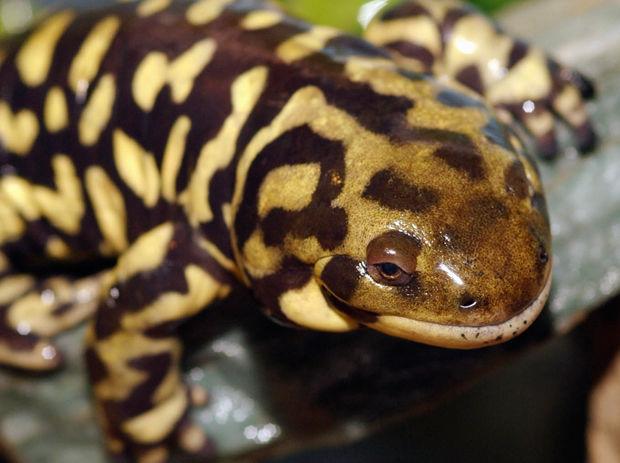
Illinois citizens voted to select the eastern tiger salamander as the state amphibian in 2004. The vote was made official by the General Assembly in 2005. (Illinois.gov)
Reptile — Painted turtle
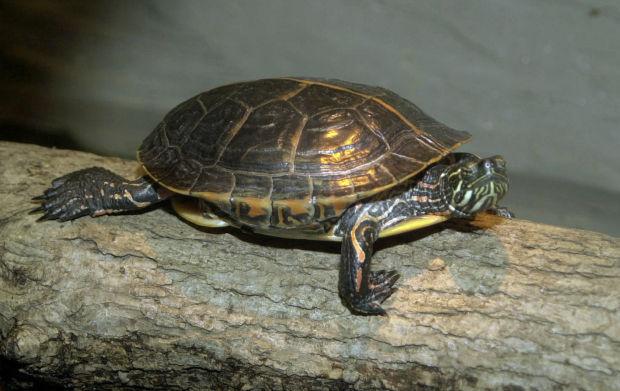
Illinois citizens voted to select the painted turtle as the state reptile in 2004. The vote was made official by the General Assembly in 2005. (Illinois.gov)
Flower — Violet

In 1907, Illinois schoolchildren voted to select the state tree and the state flower. They selected the Native Oak and the Violet. The General Assembly approved a bill to make these selections official in 1908. (Illinois.gov)
Tree — White Oak
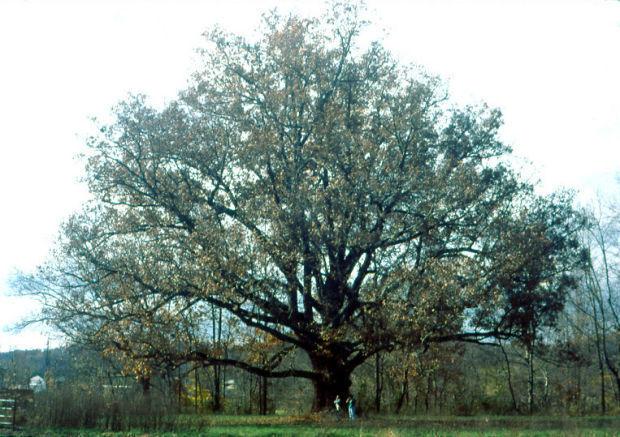
In 1907, Illinois schoolchildren voted to select the state tree and the state flower. They selected the Native Oak. In 1973, a special poll of 900,000 schoolchildren changed the State Tree from the Native Oak to the White Oak. (Illinois.gov)
Bird — Cardinal
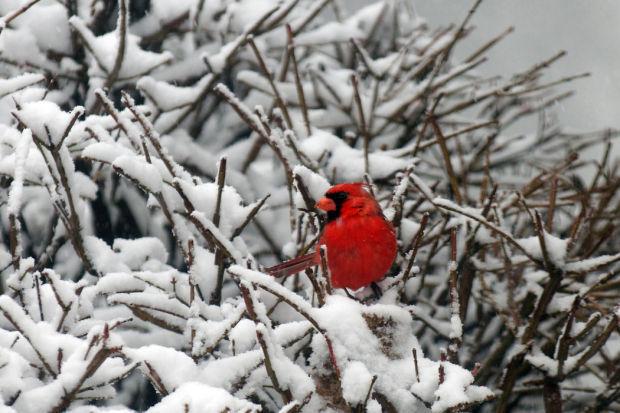
In 1928, Illinois schoolchildren selected the cardinal as the State Bird of Illinois. The General Assembly made that designation official in 1929. (Illinois.gov)
Insect — Monarch butterfly
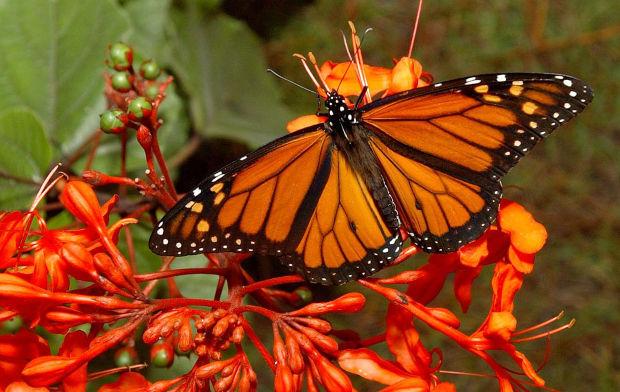
In 1974, Decatur third-graders suggested that the monarch butterfly become the state insect. Schoolchildren lobbied for the monarch butterfly and the General Assembly passed a bill making it official in 1975.
Fish — Bluegill
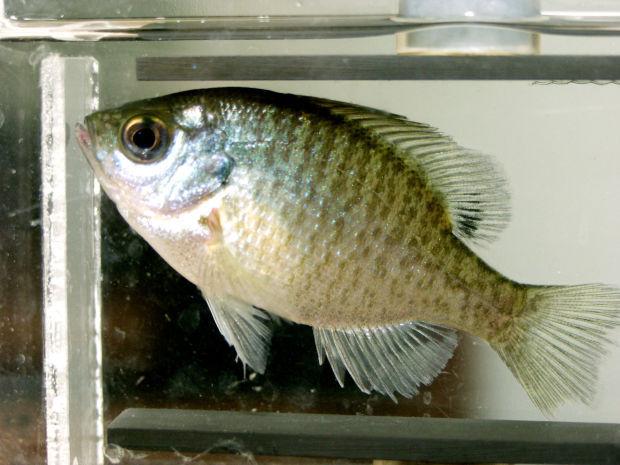
Schoolchildren selected the Bluegill as the state fish in 1986. Although the Bluegill grows to only about 9 inches in length and weighs less than a pound, it has a reputation as one of the best fighting game fish. (Illinois.gov)
Mineral — Fluorite
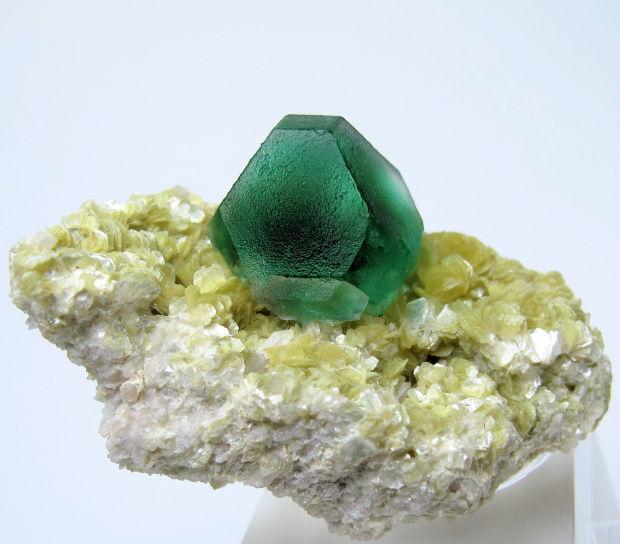
The General Assembly established Fluorite as the state mineral in 1965. Illinois is the largest producer of Fluorite in the United States. Fluorite is used in making steel, enamels, aluminum, glass, and many chemicals. (Illinois.gov)
Animal — White-tailed deer

Illinois schoolchildren voted to select the white-tailed deer as the state animal in 1980. The vote was made official by the General Assembly in 1982. (Illinois.gov)
» Fun fact: Pictured above is Stephanie, a white-tailed deer—an orphaned, formerly injured young fawn, brought back to good health by a kind soul in the Lake Bloomington area. Read Bill Flick’s 2013 story about Stephanie here.
Dance — Square dance
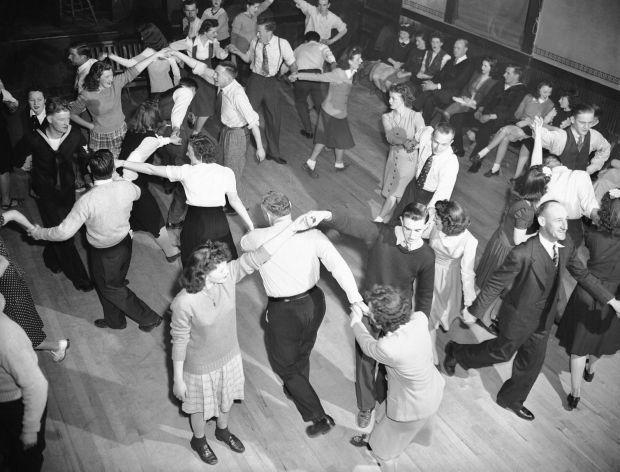
The Square Dance was designated as the official state dance in 1990. (Illinois.gov)
Prairie grass — Big Bluestem
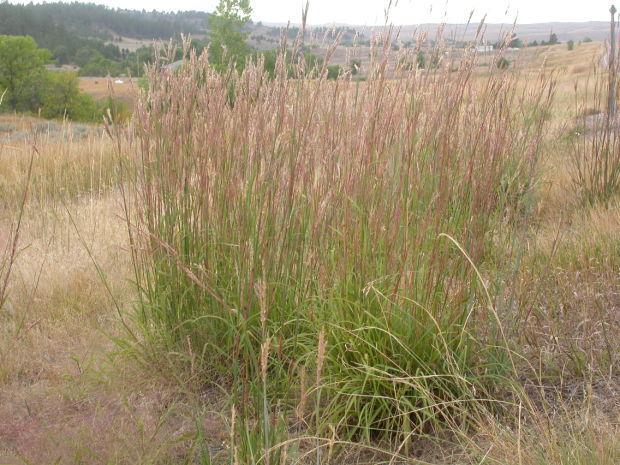
In 1989 the Big Bluestem (Andropogon gerardii) became the state prairie grass. The General Assembly adopted this designation following a poll of students conducted by the Illinois Department of Conservation. (Illinois.gov)
Fruit — Gold Rush Apple
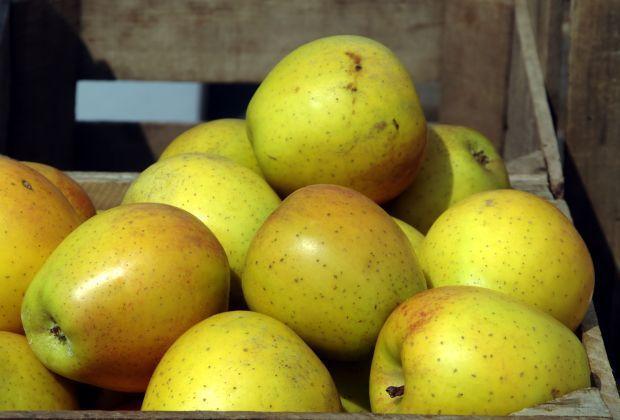
Source: ilga.gov

