


The disc drive on a PlayStation has existed in some form since the original PlayStation launched in 1994. For thirty-two years, walking into a store, picking up a physical copy of a game, and owning something tangible has been part of what playing PlayStation means. On July 1, 2026, Sony confirmed that the era has a firm end date.
Starting January 2028, all new PlayStation games will be sold exclusively in digital formats through the PlayStation Store and participating retailers. The announcement was made via the official PlayStation Blog by Sid Shuman, Senior Director of Content Communications at Sony Interactive Entertainment. Games already on shelves or scheduled to release before that date are unaffected. Everything after the cutoff goes digital only.
PlayStation Physical Discs: What Sony Said and What the Numbers Show
PlayStation announces it will end physical disc production for new games starting in 2028
— Washington Examiner
Sony framed the decision as a response to long-running shifts in consumer behavior rather than a sudden pivot. The company described the move as a natural direction for adapting to consumer trends, noting that the general preference for digital media significantly outpaces physical discs.
The data backs that framing. Digital downloads accounted for 85% of full-game software sales on PS4 and PS5 in the most recent fiscal quarter, according to Sony’s own financial disclosures, with the full fiscal year averaging 78% digital, a figure that has climbed steadily as broadband speeds have improved and console storage has expanded. The PS5 has shipped nearly 94 million units and has 125 million monthly active users, giving Sony an installed base that is already overwhelmingly digital in its habits. The disc drive, on those numbers, has become a feature used by a shrinking minority.
The retail picture reinforces the same conclusion. GameStop has reportedly closed more than 1,300 stores over the past two fiscal years. The physical game retail infrastructure that sustained disc-based gaming for decades is contracting at a pace. Sony’s announcement does not cause that contraction. It reflects it.
What Happens to Existing Games and Hardware

Sony has been clear on one point. The transition has no impact on games that have already been released or are scheduled to be released before January 2028 in disc format. Existing physical libraries will continue to function on compatible hardware. One notable pre-cutoff title is Marvel’s Wolverine, confirmed for release this fall on disc as planned.
What Sony has not addressed is whether future PlayStation hardware will continue to include disc drives at all. The PS5 Digital Edition launched in 2020 as a disc-less SKU at a lower price point and has been the more popular model in several markets. If the PS6 launches without a disc drive across all versions, the question of backward compatibility with physical libraries becomes significantly more complicated. Sony has not commented on this directly.
What This Means for Collectors and the Gaming Community
Important updates:
News on physical discs for new games –
News on PlayStation Store on PS3 and PS Vita –
— PlayStation
The timing of the announcement landed in an already charged atmosphere. Just days before the announcement, Grand Theft Auto 6 fans reacted negatively after learning that the game’s physical edition would include only a download code inside the box rather than an actual game disc, highlighting that a group of gamers still values collecting physical editions. That reaction confirmed what collectors have been saying for years: the transition to digital is not universally welcomed, and the audience that cares most about physical ownership is vocal.
For collectors and preservationists, the January 2028 date sets a firm horizon. After that point, no new PlayStation game will exist as a physical artifact. Questions about long-term game ownership, resale value, and what happens to digital libraries if a storefront closes are not new, but they become considerably more urgent when the physical alternative disappears entirely. Sony’s announcement does not engage with those questions. The conversation will intensify as 2028 approaches.
The Industry Direction on PlayStation Physical Discs
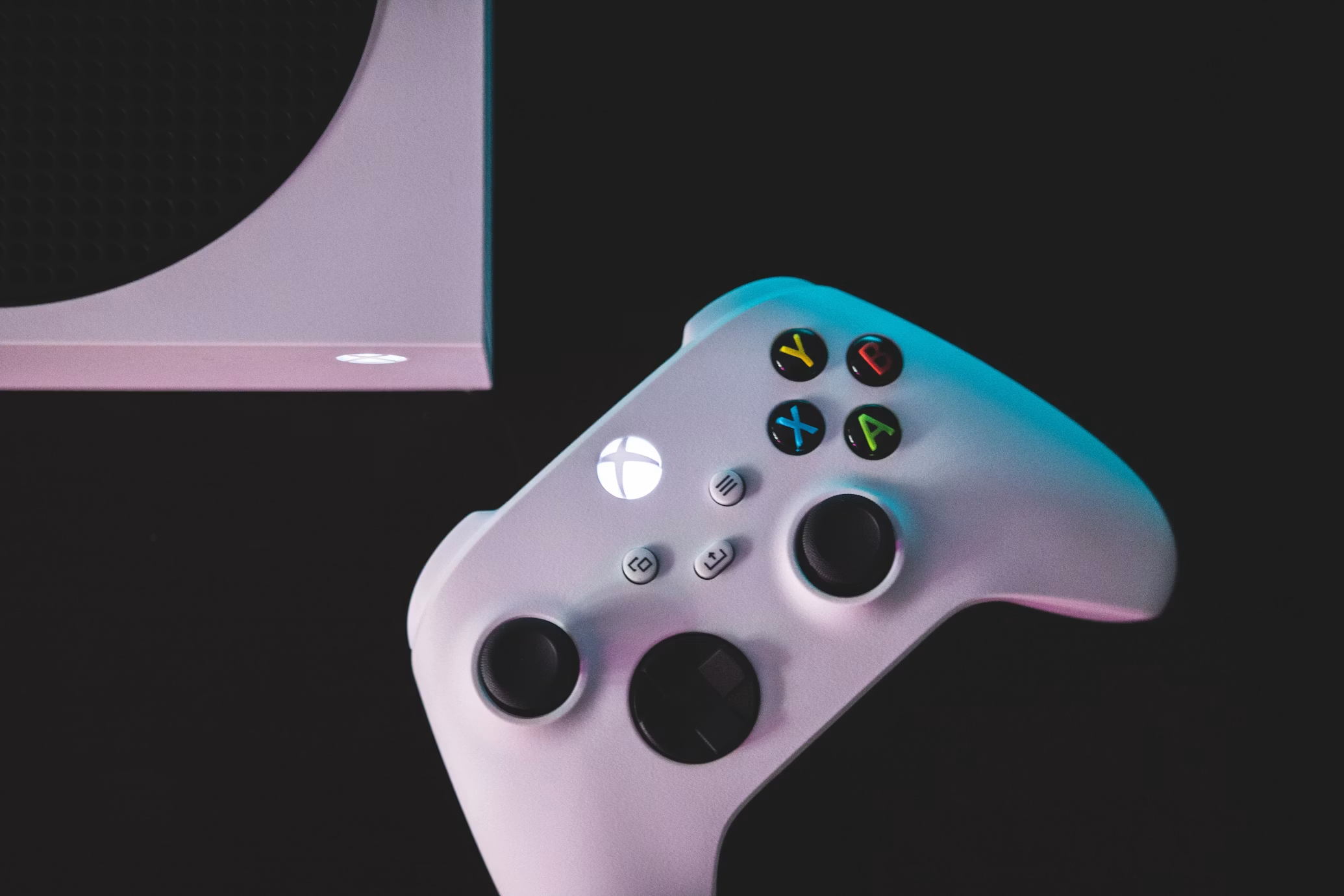
PlayStation is not moving alone. Microsoft launched the Xbox Series S as a fully digital SKU with no disc drive. Microsoft’s Xbox will also increase prices starting August 1, with Series S consoles containing 512GB of storage set to go up by about $100 to approximately $500. Nintendo’s Switch 2 will also get $50 pricier in the US starting September 1. The broader gaming hardware landscape is repricing and restructuring simultaneously.
Music went digital, and streaming killed the CD. Movies followed, and Blu-ray became a niche product for enthusiasts. Gaming has moved more slowly, partly because of the established retail infrastructure and partly because of the collector culture that surrounds physical game releases. That slowness is ending. January 2028 is eighteen months away. Publishers, retailers, and players have until then to adjust. The era of walking into a store and buying a PlayStation game on disc is coming to a close, and Sony has now said so officially.
Featured image: Denise Jans/Unsplash


