


A relic of humanity’s past isn’t so dormant after all. Research out today shows the remains of Ötzi “the Iceman” are teeming with living microorganisms.
Scientists in Italy conducted an extensive survey of Ötzi, a mummy naturally frozen in a mountain glacier for over 5,000 years. They found ample bacteria and fungi inside and on Ötzi’s body, some of which might have survived for millennia and appear to be active even today under tightly maintained storage conditions. The findings not only illustrate the resilience of microbial life but also suggest we need to be more careful about how these sorts of specimens are preserved once discovered.
“Our comprehensive assessment reveals that the Iceman is not a biologically ‘frozen’ time-capsule but rather a complex ecosystem,” the authors wrote in their paper, published Tuesday in the journal Microbiome.
Ötzi the ecosystem
In 1991, Ötzi was discovered in the Ötztal Alps that straddle the current borders between Italy and Austria. He’s the oldest known glacial mummy ever found and is believed to have died at the age of 45 some 5,300 years ago.
Since his discovery, scientists have learned much about Ötzi’s life and the Copper Age society he was a part of. That includes his last meal and the likely possibility that he was killed via an arrow to his back. The tools he was found with were also sourced from different, sometimes very distant regions, suggesting the existence of a lengthy trade route along that part of Europe.
That said, there’s been less attention paid to Ötzi’s microbiome, according to study author Frank Maixner, head of the Institute for Mummy Studies at Eurac Research. Maixner and his team weren’t just interested in identifying the microorganisms preserved inside his body but also those on the surface, which could include microbes inadvertently introduced to Ötzi after he was unearthed.
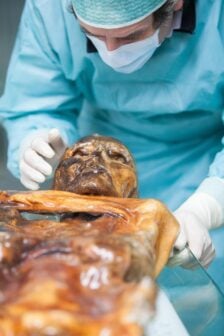
They collected samples from Ötzi and his storage environment at the South Tyrol Museum of Archaeology in Italy for genetic analysis. They also analyzed soil samples from the original site where he was found and samples from Ötzi previously collected in 1992, 2010, and 2019. From all this analysis, they made two major discoveries.
“First, we identified ancient gut bacteria preserved inside Ötzi that are extremely rare in people living modern, industrialized lifestyles today—though they can still be found in people with traditional, non-industrialized ways of life,” Maixner told Gizmodo. “These microbes give us a unique and precious snapshot of what the human gut looked like in the Copper Age, before industrialization reshaped our microbiome.”
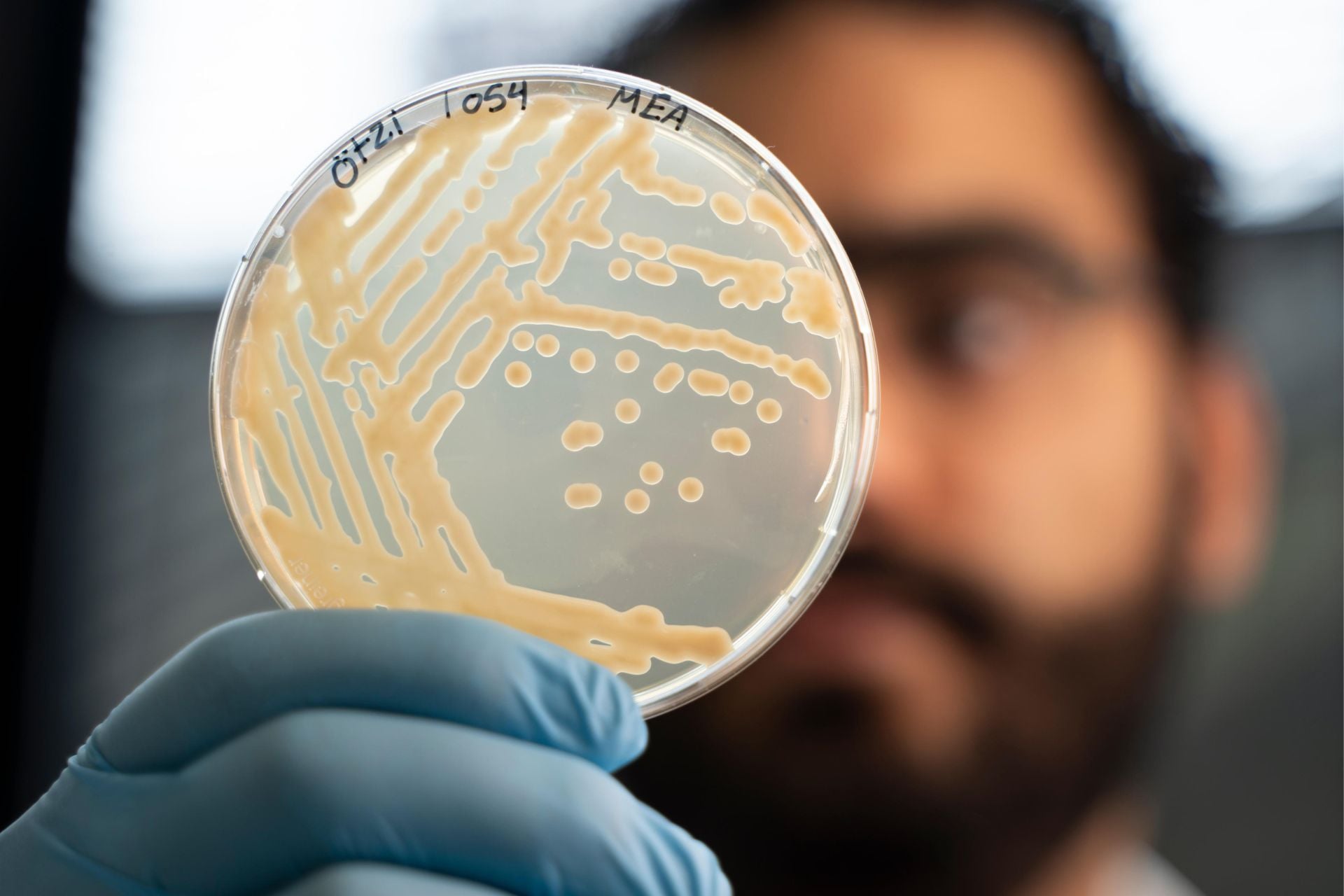
An even bigger surprise came when the team was able to successfully grow four living groups of yeast fungi pulled from Ötzi’s body—one of which came from deep inside his stomach.
“These cold-loving yeasts appear to have survived for thousands of years and are still biologically active today,” Maixner said. It’s possible these yeasts are the same fungi that originally colonized Ötzi or their direct descendants. They additionally found evidence that one particular group of yeast, called Glaciozyma, has been actively, if slowly, growing since at least 2010, despite being in cold storage.
Lessons to be learned from Ötzi
Ötzi’s preserved gut bacteria could certainly tell us more about the microbiomes of our ancestors. And the lessons learned from his surviving yeast, meanwhile, could have real-world applications someday, the researchers say, such as learning how to better ferment foods at extremely low temperatures.
The researchers also found modern-day bacteria on Ötzi’s skin, likely introduced by people following his discovery in 1991. The survival of Ötzi’s ancient and modern microbes, despite efforts to keep him as pristine as possible, highlights the challenges of ancient human preservation. Some of these bacteria and yeast possess genes needed to break down phenol, for instance, a common disinfectant used to prevent microbial growth. And even the spray water used on Ötzi to prevent him from losing too much moisture—which is treated with ultraviolet radiation—seems to have introduced different kinds of bacteria to his skin surface.
Despite these findings, the researchers note that Ötzi isn’t showing any worrying signs of deterioration, but it will be important to keep an eye on his microbiome to ensure that he stays well-preserved for the foreseeable future. To that end, Maixner and his team would like to implement constant microbial monitoring of Ötzi that will hopefully include additional types of tests used in molecular microbiology. And there are still plenty more mysteries to be solved about his hardy passengers.
“Our results provide the baseline for future microbial surveys of the Iceman,” said Maixner. “We know now ‘who is there,’ and next we want to better understand ‘what they are doing’ in this ‘ecosystem’ of the Iceman.”

