


What came first—the chicken or the egg? Or in AI’s case, the investment or the revenue?
Nvidia is guaranteeing up to $105 billion for OpenAI’s planned data center campus in Pike County, Ohio, coming in lower than the roughly $250 billion guarantee it was considering, according to reporting by the Wall Street Journal and CNBC.
The deal moved through at least two known checkpoints before landing at its final size: the Journal reported August 14 that Nvidia had already cut the guarantee to “less than $120 billion,” before the companies settled on $105 billion when the partnership was signed Monday. Nvidia disclosed the final figure—an “aggregate payment obligation” capped at $105 billion—in an SEC filing tied to the announcement. The partnership deal was signed yesterday. The reduction represents a recurring concern among AI investors—the circular cycle of money in the AI ecosystem.
Nvidia and OpenAI did not respond to requests for comment from Fortune.
The Ohio data center is a test of whether the AI boom can generate enough outside revenue to justify the spending being financed from within the AI industry. There is already evidence of market concern from the deal. When reports surfaced in July that Nvidia could guarantee as much as $250 billion, the company’s shares fell about 4.5% intraday from investor reaction to concerns of circular financing.
Reuters also noted anxiety about the sustainability of AI investment remains despite record market performance, with investors increasingly focused on enormous capital expenditures, rising debt and uncertainty over when that spending will generate returns.
Nvidia’s funding is designed to help SB Energy, the SoftBank-backed company developing the campus, secure financing by supporting certain lease and power payments and guaranteeing the value of parts of the completed infrastructure if OpenAI were to default. The structure of the deal substantially reduces Nvidia’s financial exposure to risk.
The rollback comes as Nvidia faces growing questions about a financing model in which the world’s dominant AI-chip maker is increasingly helping finance the infrastructure that ultimately creates the demand for its own chips. The self-funding cycle has been ongoing for years—Nvidia has invested in AI companies and data center operators that purchase its hardware, while also developing financing arrangements intended to make it easier for those customers to acquire more computing capacity.
Last week, Nvidia partnered with six major financial institutions to launch compute-financing platforms targeting more than $500 billion in third-party funding for AI infrastructure—a push that recently got a regulatory tailwind. SEC staff guidance issued in July concluded that certain data-center debt falls outside Dodd-Frank securitization rules requiring sponsors to retain a share of the risk on their own books, making it easier for Nvidia to mobilize outside capital rather than carry the exposure itself.
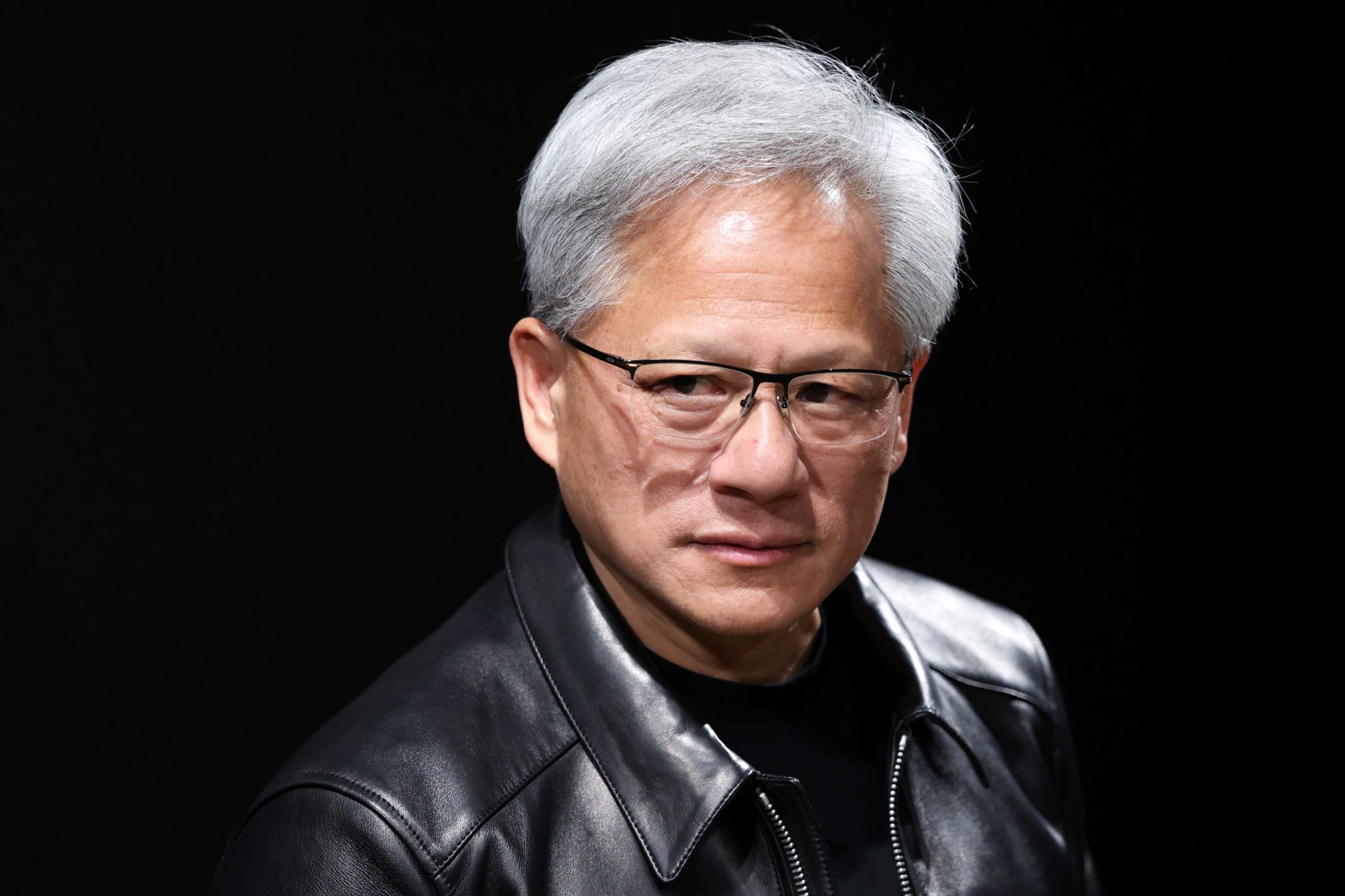
But Nvidia CEO Jensen Huang disputes the circular financing model. Huang said in a press release the company was “securing long-lived infrastructure for Nvidia compute so OpenAI can deploy the most productive AI factories that can be upgraded repeatedly with each new generation delivering more intelligence and better economics.”
In the Ohio project, OpenAI will lease the data center from SB Energy for as long as 20 years, while Nvidia will be the exclusive chip provider for the initial phase. The campus is ultimately expected to reach as much as 8 gigawatts of computing capacity, and Nvidia is also investing $1.5 billion in SB Energy.
“The first 800 megawatts are expected to become available in 2028 largely using existing AEP infrastructure,” OpenAI shared in a note. “Further development will require new power plants connected to the grid, including natural gas generation, as well as new transmission lines and associated infrastructure.”
SB Energy plans to build the campus at a former US Department of Energy uranium-enrichment site, with approximately 9.2 gigawatts of natural-gas generation planned to support the broader development. SoftBank and SB Energy are expected to invest billions more in regional power infrastructure.
Nvidia’s graphics processing units, or GPUs, have become the primary computing workhorse for training and running many of the world’s most advanced AI models. Unlike CPUs, GPUs can perform many numbers of calculations simultaneously, making them well-suited to the matrix operations used by machine-learning systems. Nvidia also built a software ecosystem around its chips, including its CUDA programming platform, making its hardware deeply embedded in the development of AI applications.
Nvidia’s investor materials described the OpenAI partnership as an integrated infrastructure offering encompassing architecture, chips, systems, networking, data centers, software, operations and financing. Nvidia said each gigawatt of infrastructure would require roughly $50 billion to $60 billion in total spending, while OpenAI would need to reinvest future revenue to fund its buildout.
The web of deals extends past OpenAI and Nvidia, with partnerships with Microsoft, Oracle, SoftBank, Coreweave and other companies to secure computing capacity to train and operate its models. Many of these arrangements involve companies simultaneously investing, purchasing computing capacity, and building infrastructure from one another.
“We expect to use this capacity to meet growing demand for advanced AI and maintain our lead as the frontier AI research laboratory in pursuit of our mission,” OpenAI said.

