


You’re tired. Not in a “rough night” way — in a “this has been going on for months (maybe even years) way. You’ve read that tracking your sleep can help you figure out what’s going wrong. So you look into sleep trackers and find that half of them charge you $10–$15 a month just to see your own data. Super frustrating! I hear you, because I’ve been you. And that’s why I decided to research the best sleep tracker without a subscription.
Because sleepmaxxing shouldn’t mean committing to another pay schedule. Nope, this article is for people who want real, actionable sleep data for the price of the device (it’s already expensive) and nothing else. No membership required, no features locked behind a paywall, no feeling like you’re renting access to your own health metrics.
Here’s what I found.
What Improving Sleep Habits With a Tracker Actually Requires
So, your goal here isn’t tracking for tracking’s sake. You want to change something — wake up less groggy, fall asleep faster, stop feeling like garbage despite eight hours in bed. That means you need a tracker that does more than count hours.
Sleep stage breakdown is non-negotiable. Knowing that you slept 7 hours means nothing if you spent most of it in light sleep. REM and deep sleep are where the recovery actually happens — adults typically spend 10–20% of the night in deep sleep and 20–25% in REM. The split tells you whether your habits (late caffeine, alcohol, screen time) are robbing you of the stages that matter.
Heart rate variability (HRV) is the signal that correlates most strongly with recovery quality. Research shows higher HRV overnight is consistently associated with better sleep quality, lower fatigue, and reduced stress — and lower HRV usually means your nervous system is under strain from poor sleep, illness, overtraining, or chronic anxiety. Seeing that number trend up over weeks is one of the clearest signs your new sleep habits are actually working.
Trend data over time is what separates useful tracking from noise. One bad night tells you nothing. Four weeks of consistent data tells you whether that glass of wine at 10pm is tanking your deep sleep every single time. You need at least 7–14 days of data before patterns emerge.
What you don’t need: a monthly fee to access the data your wearable collects. The four options below give you all of the above without a monthly fee for the core data.
The Best Sleep Trackers Without a Subscription in 2026
Best Subscription-Free Sleep Tracker Watch
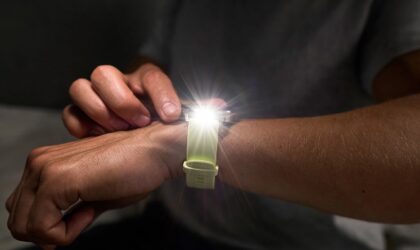
Garmin Venu 4
For improving sleep habits specifically, the Garmin Venu 4 is the strongest subscription-free watch on the market right now. Sleep stages, Nap Detection, Body Battery,and Sleep Coach are all fully free on Garmin Connect — no paywall, no asterisk.
The Body Battery metric is particularly useful for the goal of improving sleep habits, because it shows you the direct relationship between sleep quality and next-day energy. If you wake up with a Body Battery of 45 instead of 80, you can trace it back to the previous night’s HRV and deep sleep percentage. That feedback loop is what actually changes behavior..
Garmin did launch a Connect+ subscription ($6.99/month) in early 2026, which adds AI-generated coaching prompts built on your sleep and training data. Worth knowing about — but it’s genuinely optional. Every core metric that existed before Connect+ launched remains free. You’re not losing anything by not subscribing.
My verdict: Best overall subscription-free sleep tracker. The Body Battery to sleep quality connection alone is worth the price of admission.
Fitbit Sleep Tracking No Subscription

Google Fitbit Air
The Fitbit Air is Google’s answer to the “I just want to track my sleep without paying forever” crowd. At $99.99, it’s the most affordable option here, and the core tracking is genuinely free: sleep stages, HRV, SpO2, and Sleep Score are all included in the base experience with no Google Health Premium subscription required.
What Premium ($9.99/month, with a 3-month trial included) adds is AI coaching — personalized sleep guidance powered by Gemini, adaptive fitness plans, and cycle insights. That’s useful if you want coaching on top of data. But if your goal is just to see your sleep stages, HRV, and score each morning without a subscription, the base plan covers you completely.
Two things worth knowing before you buy. First, Google transitioned the Fitbit app to Google Health in May 2026, and several features were removed entirely — Sleep Profile, Estimated Oxygen Variation, and Snore Detection for older Sense/Versa 3 devices are gone. If you’re upgrading from an older Fitbit for those specific features, they won’t be in the new experience, regardless of what you pay.
Second: the Fitbit Air has no screen. It’s designed to disappear — a slim band that moves from wrist to workout to sleep without drawing attention. For people who find a watch face disruptive at night, that’s a feature. For people who want to glance at their stats in the morning without pulling out their phone, it’s a limitation.
My verdict: Best value subscription-free sleep tracker without a screen. The Google Health transition removed some useful features, but the core data remains free and the hardware price is hard to argue with.
Best Non-Wearable Sleep Tracker
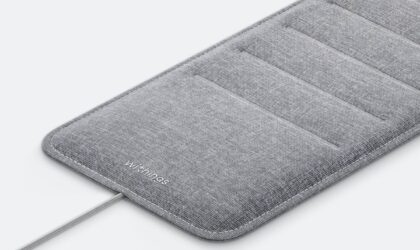
Withings Sleep Analyzer
If wearing a tracker to bed is the thing standing between you and actually tracking your sleep, the Withings Sleep Analyzer solves that problem. It’s a thin mat that slides under your mattress — you don’t wear anything, you don’t charge anything nightly, you just sleep. The device detects sleep cycles, heart rate, breathing disturbances, and snoring automatically.
I love that the sleep stage data and heart rate tracking are free via the Health Mate app on iOS and Android. That covers the fundamentals: light, deep, and REM staging, plus breathing disturbance detection that can flag potential sleep apnea patterns worth discussing with a doctor.
Here’s the honest caveat: the features that turn that data into actionable habit improvement — the Vitalité Indicator (a composite wellness score built on your sleep data) and the Health Improvement Score — require Withings+ at $9.95/month. If you want raw sleep stage graphs and breathing data, the free tier covers you. If you want the synthesized “here’s what to actually do differently” layer, that’s behind a paywall.
My verdict: Best subscription-free sleep tracker for non-wearable use. Most actionable insights sit behind Withings+, but the raw data is still worth having if the subscription model is a hard no.
Best Non-Wearable Sleep Tracker
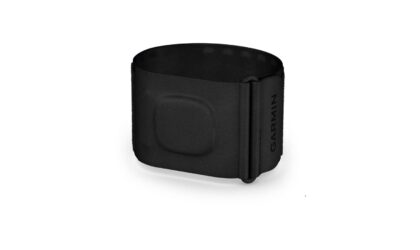
Garmin Index Sleep Monitor
The Garmin Index Sleep Monitor fills a gap that none of the other options here cover: dedicated, wearable sleep tracking without a watch strapped to your wrist all night. It’s a slim fabric armband — machine washable — that you put on at bedtime and take off in the morning. No screen or smartwatch features. But what it tracks is serious: sleep stages, HRV status, SpO2, respiration, skin temperature, and movement.
My verdict: Best dedicated sleep band. The sweet spot between the full-time commitment of a smartwatch and the total passivity of an under-mattress sensor.
Best Built-In Option: Apple Watch 11

Apple Watch Series 11
If you’re already in the Apple ecosystem, don’t forget about the most frictionless option. The Apple Watch 11 has a built-in Sleep app that delivers sleep stage analysis, respiratory rate monitoring, and sleep duration tracking with no subscription, no third-party app, and nothing to configure beyond enabling sleep focus mode.
Apple added sleep stage detection (REM, Core, Deep) with watchOS 9, and it has continued improving since. The Health app on iPhone stores your trend data over time, and the combination of sleep staging, resting heart rate, and HRV (tracked overnight) gives you everything you need to spot patterns.
The limitation is the Apple Watch battery. Most models need daily charging, which means you’re managing a charging window — ideally charging while you get ready in the morning so it’s ready for sleep by night. If that routine breaks down, so does your tracking streak.
My verdict: Unbeatable value if you’re an Apple user. If you don’t, buying one just for sleep tracking is a lot of hardware for the use case.
Your Roadmap to Improving Sleep Habits: What to Do Beyond the Tracker
I want to be clear here, the tracker is the instrument, not the intervention. Having data doesn’t change your sleep — changing behavior based on the data does.
My advice? Start with your HRV baseline. Spend the first two weeks wearing the tracker without trying to optimize anything. Just collect data. You need a personal baseline before “low HRV” means anything — the number that matters is what’s low for you, not a generic reference range.
Then add one variable at a time. If you want to test whether alcohol affects your sleep quality, track two weeks without it and compare your deep sleep percentage and morning HRV. Don’t change three things at once — you’ll have data and no ability to attribute the change.
Beyond the tracker: room temperature has a meaningful effect on sleep quality, with most research pointing to 65–68°F as the sweet spot — cool enough to support the natural drop in core body temperature that happens during sleep.
Morning light exposure, too, helps anchor your circadian rhythm: getting natural light within the first hour of waking signals your body clock when the day starts, which makes the end of the day easier.
And on caffeine: a 400mg dose taken as much as 6 hours before bed has been shown to reduce total sleep time by more than an hour — experts recommend cutting off by early afternoon, but slow metabolizers may need to stop even earlier.
Your First Milestone: One Metric, One Week, No Monthly Fee
In week one, I suggest wearing the tracker and checking your deep sleep percentage. A healthy range is roughly 13–23% of total sleep time. If you’re consistently below 10%, that’s the signal to investigate. The culprits could be late alcohol, inconsistent bedtimes, and stress. If you’re hitting the target range consistently, your sleep architecture is working. Next, focus on the HRV trend instead.
One metric per week. That’s the start.

