


For many men, shaving their head is a confidence boost. Whether you’ve decided to embrace a receding hairline, simplify your grooming routine, or simply prefer the clean look, going bald can feel surprisingly liberating. But once the hair is gone, your scalp becomes the center of attention, especially during the summer months.
That’s why learning how to care for a bald head is so important. Without hair acting as a natural barrier, your scalp is exposed daily to the sun, sweat, dirt, and environmental irritants. The good news? Keeping your dome smooth, healthy, and protected doesn’t require an elaborate routine. A few smart habits can help prevent irritation, flakes, razor bumps, and sun damage while keeping your bald look sharp all season long.
Check out how to care for your bald head even in the heat of summer…
#1. Start With a Gentle Cleansing Routine
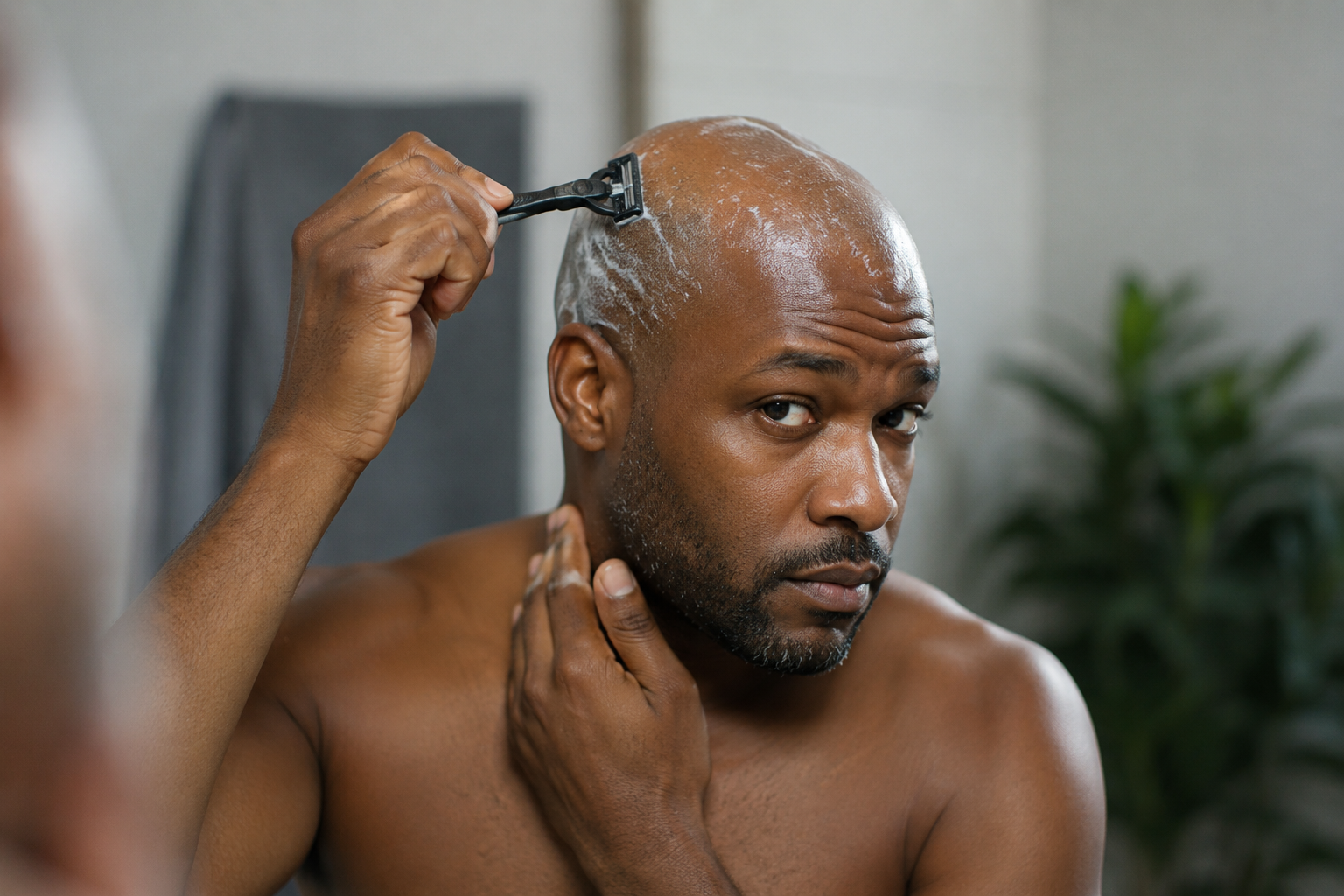
One of the biggest mistakes newly bald men make is treating their scalp as though it doesn’t need special attention. In reality, your scalp is skin—just like your face—and it deserves the same level of care.
Many traditional shampoos are formulated to remove oil and buildup from hair, which can be too harsh on a freshly shaved scalp. Instead, opt for a gentle cleanser or a mild shampoo designed for daily use. Ingredients such as glycerin and ceramides help maintain moisture while preventing dryness and irritation.
If your scalp feels tight after washing, consider applying a small amount of conditioner. It may seem unusual when you no longer have hair, but conditioner can help soothe freshly shaved skin and restore hydration.
#2. Prevent Razor Bumps and Irritation
Nothing ruins a clean bald look faster than red bumps and irritation. Folliculitis, which appears as small, inflamed bumps around hair follicles, is one of the most common scalp issues after shaving.
The solution often comes down to technique. Always shave in the direction of hair growth rather than against it. While shaving against the grain may provide a closer finish, it also increases the risk of irritation and ingrown hairs.
Using a sharp blade is equally important. Dull razors require more pressure, which can aggravate the skin. Many bald men also prefer electric head shavers because they offer a close shave while reducing the likelihood of razor bumps.
If you’re researching how to care for a bald head, improving your shaving technique should be one of your priorities.
#3. Watch Out for Ingrown Hairs
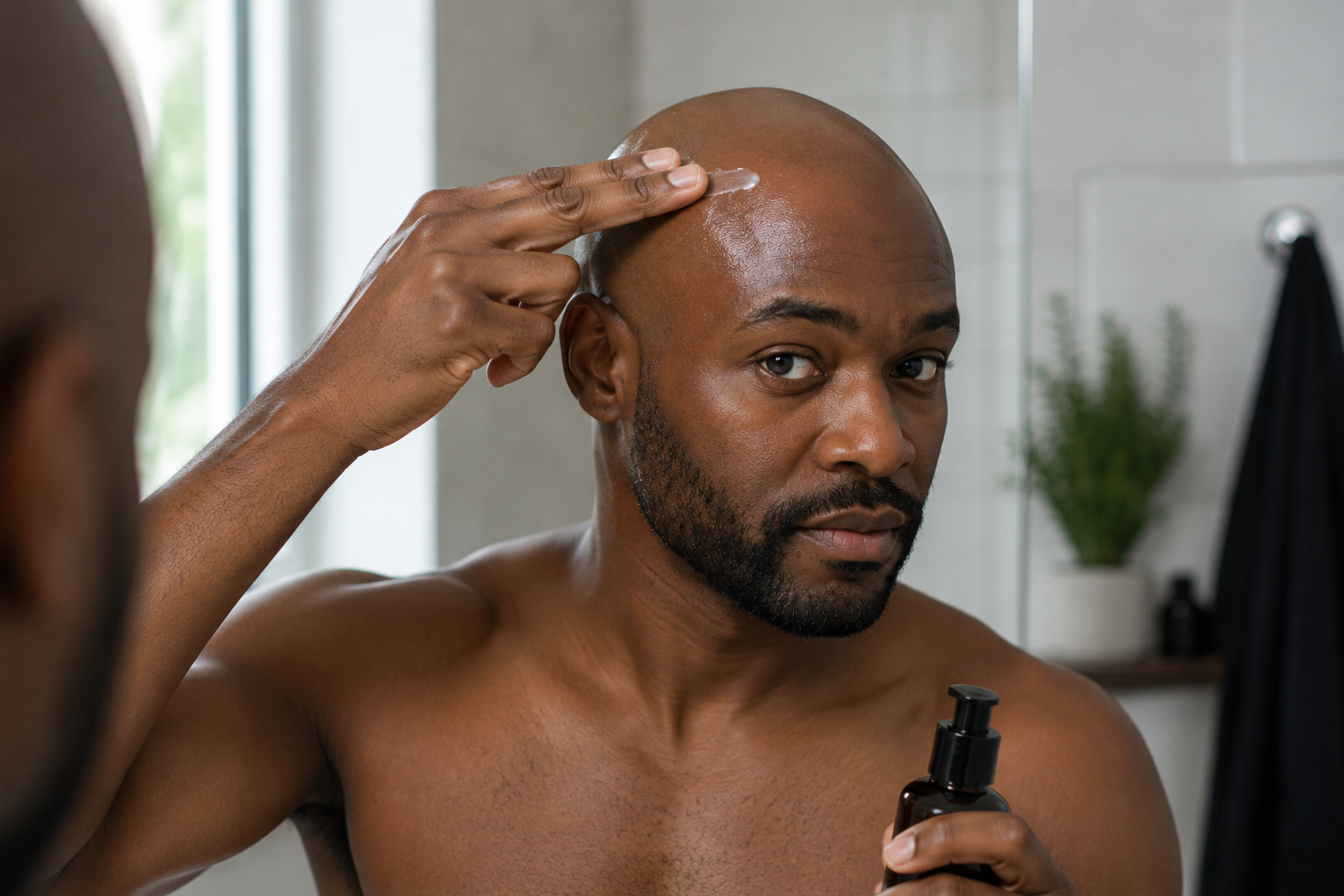
Ingrown hairs occur when shaved hairs curl back into the skin instead of growing outward. This can lead to painful, swollen bumps that are difficult to ignore.
To minimize the risk, never shave dry. Warm water helps soften the hair and prepares the scalp for a smoother shave. Using a quality shaving gel or cream also creates a protective barrier between the blade and your skin.
After shaving, rinse with cool water and gently pat your scalp dry. Avoid rubbing it with a towel, as this can cause additional irritation. For men who frequently struggle with ingrown hairs, switching to an electric razor may be the simplest solution.
#4. Keep Your Scalp Hydrated
Many people assume oily skin is the only concern for a bald scalp, but dryness can be just as problematic. A dehydrated scalp can become flaky, itchy, and uncomfortable, especially during hot summer weather.
Applying a lightweight moisturizer or scalp serum after showering helps maintain the skin’s moisture balance. Look for products containing hydrating ingredients such as glycerin, hyaluronic acid, or aloe vera.
Hydration is an often-overlooked aspect of caring for a bald head, yet it can make a noticeable difference in both comfort and appearance. A well-moisturized scalp tends to look healthier, smoother, and more polished.
#5. Deal With Flakes Before They Become a Problem
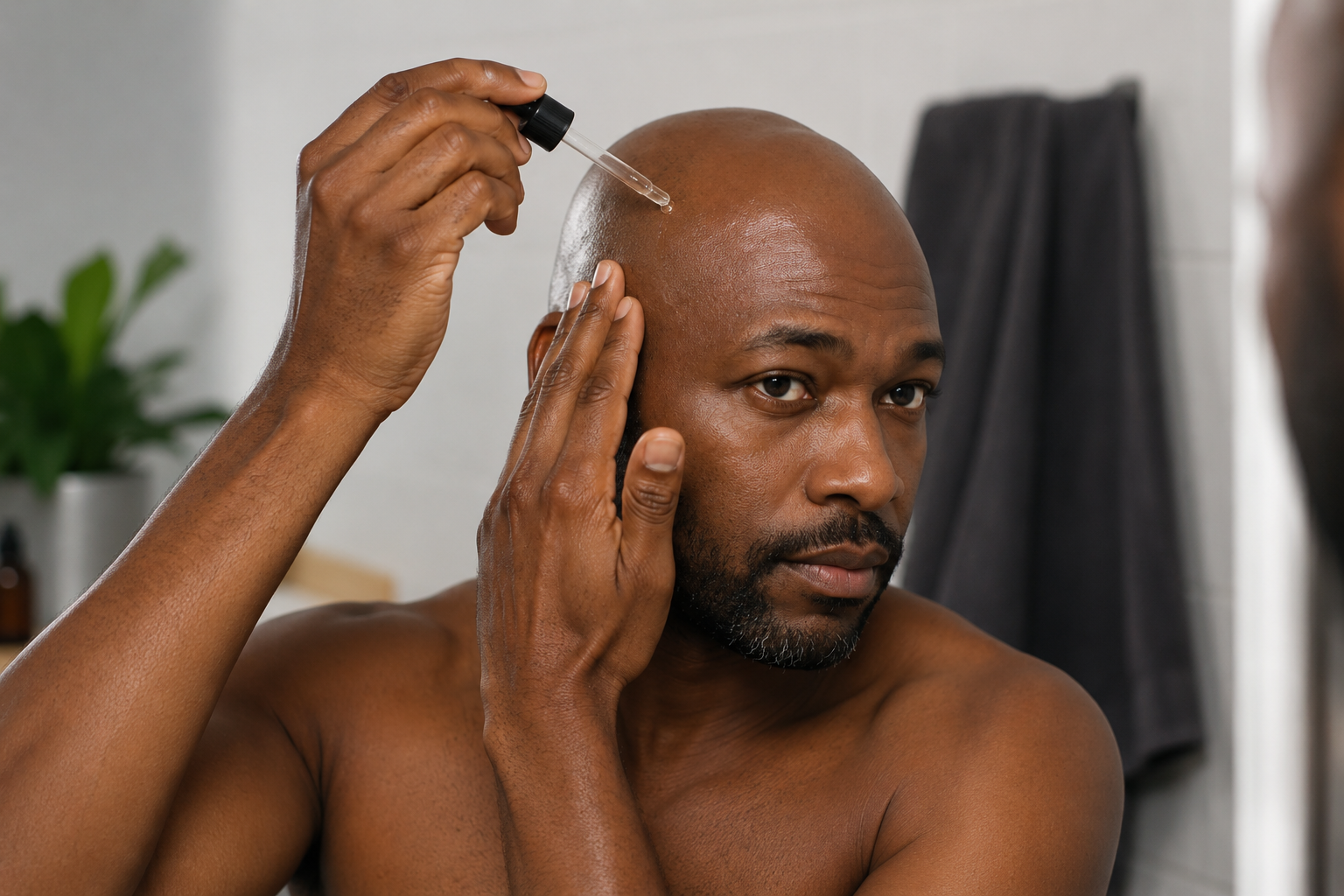
If you notice white flakes on your scalp, don’t assume they’re simply caused by dry skin. Dandruff can result from a combination of excess oil, inflammation, and an imbalance in the scalp’s natural microbiome.
Start by using a gentle cleanser and maintaining a consistent moisturizing routine. If flakes persist, consider incorporating an anti-dandruff shampoo containing ingredients such as zinc pyrithione or ketoconazole.
Occasional exfoliation can also help remove dead skin cells and product buildup. A mild scalp scrub used a few times each month is usually enough to keep flakes under control without causing irritation.
#6. Never Skip Sunscreen
Perhaps the most important lesson in how to care for a bald head is understanding the importance of sun protection. Without hair covering your scalp, ultraviolet rays have direct access to one of the most vulnerable areas of your skin. This increases the risk of painful sunburn, premature aging, and even skin cancer.
Apply a broad-spectrum sunscreen with at least SPF 30 every day, even when it’s cloudy. If you’ll be outdoors for extended periods, reapply every two hours. Don’t forget your ears, which are another commonly overlooked area.
For additional protection, wear a hat whenever possible. A quality baseball cap, bucket hat, or wide-brimmed hat provides an extra layer of defense during long days outdoors.
#7. Make Scalp Checks Part of Your Routine
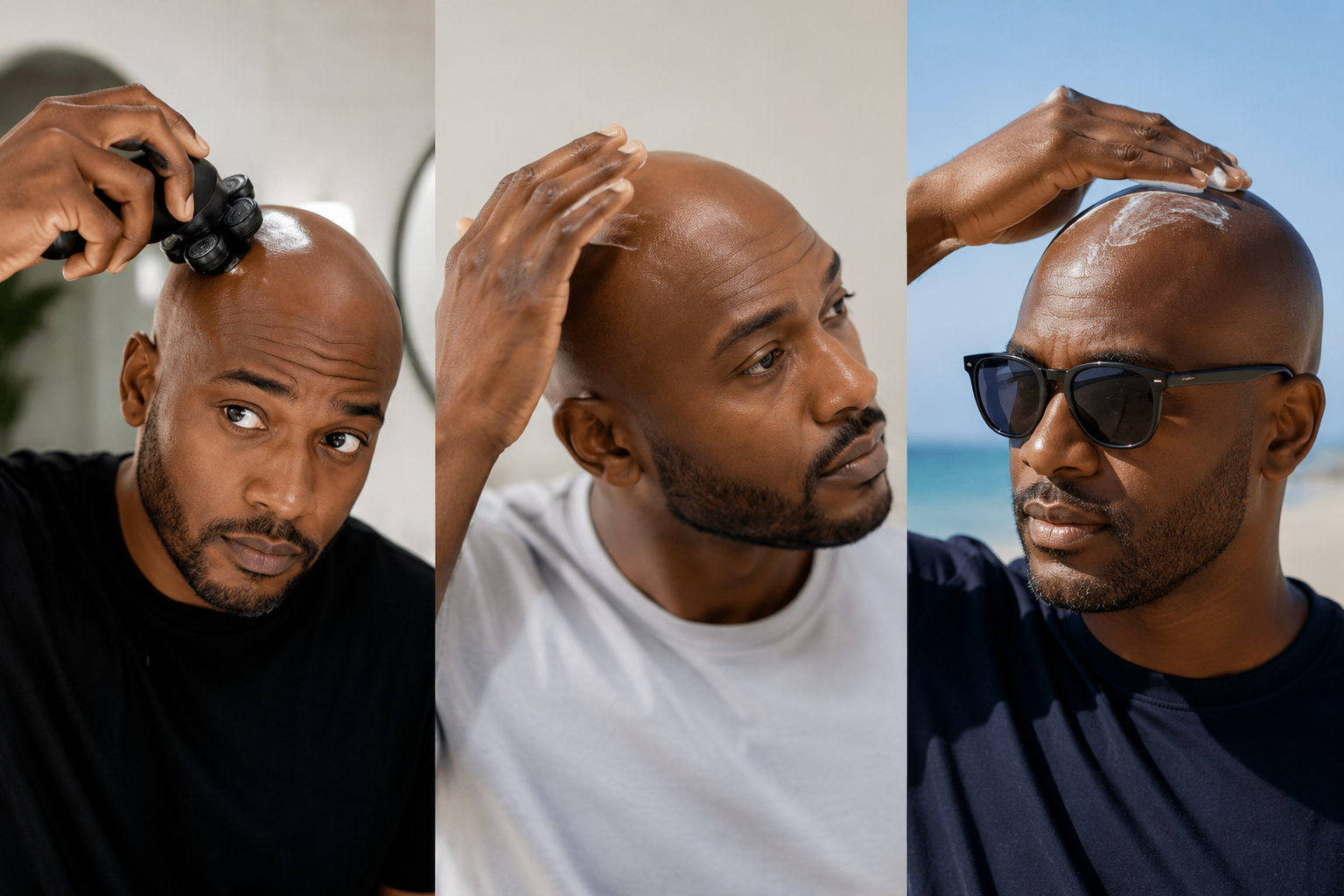
Once you shave your head, it becomes much easier to spot changes in your skin. Take advantage of that visibility by performing regular scalp checks.
Look for new moles, sores that won’t heal, unusual discoloration, or persistent scaly patches. If something seems unusual, schedule an appointment with a dermatologist. Early detection can make a significant difference in treating skin conditions.
Look Sharp All Summer Long
Learning how to care for a bald head doesn’t have to be complicated. A gentle cleansing routine, smart shaving habits, daily moisturizing, and consistent sun protection form the foundation of a healthy scalp. By giving your scalp the same attention you give the skin on your face, you can keep your bald head looking smooth, comfortable, and protected all summer long.
Featured image: Style Rave Studio/AI-generated Visual

