



This might be a hot take, but I’m not a fan of tretinoin. There, I said it. I had a bad experience with it trying to clear up my acne-prone skin and it hasn’t been the same since. It’s been a while since I stopped using it, but my skin barrier never really recovered and the journey to figure out how to heal it has been long. While I’ve been fortunate enough to have access to the best aestheticians Hollywood has to offer, I’m especially thankful to have worked with celebrity aesthetician Renée Rouleau. Rouleau has been a guiding light for me and my damaged skin. She’s extremely knowledgeable, trustworthy, and her list of celebrity clientele speaks for itself (she treats everyone from Sabrina Carpenter to Demi Lovato). She’s also spent over 35 years as an aesthetician so it’s safe to say she’s seen it all.
I came to her with an S.O.S. message about my now extremely reactive, inflamed, and compromised skin. I asked her for advice on how to fix it and decided to share because I knew I wasn’t the only one struggling with tretinoin damage. In fact, friends of mine who know I’m a beauty editor now come to me more often than not asking if I have any experience with it.
Rouleau, true to her educator ways, was kind enough to help us all out. Not only that, she gave me a whole routine from her suite of incredible products that honestly changed my life. It also happens to be National Aesthetician Day so it’s the perfect time to celebrate her knowledge and put it to good use. For everything she told me, keep scrolling!
Why Tretinoin Isn’t Always Great for Acne
According to Rouleau, it’s sometimes easy to make the mistake of going overboard on tretinoin. Like any vitamin A derivative, it works by speeding up cellular turnover so you would assume that it’s good to use when dealing with acne. However, Rouleau says that this isn’t always the case. “If you’re someone who’s dealing with acne, your skin is very biologically active,” she explains. “The analogy I like to use is acne-prone skin is going 100 miles per hour and we’re trying to get it to go 50 miles per hour.” Basically, in Layman’s terms, if you’re dealing with acne, your skin is already turning over really fast and an increase in the shedding of dead skin cells means your pores can clog easier. Adding a retinoid to the mix may just increase the problem.
Tretinoin is more helpful for things like skin aging and sun spots. For lower-level breakouts and congestion, a gentler retinoid can definitely help more. Rouleau says that it can clear smaller clogged pores, blackheads, and overall congestion, but for irritated, red, and inflamed breakouts, not so much.
I found that overusing tretinoin on my type of acne was the issue. When I used it, I had a dermatologist who prescribed it to me every night (yikes). It never actually cleared my skin—I would still break out while I was using it, but was afraid that if I stopped, it would get worse. If only Rouleau had been my aesthetician during this time. Sigh. Eventually, I did learn my lesson, but it left some damage in its wake. At that point, my moisture-barrier was totally shot. Even though I stopped using tretinoin a while ago, I’m still in the recovery process. My next question for Rouleau was how to go about fixing the damage.
How to Correct Tretinoin Damage
For starters, if you’re dealing with red and inflamed breakouts, I hate to break it to you, but it might be a good idea to stop using tretinoin. “Always listen to your skin,” Rouleau shares. If you’re still breaking out despite using a retinoid, it can’t hurt to try subtracting it from the equation for a while to help calm your breakouts. Rouleau also has a super detailed blog post about what to do if your skin is dry, flaky, and barrier-damaged due to aggressive topical treatments. She even has a handy quiz on her website that helps you to pinpoint your exact type of skin and the ingredients that will work best for you.
Rouleau also says it’s important to focus on calming, repairing, and soothing ingredients that are right for your specific skin type. As an example, my skin type on the Reneé Rouleau scale is skin type four which is really sensitive, oily (or combination), and prone to some breakouts. From there, Rouleau helped me to build a barrier-repairing routine that would soothe, calm, and mend without causing new breakouts. The key to this is selecting the right moisturizer. Rouleau’s Skin Recovery Lotion ($45) is a great option for those who are acne-prone because it’s designed to improve barrier function for breakout-prone skin without using heavy oils or other pore-clogging ingredients.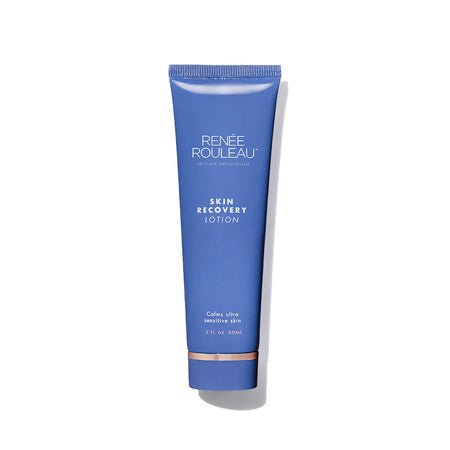
Renee Rouleau
Skin Recovery Lotion
Renee Rouleau
Moisture Protecting Cleanser

