


It’s 8 a.m. My son has the flu and has just thrown up on his dad as he heads out the door for work. I’m two weeks behind on a deadline, chasing invoices that need to be paid before the year wraps, and mentally sorting through an impossible list. I need to send new pitches, finally face the project I’ve been procrastinating on, follow up on unpaid work, pick up groceries and medication, prepare lines for my next TV segment… or completely disconnect, crawl back into bed, and cuddle my sick child while binge-watching a series.
Mornings like this can feel isolating, especially when I scroll through Instagram and see “rock-star” moms launching businesses, collecting accolades, and landing on lists like Forbes 40 Under 40. That feeling began to shift when I started connecting with other mothers more intentionally. I found a community of women with similar ambitions who, like me, are trying to define what balance really means while building businesses and raising families. Those conversations became a community and reminded me that I’m part of a growing wave of women redefining success, structure, and self-expression through entrepreneurship. I spoke with eight women who are building companies and raising families on their own terms—not perfectly but powerfully.
What I discovered is a generational shift: Modern motherhood looks and feels different. The freedom to define motherhood on our own terms has emerged not just from desire but also from necessity. The once-clear separation between work and family has blurred, perhaps accelerated by COVID and the rise of working from home, but the change is undeniable. We are entering a new ethos of integration, one that allows for greater vulnerability in the workplace and more honesty about the flexibility required to even attempt to have it all.
Mandela Cocores, founder of Welcome Home, shares that flexibility has been the most meaningful change: “Having a flexible schedule means I can actually attend my kids’ school events without feeling like I need to apologize to a boss for missing a couple of hours of work.” Ingrid Best of IBest Wine echoes this shift, noting how it has shaped her leadership. “Motherhood has deeply influenced how I lead. It’s made me more empathetic and more human-centered. I approach work with the understanding that we’re all people first—each navigating our own experiences,” she says. These women are visionaries in their own right, and what follows are key insights into how they’re making it work.
The Legacy Builder
Denise Woodard, Founder and CEO of Partake Foods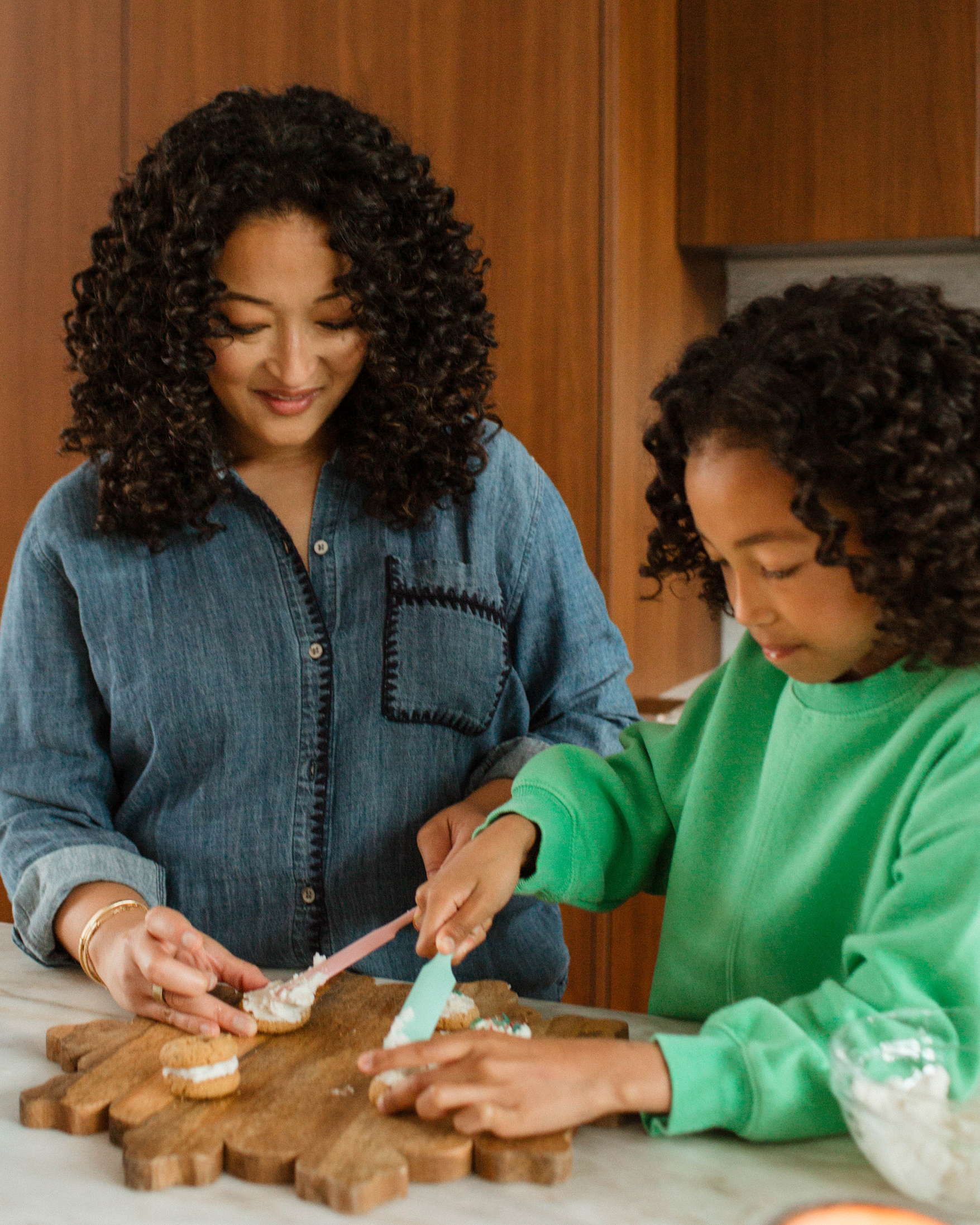
Denise Woodard is the founder and CEO of Partake Foods, an allergy-friendly snack brand inspired by her daughter Vivienne’s food allergies. Based in Los Angeles, Woodard built Partake after discovering how few safe and delicious options existed for families like hers. What began with three cookie flavors has grown into a national brand sold in over 18,000 stores, including Target, Whole Foods Market, and Kroger. The business was born from deeply personal circumstances. After multiple emergency-room visits when Vivienne was just 1 year old, Woodard began baking at home, won a local pitch competition, and built Partake on nights and weekends while working full-time at Coca-Cola. A year later, she left her job—emptying her 401(k), selling her engagement ring, and delivering cookies from the back of her car to fulfill early orders.
Her favorite part of the journey is seeing how entrepreneurship has shaped her daughter’s view of what’s possible. “She’s grown up watching ‘mommy’s cookies’ appear on grocery shelves, tagging along to events, trade shows, and in-store demos and even playing store and selling things to her friends at the park. I love seeing her entrepreneurial spirit come out!” she says. Like many founders, Woodard faced moments of doubt. “There have been many small moments rather than one dramatic one—late nights alone in my car after a demo or sitting at the kitchen table staring at spreadsheets [and] wondering how we’d make the next production run happen and still be present for Vivienne,” she says. “Initial fundraising was one of the toughest stretches. After the 80th investor ‘no,’ it was hard not to take it personally and ask myself if I was crazy for pushing so hard.” Still, she kept going. “I knew I could never look my daughter in the eye if I quit just because it got hard,” she adds.
Her advice: “Use motherhood as an asset, not a liability. Motherhood has sharpened my crisis-management skills, my ability to stretch resources, and my long-term thinking, all of which are essential for building a company. Treat the skills you build at home as the advanced training they are.”
See More

