


Last month, Roborock released the Saros 20 Flow. It’s a hideously expensive $1,700 robot vacuum that comes with boastful claims about its powerful suction, slim build, and self-maintaining features. And if everything about that appears to describe every other high-end robot vacuum you’ve read about lately, that’s because it often does.
The Saros 20 Flow is a redux of the Saros 20 with one key improvement: it uses a roller mop instead of a pair of spinning pads. In my experience, roller mops are just better at handling stuck-on crud and heavier liquid messes, and that’s proven true during my testing of the 20 Flow over the last week. That comes with a bit of a compromise, as the 20 Flow stands 3.5 inches tall, compared to its predecessor’s 3.13 inches. It’s about three-quarters of an inch taller if you factor in its LiDAR sensor disc, though that lowers into its body as needed to fit under short furniture. The two floor bots look noticeably different as a result of these changes but otherwise are nearly identical when you pull them up in Roborock’s specs comparison tool.
In many areas, the Saros 20 Flow is one of the best robot vacuums I’ve used. It’s great at cleaning hair and dirt out of carpet, it mops with the best of them, it gets around without any major issues, and its dock is mercifully quiet when emptying the robovac’s dustbin. It also supports local control via the Roborock app when the internet goes down.
Nevertheless, I’m not convinced most people should bother siphoning off most of the cost of a 14-inch MacBook Pro from their bank accounts to own one.
Roborock Saros 20 Flow
A great mopping, sweeping robovac that lacks many of the issues I have with the category, except for its price.
- Excellent vacuum and mop performance
- Quiet self-emptying dock
- Washes its own mop
- Can climb short steps
- Offline control supported
- So, so expensive
- Buggy zone cleaning
- Noisy when vacuuming
- Won’t clean the area around its dock
- Might eat your cables
Like other robovacs, but better
It’s difficult to discern the Saros 20 Flow from some competing products, particularly the Dreame Aqua10 Ultra Roller, which has a nearly identical set of features, down to the roller mop and little robotic legs for boosting it over up to 1.77-inch transitions. The Aqua10 is a bit taller, at nearly four inches with its LiDAR disc retracted. And it only offers 30,000Pa suction, whereas the Saros 20 Flow matches its predecessor at 36,000Pa. (Don’t take those numbers too seriously—they’re among the highest you’ll find in a robovac, but even assuming both companies are measuring the same way, suction isn’t everything.)
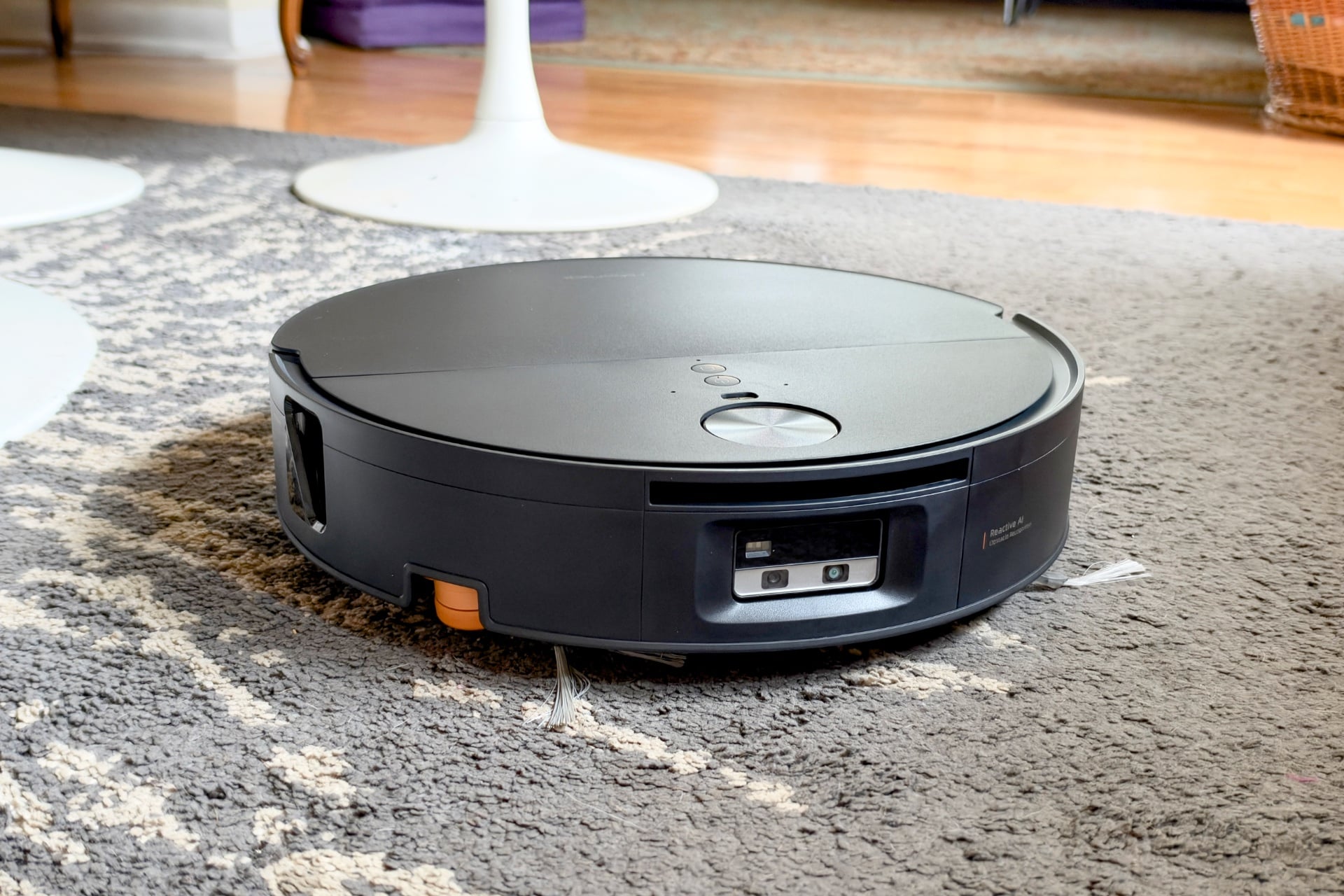
I had a nicer time setting up the Saros 20 Flow than I’ve had with many of its peers, which often come with a ton of trash to throw away, like foam inserts in crevices and plastic that you have to peel off the robot and the dock itself. The 20 Flow came with a bit of that—the robot and its dock were packed in bags and thick molded pulp, with a bit of tape holding the dock’s water tanks in place.
But once I’d dealt with all that, I just plugged the dock in, snapped a little ramp onto the front, filled the water tanks, and slid the bot into its lower cavity. I then added the device to the Roborock app, which just involved holding down the home and power buttons on top of the robot to get it into pairing mode, tapping the “+” button in the upper right corner of the app’s home screen, scanning a QR code under a cover on top of the device, and entering my Wi-Fi information to get it on the network. Then the app prompted me to start mapping.
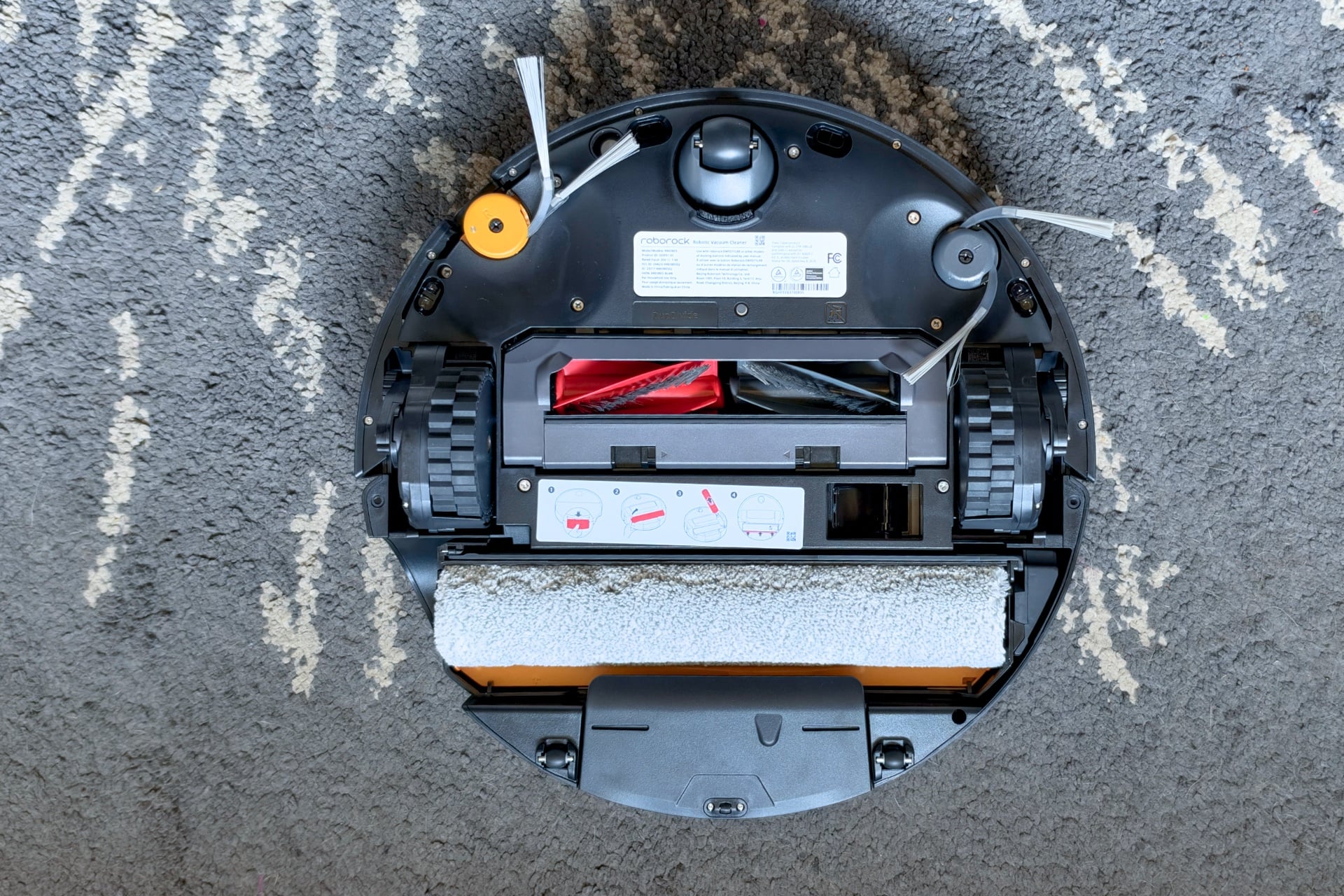
I did this initial run—which took eight minutes for about 450 square feet—and most of my targeted testing at my partner’s house. After mapping, I performed the usual ritual of adjusting the map by dividing and combining and renaming rooms that the app tried to automatically separate and identify. I appreciate the effort, but the Roborock app was about as good as any other robovac software at this—which is to say, it only got about half of it right and otherwise did things like combining the hallway and bathroom into one big, weirdly shaped bathroom.
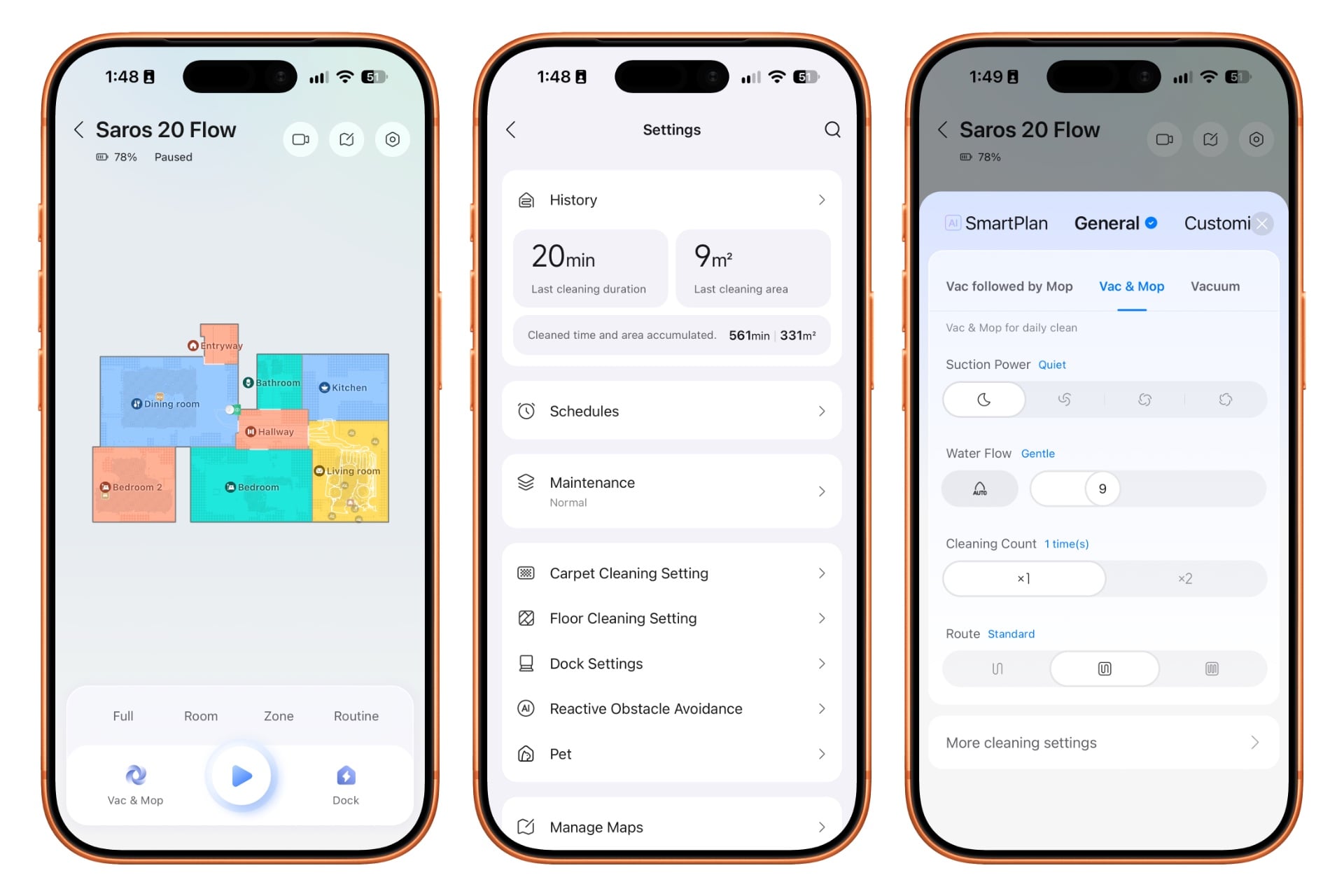
In the Roborock app, the Saros 20 Flow follows most of the conventions of other robovac apps from Dreame, Ecovacs, and Anker. You start on a main screen with a map and controls that allow you to start a job and set the parameters of your clean. For example, you could instruct the device to vacuum two rooms but mop only one. As with most robot vacuums, there is no mop-only option. You can set the 20 Flow on your whole home, specify particular rooms or just custom portions of your home (i.e., “zones” that you define by drawing a rectangle on the map where you want it to work), or carry out routine cleanings you define in the app. Pop into the robot’s settings, and you’ll be able to tweak things like whether it cleans carpets in separate passes from hard floors, does it all at once, or ignores carpeted areas entirely. You can turn its sensor cluster on or off and control movements such as its swinging side brush and sliding mop roller. It uses AI for object detection, and you can turn that off as well.
See More

