


World updates
Sign up to myFT Daily Digest to be the first to know about World news.
Good morning. This article is an on-site version of our FirstFT newsletter. Sign up to our Asia, Europe/Africa or Americas edition to get it sent straight to your inbox every weekday morning. You can reach us at firstft@ft.com
Hurricane Ida wiped out power in New Orleans as winds of up to 150mph and a storm surge battered the US Gulf Coast, leaving more than 1m households in Louisiana without electricity.
The National Hurricane Center said the Category 4 storm made landfall near Port Fourchon, Louisiana, about 60 miles south of New Orleans, yesterday afternoon causing “catastrophic damage”.
“This is one of the strongest storms to make landfall here in modern times,” said John Bel Edwards, Louisiana governor. “We can expect devastating impacts to continue for the next 24 hours or so.”
Figures from PowerOutage.US, which tracks disruptions to the country’s electrical network, showed that 50 per cent of Louisiana’s 2.2m residents were without power.
The storm hit 16 years after Hurricane Katrina overwhelmed the low-lying region’s flood defences and killed more than 1,800 people.
Officials in the region said a $15bn system of pumps, levees and flood barriers built after Katrina had prepared them for storms such as Ida but warned they would be unable to assess the true extent of the damage until the severe weather cleared.
The National Hurricane Center downgraded the storm this morning, saying wind speeds had dropped to 60mph. But it warned that as Ida moved inland there was considerable risk of flooding in portions of the Lower Mississippi Valley, Tennessee Valley, Upper Ohio Valley and Central Appalachians “through Wednesday”.
Five more stories in the news
1. Kabul airport under rocket attack Rockets were fired at Kabul’s international airport today as US troops rushed to complete their evacuation a day ahead of a self-imposed deadline. Over the weekend the US killed an Isis-K “planner” linked to Thursday’s suicide bomb attack outside the city’s international airport, which killed scores of Afghans and 13 members of the American military.
2. Nuclear watchdog sounds alarm over North Korean reactor The UN’s International Atomic Energy Agency has warned that North Korea appears to have restarted a critical reactor at its biggest nuclear materials complex. The watchdog said there had been “indications consistent with the operation” of the nuclear reactor at Yongbyon, 90km north of Pyongyang, for the first time since December 2018.
3. German election debate reveals gulf on climate policy The three candidates vying to succeed Angela Merkel as German chancellor clashed last night in their first televised debate, with differences over how to tackle climate change dominating the discussion.
-
Go deeper: The upcoming election was supposed to be a turning point for the Christian Democrats — but instead, the ruling party faces a reckoning as polls suggest it could lose to a Social Democrat-headed coalition.
4. Emerging economies cannot afford another ‘taper tantrum’ Emerging markets cannot “afford” a repeat of the 2013 market disruption that occurred when the Federal Reserve’s signalling of sooner than expected stimulus withdrawal sparked a surge in global borrowing costs, IMF chief economist Gita Gopinath warned as the Fed prepared to dial back its pandemic support.
5. Whoop valued at $3.6bn after SoftBank investment A $200m investment from SoftBank’s second Vision Fund values Whoop at $3.6bn, making it the most valuable standalone fitness monitoring start-up, the company said. Will Ahmed, chief executive, said the new capital would allow it to compete more effectively with Amazon, Apple and Google, which each sell wearable health-tracking devices.
Coronavirus digest
-
The summer resurgence of cases has had little impact on the eurozone’s recovery, according to data that suggested consumers were driving a rebound.
-
US intelligence agencies did not reach a conclusion on whether Covid-19 spread to humans through animals or a Wuhan lab accident.
-
Carnival Corporation failed to move to protect cruise passengers last year despite warnings from a ship doctor about a “concerning” outbreak, according to court filings.
-
Pfizer is hiring in the US for people to promote its Covid-19 vaccine as it gears up to compete with pharma rivals to offer annual boosters.
Read the latest on our coronavirus live blog.

The day ahead
UN Security Council meets on Afghanistan The council will discuss a French and British proposal to create a safe zone in Kabul for those attempting to leave Afghanistan. A resolution is due to be tabled today.
Earnings Zoom, the San Jose-based videoconferencing company and lockdown darling, reports earnings.
Here is the full list of events we are watching this week. To receive the preview direct to your inbox sign-up to our Week Ahead email.
The FT Weekend live festival returns on Saturday. For inspiring conversations, in-depth storytelling, escapism and a lot of fun, don’t miss our new FT Weekend podcast, hosted by Lilah Raptopoulos.

What else we’re reading
Big Four rush to join the ESG bandwagon The Big Four accounting firms are lining up investment strategies to tap the sustainability surge as trillions of dollars flow into environmental, social and government funds. But some partners have warned that the firms could face a backlash if they fail to live up to the standards they promote.

How US community banks became ‘irreplaceable’ Local lenders played an outsized role in dispensing loans to small businesses and the self-employed during the pandemic. But now they are facing calls to adapt as banking moves online.
Chinese tech titans’ mission to give away billions A burst of benevolence has seen billions redirected from company coffers and personal bank accounts to state-linked causes as China’s wealthiest entrepreneurs try to appease President Xi Jinping. But the donation drive has drawn scepticism.
Long live the labour shortages The pandemic devastated rich countries’ economies. But there are signs that a productivity boom could be emerging from the wasteland, writes Martin Sandbu. Sign up here to receive Martin’s newsletter Free Lunch.
The future of work is autonomy The pandemic highlighted autonomy — or lack of it, as many of our freedoms were curtailed. Yet for many white-collar workers it proved liberating to work more flexibly. While the debate around offices reopening sets the workplace against the home, the real issue is over control, writes Emma Jacobs.
Sleep gadgets
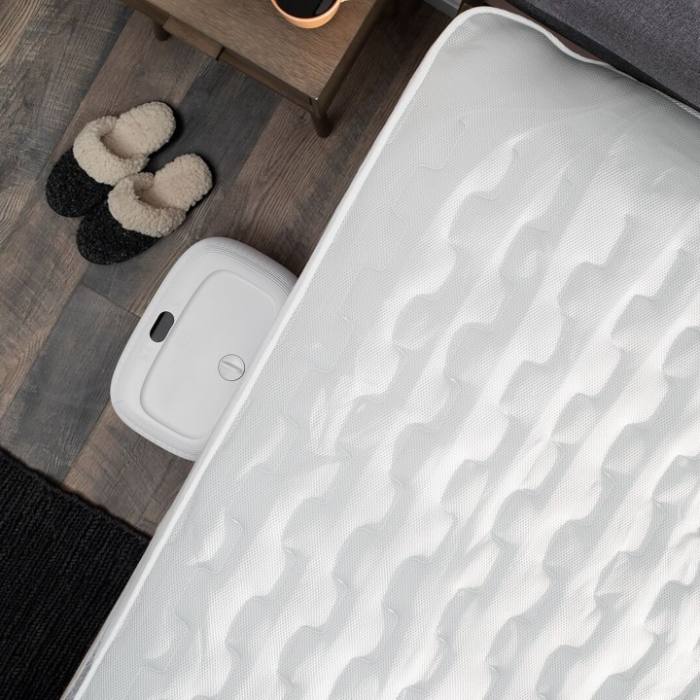
In 1968 Charles Hall invented the modern waterbed. More than five decades later his nephew Todd Youngblood has developed a new cooling system not unrelated to Hall’s innovation. That is one of four new gadgets to help you get a good night’s sleep.
Recommended newsletters for you
Due Diligence — Top stories from the world of corporate finance. Sign up here
Moral Money — Our unmissable newsletter on socially responsible business, sustainable finance and more. Sign up here

