


First campaign shoot
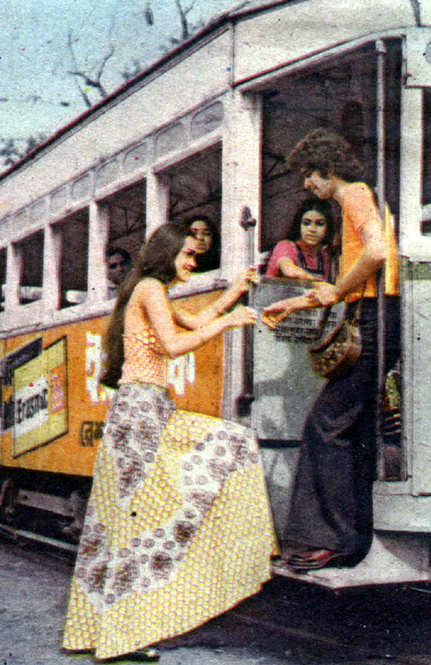
At that time, there were hardly any campaigns. There is a shoot that I directed and imagined, which has been covered by TCT. And there’s another one with Rakhi on the cover of Filmfare. Okay. And there is another one we which is in the middle of Calcutta on the crossroads of models conducting traffic, I think and that was for something called the ‘Junior Statesman’. In those days, there were no campaigns and shoots.
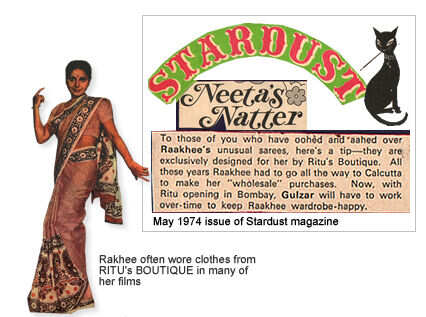
What few available magazines would do is send a photographer, and maybe somebody with them, and they would do what they thought would fit into their magazines. There used to be no campaigns unless you’re talking about a Liril campaign, which happened much later. And I’m talking now about the ’60s, late ’60s. So there were radio campaigns, soap campaigns but no individual designer campaigns at that time. So what we did was, we did our own photography, local fellow, hardly any professional inputs there, there were no stylists, I started my own thing, or with a friend. So it was as primitive as that.
First Design
I began creating with hand block print I was doing a kind of revival in a place called Sirampur. It was a Danish colony, on the banks of the river where lots of textiles were exported from that colony to Denmark. And down the road was an English colony, a British colony; one which was a Portuguese colony; one which is a French colony. So along the river, there were all these colonies, which got textiles from the wall and exported them. I just happened to come across Sirampur where the block printing at one time used to be there, but it was a completely dead city. And I found a very small unit, which was still doing some hand block printing. And I kind of adopted it started doing a revival with that. I was not a print designer and they didn’t have any old blocks with them, either. I was in my 20’s. So what I began doing were some completely bizarre design blocks. They had polka dots, Azalea flowers and crazy layouts on them, but the only merit of them that they were printed by block on silk. They somehow produced a kind of freshness into the repertoire of women who used to wear sarees. And from there slowly, moved into more traditional sarees and did a revival of old classic prints. I then made a big mistake, I printed it on khadi. So I had an exhibition of the gorgeous hand block printed traditional blocks and so on and it was the biggest flop. People said that they look like our old grandmother’s saris, which was what I was actually trying to achieve, but the mistake was I printed it on khadi. And then I printed it on chiffon and there was no looking back. We were copied from Surat and Benaras, people would fly down to buy a few sarees to create copies of it in synthetics, all over the country. So this is where India got its first traditional ethnic designs back after 200 years of having stopped completely.
Craft and Creativity
So I started trying to locate all Indian prints and there were none to be found in India. Because the British had copied it, so they became almost State prints. The Jamavar became the paisleys, the prints that were coming from the Bengal are called the Chintz (they are roses). India’s legacy of this almost got wiped out. So a lot of work on that. And I still am doing, because we had one of the richest collections of textiles in the world which we supplied to the rest of the world. And then, due to the colonization, all this was put on machines in England, hence adding so much taxes on the Indian product that they wiped out all the legacy from India. So I was having a lot of fun, as a matter of fact, locating old Indian fabrics and recreating them. So that was my involvement in hand block printing. And today we are still continuing that legacy.
First Exhibition, wedding, zardozi design
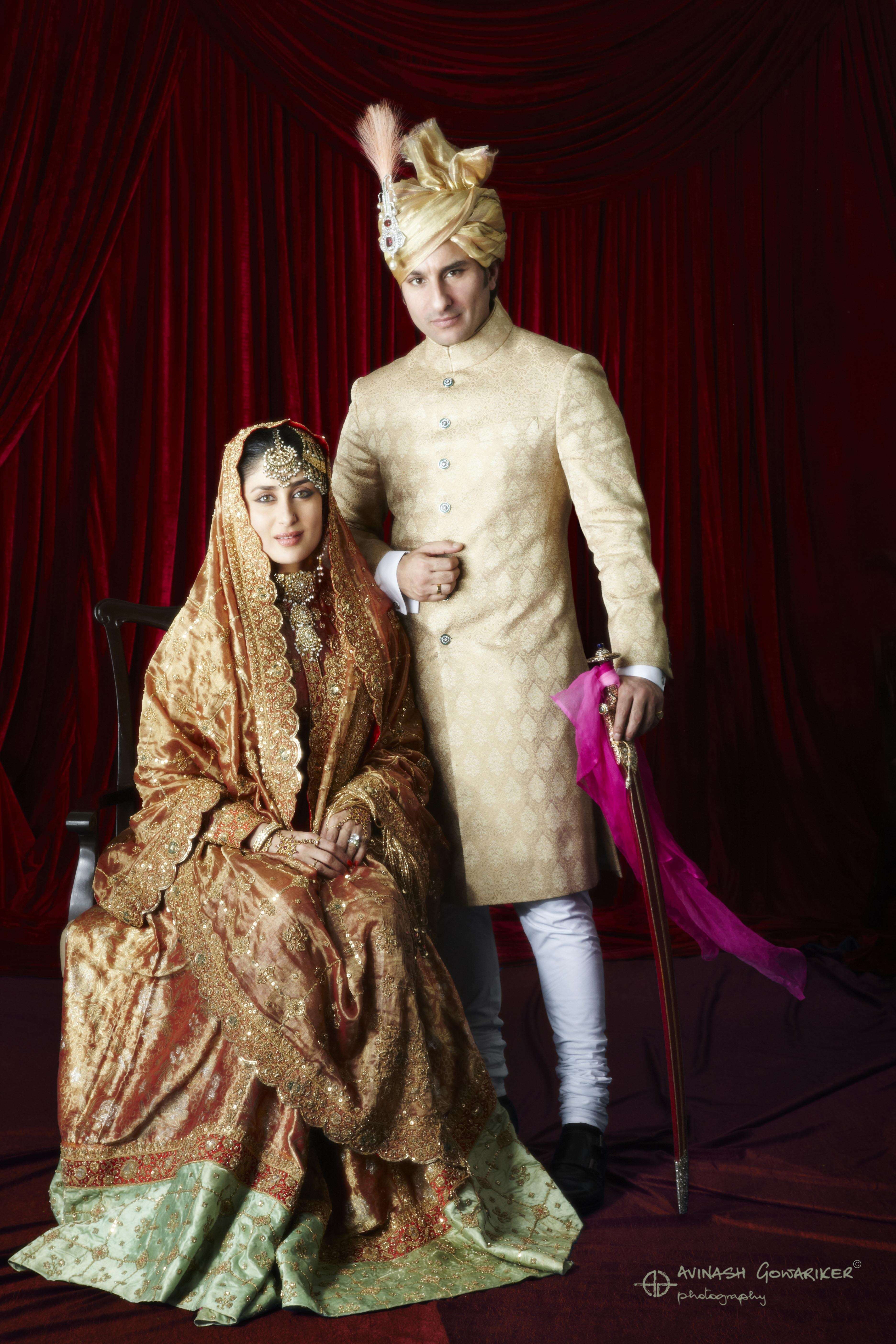
The second was a little later, I discovered a very small village, not only a village, way into the interiors of Bengal, the highly skilled craftspeople who did gold embroidery on fabrics, but it had gone so bad that they were embroidering for the middlemen by weight. The saris would come from Marwar (Rajasthan) especially the Bandhanis and they would weigh the sari and pay them for the extra weight that they had put on it. So you could imagine the costly designs. The craftspeople knew what they were doing, I mean, they had the skill in their hands. So I’ve had almost a 35-year revival of the embroidery craft, as a method of Zardozi, which was the word that I had to create. And then we did these exhibitions of Zardozi all over the country, in museums, Jahangir, we bought the embroidery quality up to that level that it became very aspirational for everybody. And here was the start of your Big Indian Wedding. The exhibition was of such high quality that it even was taken by the Festival of India to America as a standalone exhibition. And from then onwards, we began to have a wedding line, which was a very conservative and still is to a large extent, Classic Collection of all Indian embroidery designs of Rajasthan and Gujarat which were used for embroideries for the royal family. As a matter of fact, I actually revived one of them, Sharmila Tagore’s Joda for Kareena’s wedding. So, this was the legacy that there was in Bengal. I had to locate old clothes from the royalty in India, and from museums all over the world, to bring back to the people we will work with samples of what their ancestors used to make, that memory had completely gone out of their mind. So that was the second project. Zardozi embroidery till now is still one of the most sought after embroideries on festive/occasion wear, and not only for India, but the rest of the world too. I mean, they were very nice moments that I had in my earlier years. I just react instinctively from one thing to the other, went to Museums in London, the V&A Museum, and I found all these gorgeous embroidered clothes. We don’t even have a piece of this in India. And then I paid them for taking photographs of those and brought them back. And it was an enriching moment when we saw that we could get them to reproduce the trend that great grandfathers used to. So to my mind, that is the most exciting part of my journey in fashion. Then of course today, people are doing sequences, they’re doing Gota, and they’re doing everything else. They are being patronized by the Indian people themselves, which makes me very proud.
First fashion Show
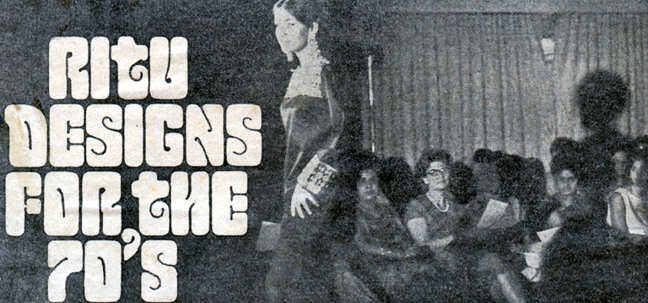
The first Indian fashion show happened in the 1970s or 71 which was at the Park Hotel. They were very nice – they gave us a place as long as we kept ordering coffee. So there were no models at that time but Bengali women tend to be very beautiful. The only trouble was that there was no choreographer, there was no need to take care of wardrobe or anything. So they would go backstage and we’d order another round of coffee and cake or something. And everybody would wait till the next slot came in. It was so great. Well, there’s a picture also, it was called the fashion mood of the ’70s. I made my first clothes for a show, they were denim with the red zip and red leather patches. They were quite the tricky looks that I put up my first exhibition at the fine arts gallery and nobody knew what I was making. But again, I knew I am showcasing my designs to the country starving of anything. But, it took the younger generation by storm. And I started doing Kurta Pyjama which was appreciated by the consumers.
Down the memory lane
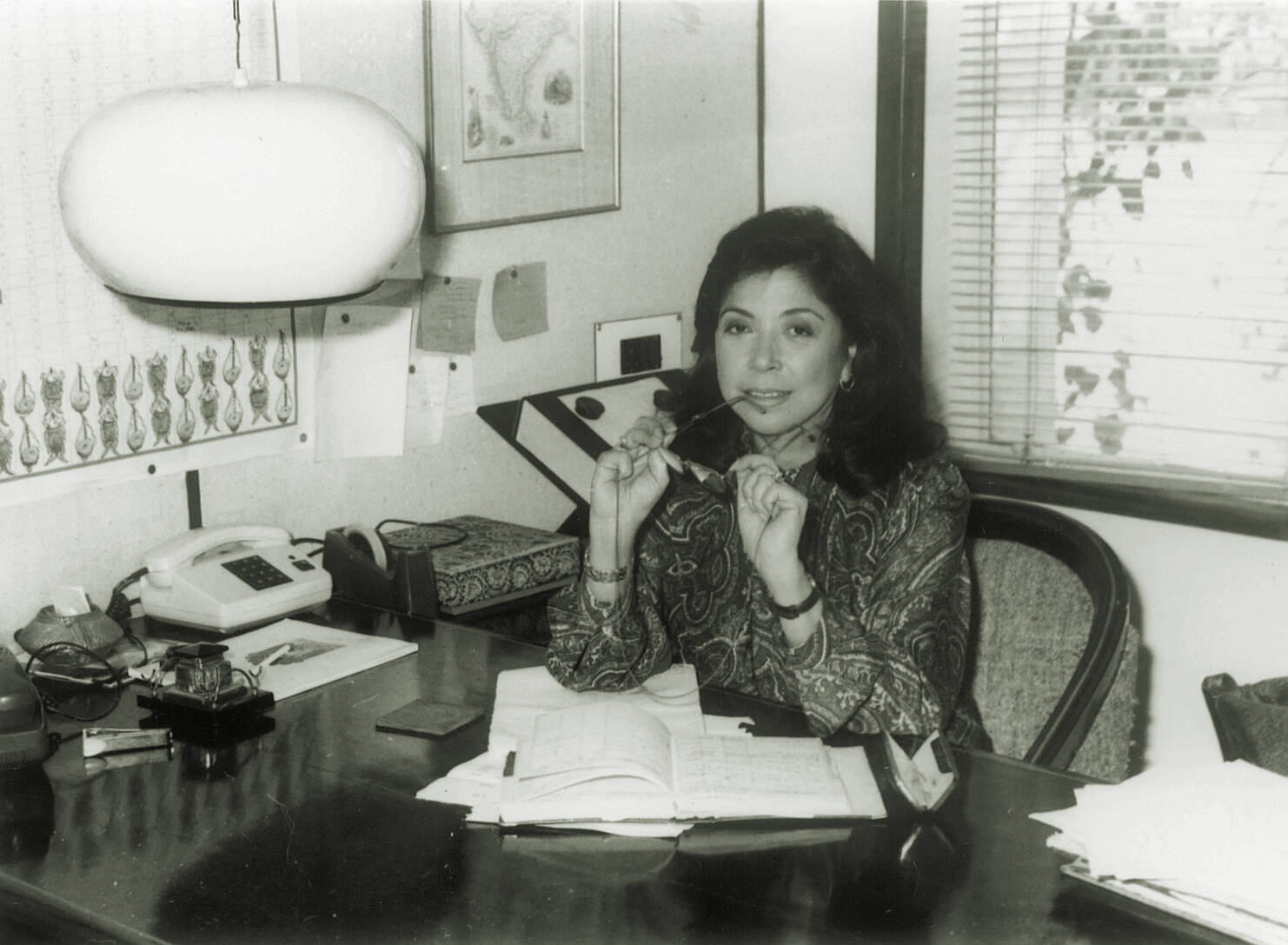
I think I made my first exhibition because there was a fine arts gallery in Calcutta. It gave us a burst of completely wacko young ideas. But when we the gallery I was part of the amateur club of theatre. So I thought all of them to come and help me with the exhibition. And there were hangers and nails. So there was a garment on the hanger. It was great beyond belief, you have to go and source a ladder from the market. Kolkata was a happening place at that time. It made such an impact it, with indigenous fashion, we were not allowed to import zip or a button. Whatever and whichever designing happened, it happened in a very organic fashion. And because there was a bang, almost 20 years and that is the start of the indigenous Indians towards looking for its own.
Padma Shri Award Moment
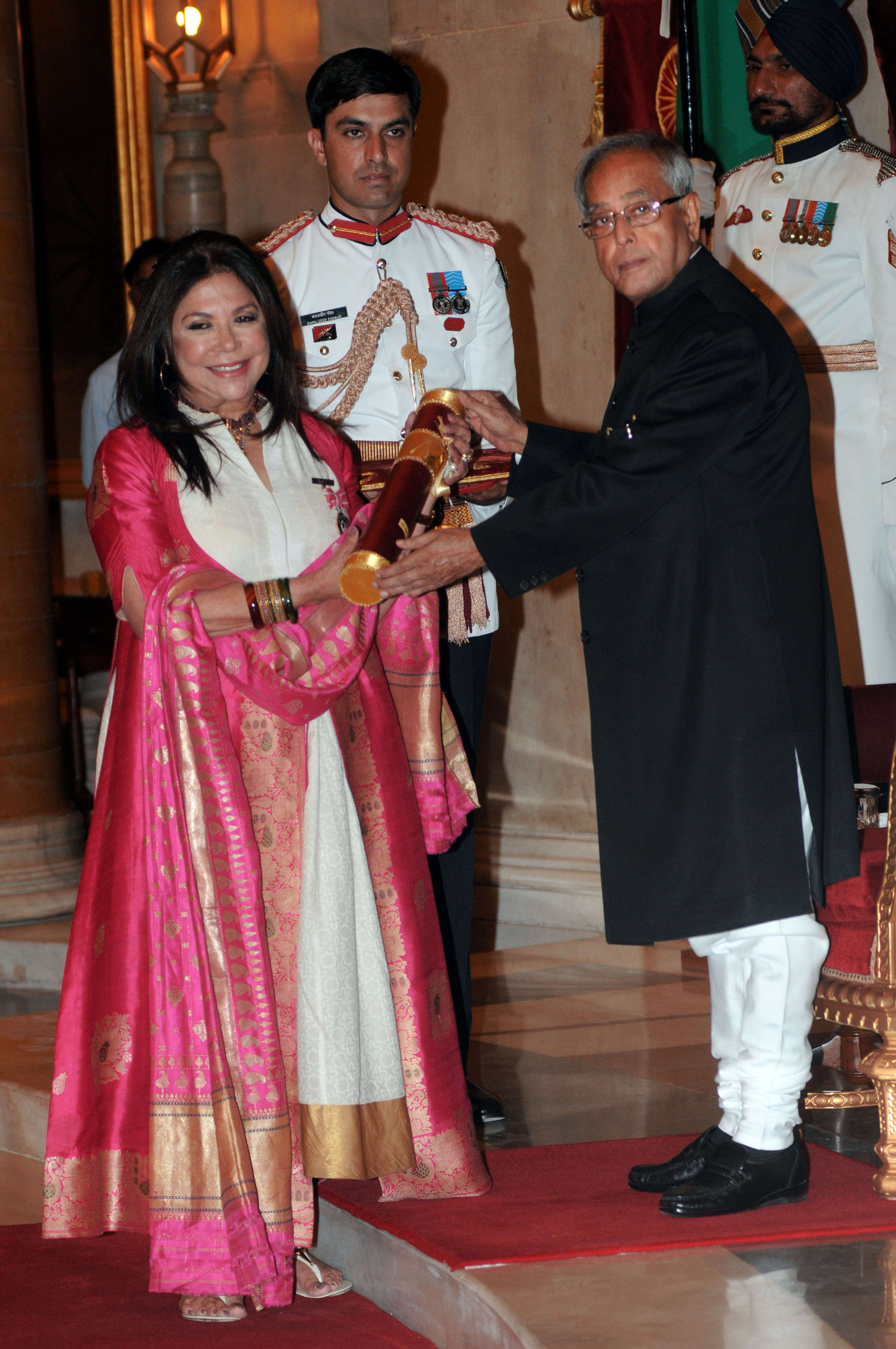
You know, it was a long haul from my crew, for printers in Sirampur to get that award. Because on this journey, I was not knowing how relevant all our work; Rajiv Sethi, Abraham Thakore; to create what we have today is the only country where you have an indigenous fashion handwriting. The rest of the countries are just copying, to have to cater to whatever the Europeans like. Our country has managed to create its handwriting, laid down its own rules, and has its clientele and I didn’t know how relevant it is going to be in the 20th century when the government awarded Padmashri to this discipline. It is always for doctors or teachers, scientists, musicians, but there was never an area for textiles so there it was.
First ramp show
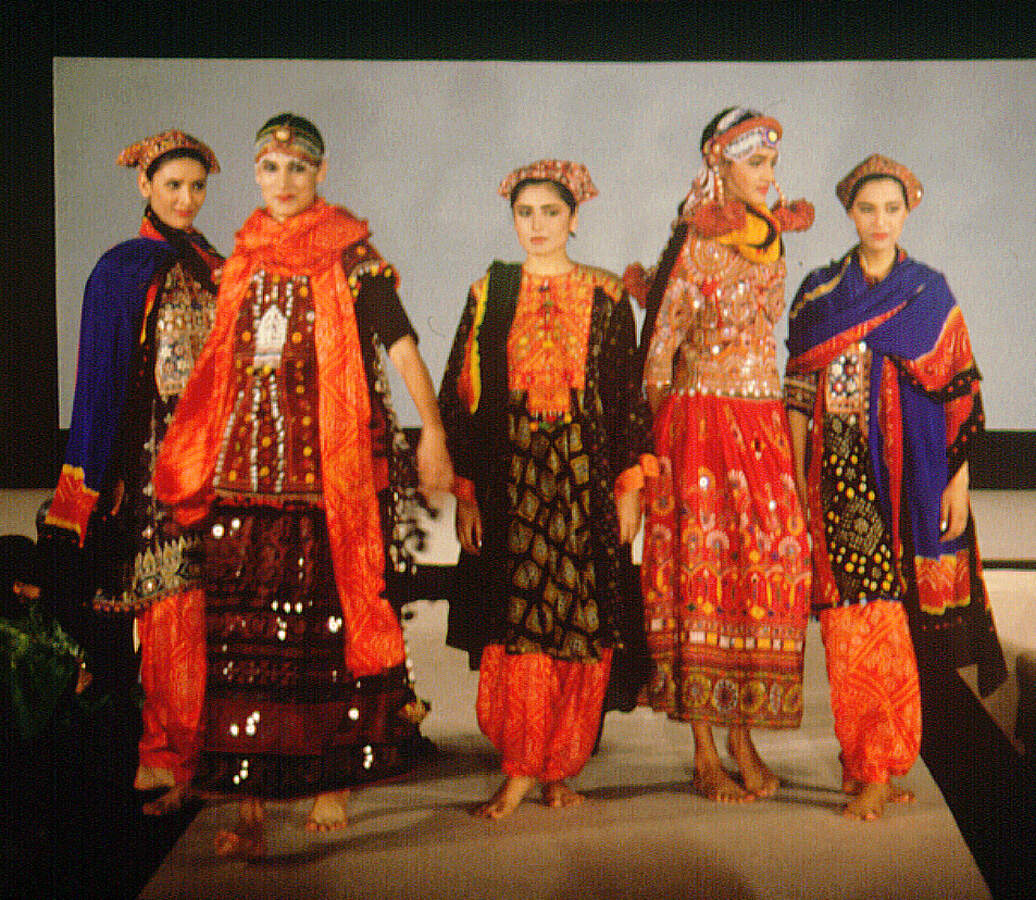
My most favourite ramp show was in the 80s, we did a show called The Tree of Life. And that week, I travelled from state to state to document visually where I found all these elements of inspiration, chicken, zardozi, hand block printing, Bandhani all of these elements. So almost it was a pan North Indian audiovisual and it talked about the roots of all these crafts. At first, we ran the AV and then the models would come on the ramp wearing clothes from that area that are designed. It clarified to all our minds, where we were coming from in the Indian context. This show was first mounted at the crafts museum, and then at various museums all over the world. This show underlined a fashion of what India was all about.
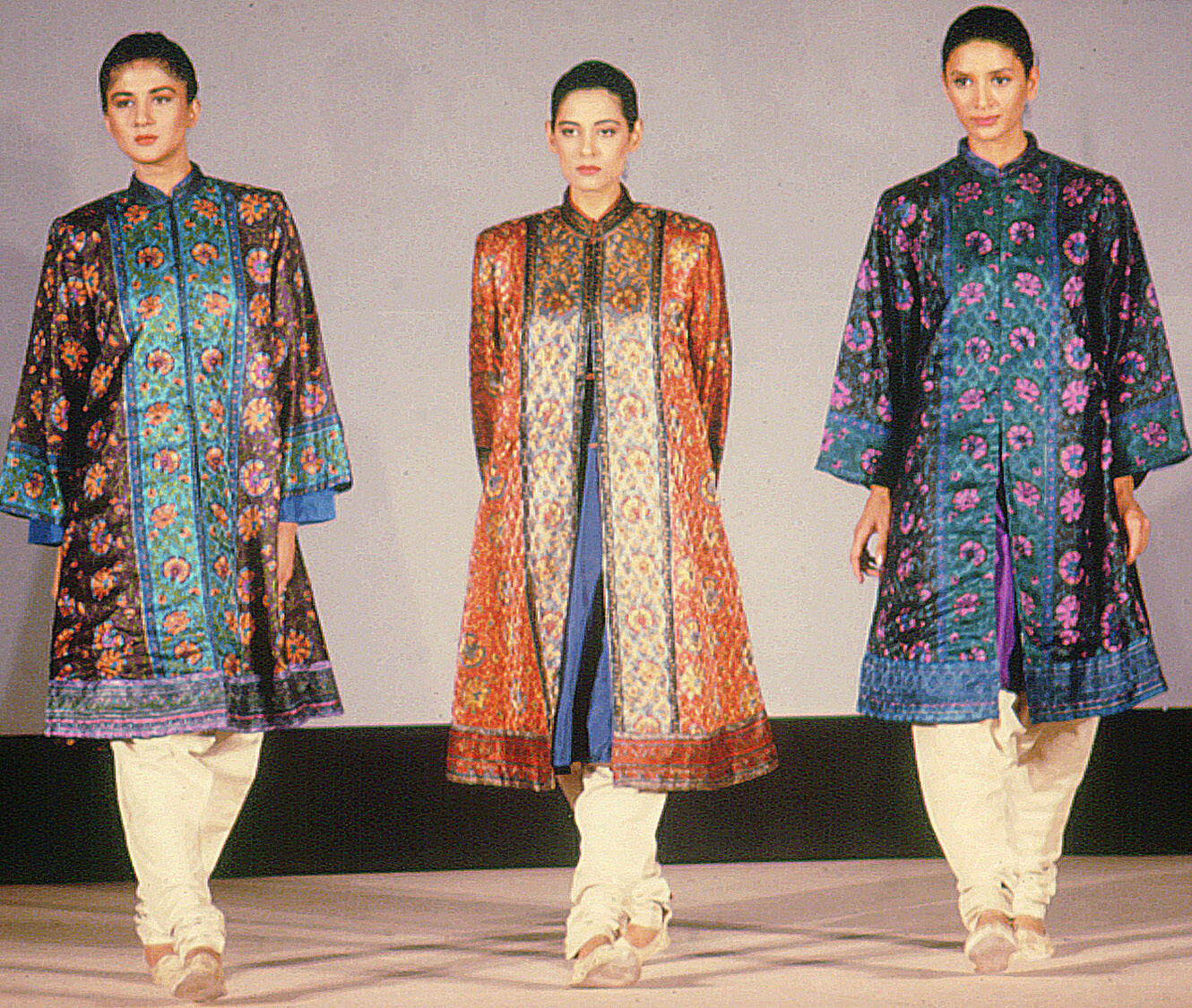
And the last time we did it was at a dinner in Hyderabad, hosted by the prime minister, 3-4 years back and it is still very, very fresh. This show remains my favourite, even though they’ve been hundreds after that. FDCI, where I was a president for 6 years, started the young fashion movement.
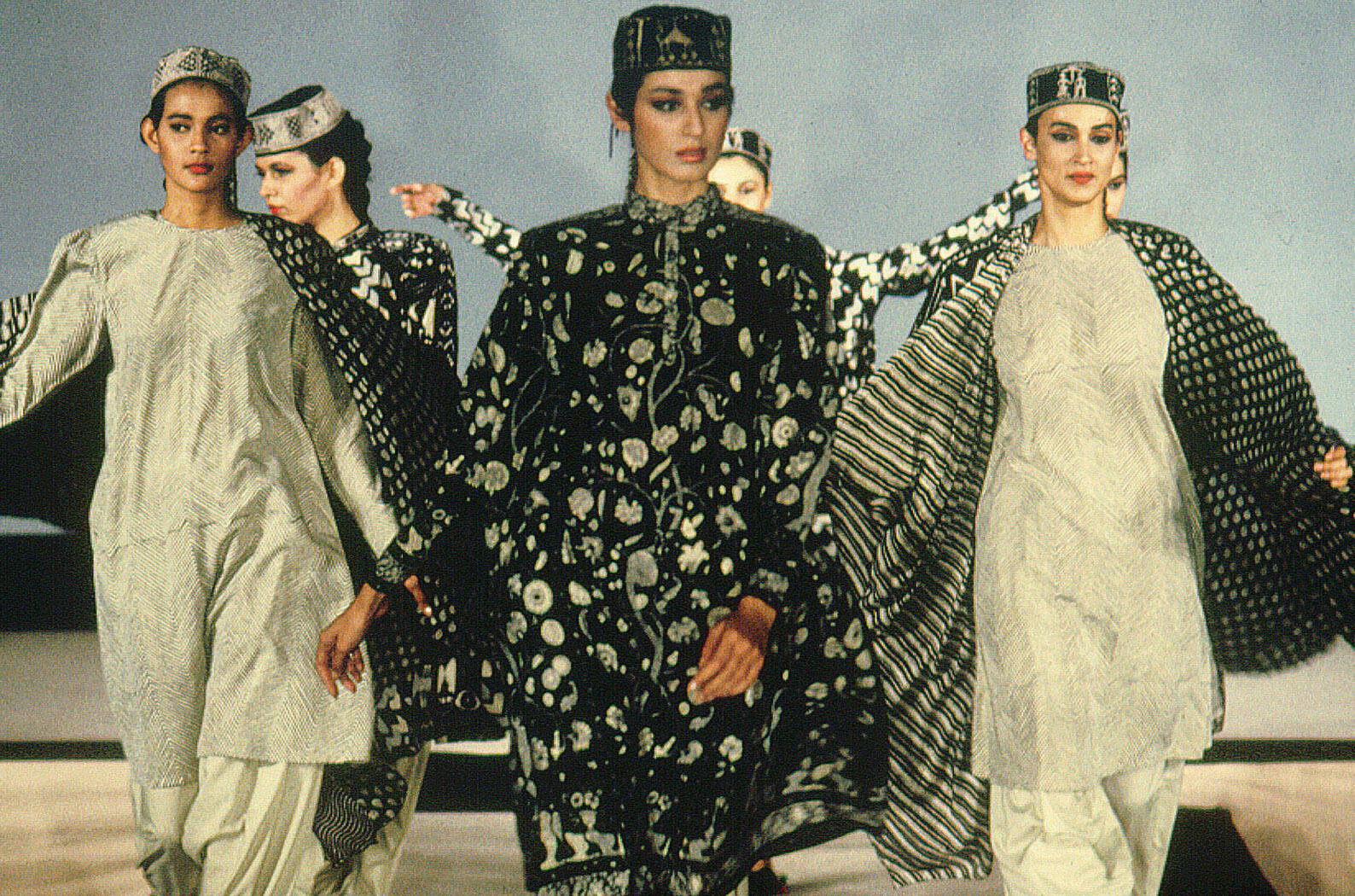
But that remains to my mind, my most favourite. And today, most of the girls who modelled at that time have now become celebrities. There was Priyanka, Aishwarya, Sushmit, Lara, Dia Mirza Those were the girls at that time.
Ritu Kumar bespoke bridal services
Our expertise is famed for rooted aesthetics, vegetable colour palettes and the finest print techniques in the country. Our designs are heirlooms; passed on to generations and can be kept for posterity. Our atelier in Kolkata works with master weavers, embroiders, printers and artists from Bengal, Benaras, Andhra Pradesh and Gujarat.
With our bespoke experience, our customers will have access to the richest textile heritage and finest craftsmanship; one of a kind pieces that will be timeless, classic and extraordinary in every sense. Our Designers and artisans are at hand to help our customers create their unique handcrafted ensembles. Kareena’s wedding outfit. It was a family joda, and after Sharmila wore it, it went to pieces. Since the odhani was mainly wiring and there was very little left in it, (Basically, the fabric had torn, only zari and gold embroidery were holding the fabric). I recreated the outfit for Kareena. This took me about four-five months and some very skilled craftspeople, who used Benaras woven fabric and patched the embroidery on it, so it was more complicated than doing a new one. But at least they retained the pure gold in the outfit. For instance, I did a gota suit for a bride that belonged to her mother-in-law’s mother-in-law (great grandmother in law) and the gota work was done in pure gold which you can’t find today.

