


Baggy jeans are no longer just a nostalgic nod to the early 2000s. They’ve become the backbone of contemporary menswear, merging comfort with undeniable attitude. What once felt overstuffed or outdated has been reimagined through thoughtful cuts and modern silhouettes, placing baggy denim firmly in the “this is how we dress now” category. Fueled by a broader shift toward ease, rooted in the legacy of street culture, and reinforced by a stylistic backlash against skinny fits, these roomy cuts are rewriting the rules of cool.
Importantly, this dominance isn’t happening in isolation. On the runways, designers from Balenciaga to Loewe have doubled down on exaggerated proportions, while mainstream players like Gap and rising labels such as Très Rasché are responding to surging demand. At the same time, celebrity influence has amplified the trend. Consider Rema, pairing wide-leg jeans with sleek accessories, or Tyga, styling baggy jeans with a leather jacket—together they’ve pushed this silhouette into the everyday fashion lexicon.
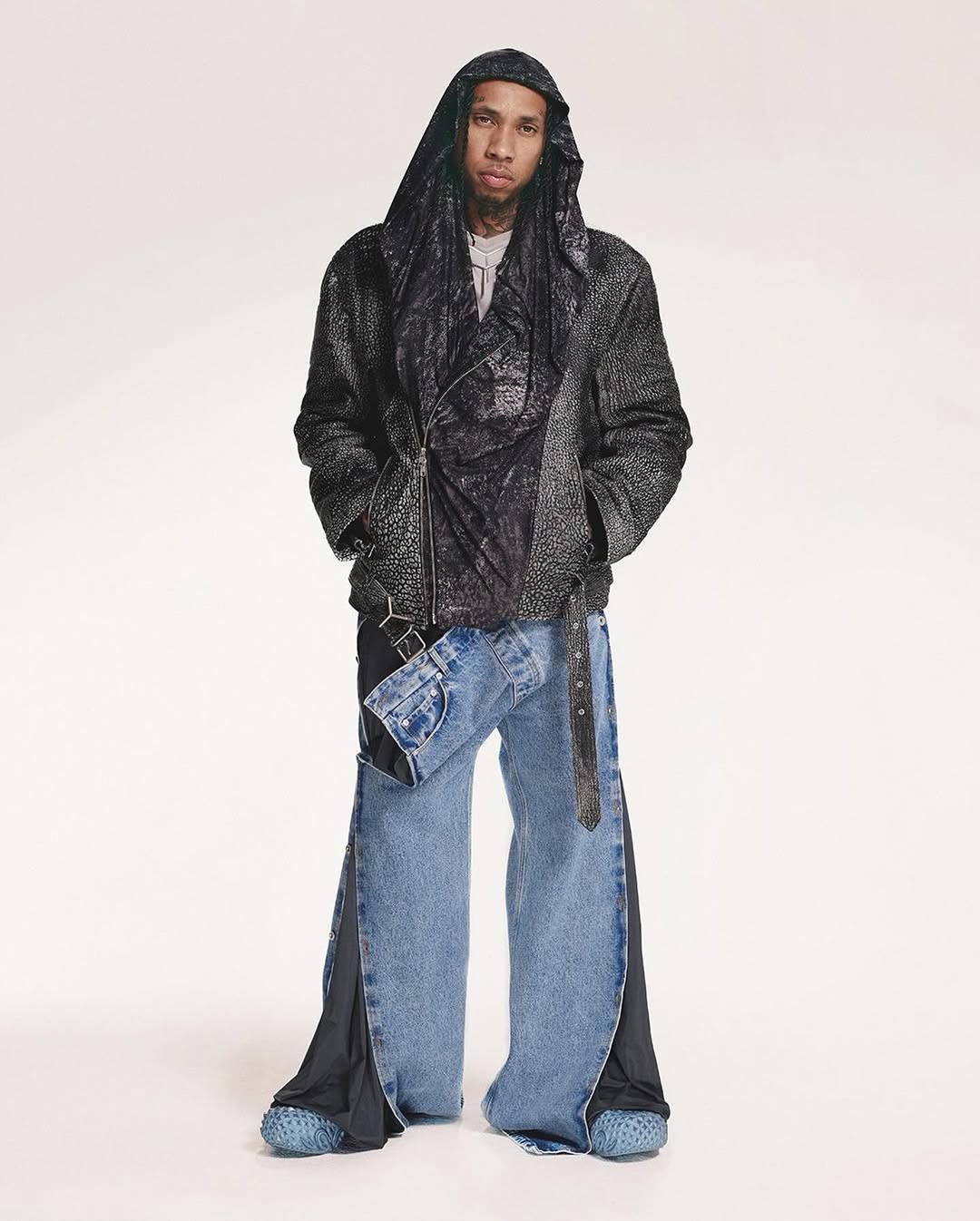
Ultimately, baggy jeans aren’t just resurfacing quietly. They’ve become a statement piece. Millions are embracing the balance of relaxed volume and refined proportion, and the numbers reflect it. Searches for baggy jeans have skyrocketed nearly 300% year-over-year. The message is clear—baggy denim is no longer a passing phase; it’s the new standard.
How We Got Here: From Subculture to Runway

Baggy jeans trace their lineage back to the vibrant Madchester scene of the late ’80s and early ’90s, when bands and rave-goers embraced wide-cut denim paired with bold prints and a carefree, casual aesthetic. Meanwhile, across the Atlantic, hip-hop fashion of the 2000s cemented baggy cuts as emblems of street authenticity and resistance to conformity, shaping a cultural code that still resonates today.
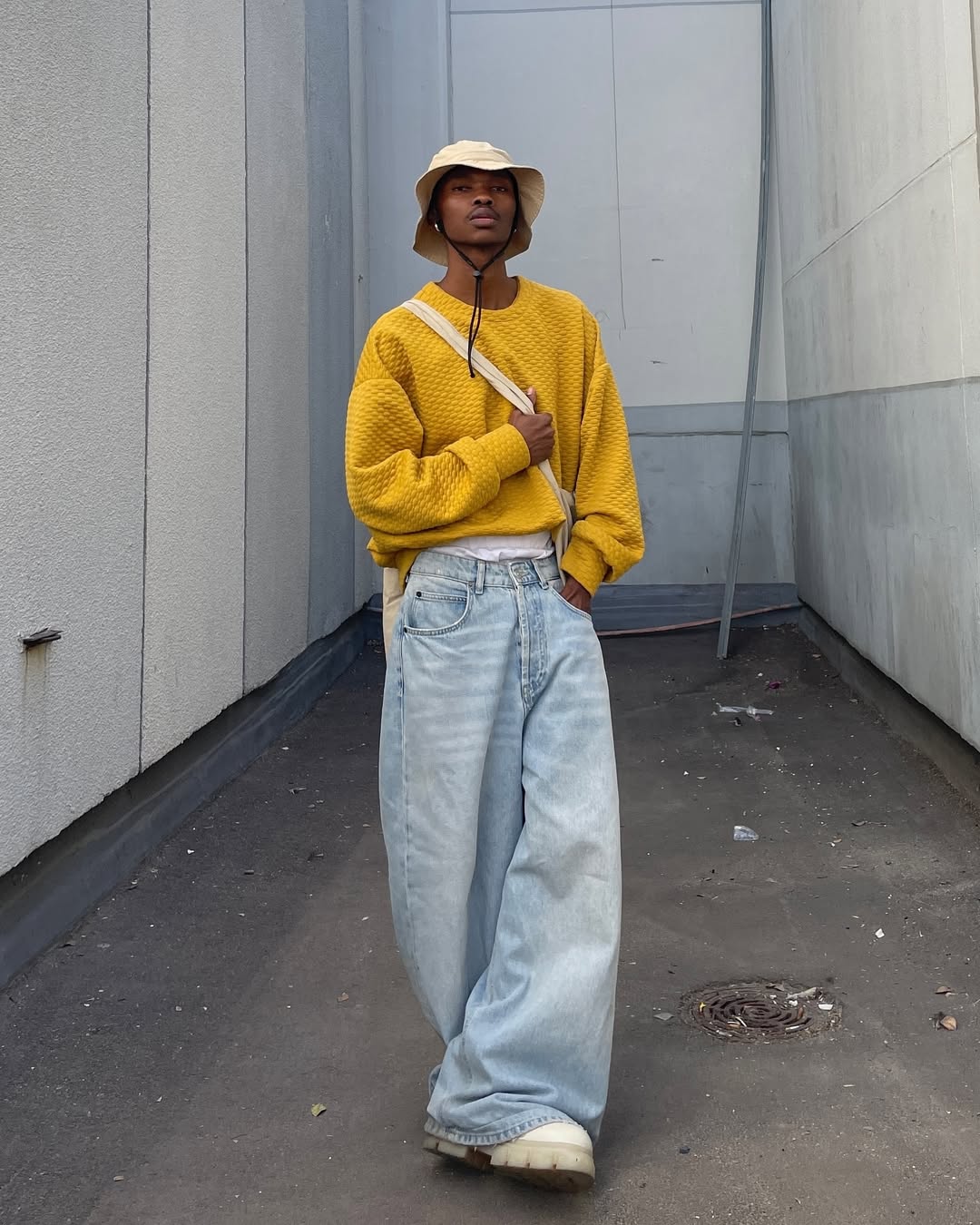
Fast forward to the late 2010s and early 2020s, when oversized fits found fresh momentum. Pandemic-era priorities around comfort collided with nostalgia-driven micro-trends—think barrel-leg and horseshoe jeans—ushering in a new appreciation for volume in denim. By 2025, baggy jeans are no longer a subcultural signature; they’ve stormed the mainstream, propelled by Gen Z’s rejection of rigid conformity, TikTok’s viral styling moments, and a broader cultural embrace of authenticity.
What’s Driving The Baggy Jeans Moment in Menswear
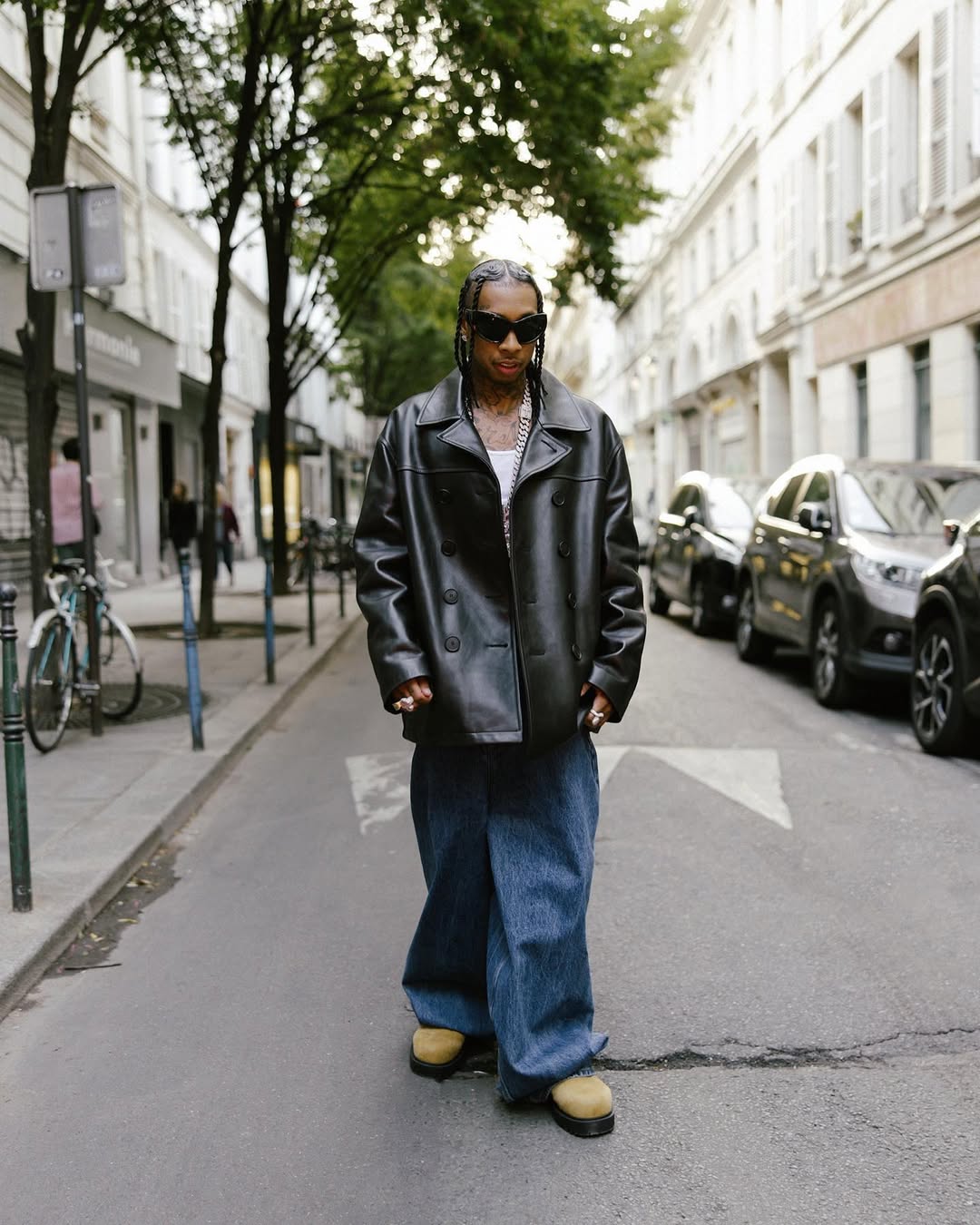
The resurgence of baggy jeans in menswear is powered by a cultural pivot toward comfort and ease. After more than a decade of skinny fits reigning supreme, fashion has softened its silhouette, embracing shapes that feel forgiving rather than restrictive. This shift isn’t just about looking relaxed. It’s about moving freely and expressing style without the pinch of overly tailored cuts.
Oversized denim also taps into the wave of early 2000s nostalgia saturating music, accessories, and pop culture at large. Wearing baggy jeans offers a subtle nod to the past while still pushing fashion forward. The trend’s momentum is amplified by celebrity influence. When icons like Tyga, Rema, and Justin Bieber step out in roomy denim, the look instantly becomes aspirational yet accessible.
See More
For the latest in fashion, lifestyle, and culture, follow us on Instagram @stylerave
Denim Tears Hoodie: The Cultural Symbol In Streetwear Is Now Becoming A Wardrobe Staple


