


Apple’s launch quote for the new iPad mini lists gamers right next to doctors and field service workers as the people it’s built for. That one word, along with, of course, my eye for gaming gear, is why we’ve gathered around. Once Apple aims a small tablet at gamers, it walks onto Lenovo’s turf, and the Legion Tab Gen 5 is the 8-inch-class tablet built for nothing but play. Both start at $699 in the US, too.
Related: REDMAGIC Astra 2 vs. Lenovo Legion Y700 Gen 5: One has OLED, the other has better value
Where Apple highlights sleekness—dropping an OLED panel into a 5.4 mm chassis—Lenovo prioritizes raw thermals. The Legion Tab Gen 5 swaps ultra-thin ergonomics for a 165 Hz refresh rate and a vapor chamber built for sustained performance. In other words, your choice comes down to portable elegance and unthrottled gaming power.
Quick verdict
Take the iPad mini on your commute or to the beach without worrying about a little water or dust. It weighs just 255 grams and carries an IP67 rating.
Reach for the Legion Tab Gen 5 when gaming is your priority, emulators included. The current price also buys you twice the base storage, a case, and a 68 W charger.
The 165 Hz panel against OLED contrast
You’ll stare at the screen every minute you own either tablet, and on paper Lenovo comes out ahead. Its 8.8-inch 3K IPS panel packs 408 pixels per inch to the iPad mini’s 326, and it refreshes at up to 165 Hz. That refresh rate pays off in a shooter, where your eye is chasing a target across the map. Apple’s press materials for the mini don’t mention a refresh rate, and I wouldn’t assume a high one until Apple says so.
Contrast flips the result. Apple quotes a 2,000,000-to-1 ratio for the OLED, with HDR highlights peaking at 1200 nits, more than double the previous mini. Night scenes in a horror game look grayer on any LCD, the Legion’s included, because its backlight never switches fully off.
Plenty of would-be Legion buyers have crossed it off for skipping OLED. I get it. IPS does take burn-in worries off the table, and that counts for a tablet you plan to keep for years. My call goes to the iPad mini’s OLED for most people, with the Legion’s 165Hz panel reserved for anyone who mostly plays fast shooters.
Heat over a two-hour session
Bypass charging might be the most useful gaming feature Lenovo lists, and it gets about one line on the product page. Plug in, and wall power runs the chip directly while the battery stays out of the loop. You can play at a desk for an afternoon without slowly cooking the cell. Behind it is a 9000mAh battery, cooled by a vapor chamber Lenovo brands Legion ColdFront Vapor 3.0.
Even that setup has a ceiling. In footage I’ve watched of Cyberpunk 2077 running through the GameHub emulator, the Legion holds roughly 40 fps at 720p on low settings. Its chip stays pinned at the thermal limit the whole time.
Apple gives me little to go on if I want to game for hours on the iPad mini. Its 18.9 Wh battery is rated for up to 10 hours of web browsing or video, but Apple doesn’t say how long games last or explain how the tablet handles heat. That’s a big omission when the chip gets so much praise for its GPU gains and the whole device measures just 5.4 mm thick. The 30-minute charge to 50% also requires a 35 W adapter. Apple puts a 20 W one in the box. Lenovo takes the win for long gaming sessions.
Emulators and the game library
Emulation decides itself fast. The Legion runs Android 16, and GameCube games in Dolphin run at four times their native resolution at full speed in most of the titles I’ve seen tested. PS2 looks just as comfortable.
Storage stretches further on the Lenovo too. Its spec page doesn’t list it, but the tablet takes microSD cards up to 2TB. Treat the card as a home for ROMs and video. Android games still have to install on the 256GB inside.
Apple’s case rests on the App Store. The A20 Pro adds hardware ray tracing and mesh shading, and Apple claims up to 2.7x the GPU performance of the outgoing mini. For iPhone gamers like me, the mini simply joins the same account. No new store, no relearning.
Emulation fans should buy the Legion Tab Gen 5. Everyone whose games come from the App Store can stop worrying about this section.
Weight in a bag (and in the rain)
Apple runs away with this one. The iPad mini weighs 255 grams in Wi-Fi trim, about 105 grams less than the 360-gram Legion, and it’s 5.4 mm thick to Lenovo’s 7.59 mm. Over an hour of one-handed reading on a bus, your wrist will notice. IP67 sealing means a spilled drink or a rain shower is no crisis, and Lenovo lists no water resistance anywhere.
Cellular widens the gap. For $849 the mini gets Apple’s C2 modem and 5G over eSIM, while the Legion stays Wi-Fi only, a gap its own buyers keep grumbling about in comment sections. For portability, nothing in this matchup touches the iPad mini.
What $699 puts in the box
The Legion Tab Gen 5 costs $699.99 through Lenovo’s store. You get 12 GB of RAM and 256 GB of storage, plus a folio case and a 68 W charger in the box. Lenovo lists the bundle’s estimated value at $899.99, so the included accessories count toward the deal.
Apple’s $699 iPad mini starts at 128 GB and ships with a 20 W adapter. Add the $79 Smart Folio, and you’re at $778 for half the storage, and you still don’t own a charger that can hit Apple’s fast-charge claim. The 6-core CPU and the Dual 16-core Neural Engine are kept for the 512 GB model, and nano-texture glass needs at least 256 GB. The base mini gets a trimmed-down version of the chip from Apple’s headlines.
Note-takers will point to Apple Pencil Pro support, and at $129 it’s a lovely tool. Lenovo lists its Tab Pen Plus for $49.99. Dollar for dollar, the Legion Tab Gen 5 gives you more hardware, and the margin is wide.
Ports for a desk setup
The Legion Tab Gen 5 can handle a desk setup without making you unplug everything to charge. One USB-C port supports 10 Gbps data, charging, and DisplayPort, while the slower 480 Mbps port can supply power at the same time. Lenovo’s desk mode also gives you a mouse-and-keyboard interface instead of the usual touch controls.
You get one USB-C port on the iPad mini, with support for an external 4K display at 60 Hz. iPadOS 27.2 is set to add extended display support, which makes the mini more interesting for desk work. The Legion remains my pick for gaming, though.
Where the iPad mini wins

Apple
I already have an iPhone 15 Pro, so I’d rather get a tablet that handles the things I don’t want to do on my phone. The iPad mini‘s OLED screen would be great for films and comics on the commute home, and at 255 grams, it won’t weigh down my bag.
It’s also the pick when weather and spills are part of your day. Apple pitches the mini at doctors and field service workers as well as gamers, and IP67 sealing plus optional nano-texture glass back that up for outdoor work. The $849 cellular model means you never hunt for Wi-Fi at an airport.
Siri AI is part of the pitch too. I’d treat it as a bonus for now, since it launches in beta with daily usage limits, and Apple already says expanded access will cost extra later.
Where the Legion Tab Gen 5 wins
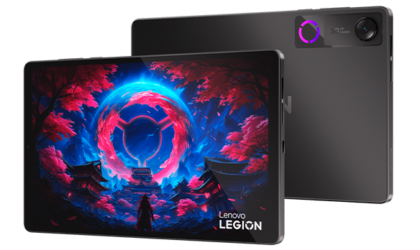
Lenovo
Gaming-first buyers belong here. Anyone who plans to spend a Sunday working through a backlog of PS2 classics with a controller in hand, or to plug the tablet into a monitor and leave it charging under load for hours, gets more from the Legion Tab Gen 5 for the same money.
Related: 6 Best tablets for gaming because your phone just can’t cut it
I’d look at the Legion Tab Gen 5 before spending extra on iPad mini accessories. Lenovo includes the case and charger, doubles the base storage, and leaves you a microSD slot for future expansion, which should interest my friend David whose game library keeps growing. The Halo RGB ring is overkill for me, but you can dial it back in software without paying a cent more.
Final verdict
I’d buy the iPad mini. I already play CODM on my iPhone 15 Pro, sometimes longer than I should during working days, so I don’t need another device built around gaming. The mini would get more use from me as a video screen and everyday tablet. But if emulation is a priority for you, you’ll be better served by the Legion Tab Gen 5, which becomes the more tempting purchase with a 165 Hz display,

