


Sen. Ron Johnson speaks to reporters during a “Parent Empowerment Rally” in Richfield on Saturday. Johnson, who is up for reelection this year, has become more vocal in his push to get conservatives on every ballot, including typically nonpartisan races such as school board elections.
In August, several members of the western Wisconsin community of Holmen were escorted out of a School Board meeting for failing to comply with the district’s mask requirement. Now two of them who spoke out against COVID mitigation policies are seeking election to the School Board in April.
About 17 miles north of Milwaukee, in the Mequon-Thiensville School District, at least one candidate seeking election to the board ahead of the February primary led a recall effort — driven by frustration with COVID mitigation policies — which was ultimately struck down in November. Two of the four board members targeted in the recall, who are up for re-election, decided against running to retain their seats.
The Assembly debated and then voted on a bill to crack down on certain teachings in schools, including that one race or sex is superior.
In Dane County, the Mount Horeb School Board contest has drawn 11 candidates in the Feb. 15 primary for three seats in a district of 2,500 students. Three of those 11 candidates are pushing conservative talking points as a part of their platform.
Across the state candidates focused on political platforms and single issues have signed up for this April’s nonpartisan school board races ahead of the November midterm elections.
People are also reading…

Ford
“We’re certainly seeing the nationalization of school board races here in Wisconsin and across the country,” UW-Oshkosh associate professor of public administration Michael Ford said. “You’re seeing a heck of a lot of talk about things like vaccine mandates, Critical Race Theory, things that are actually pretty disconnected from the reality of being a school board member.”
That theme was on display at a “Parent Empowerment” rally in Richfield on Saturday attended by school board hopefuls from across the state, Republican U.S. Sen. Ron Johnson, of Oshkosh, and Frank McCormick, a former educator from Illinois.
McCormick echoed other speakers at the event in railing against COVID-19 mask mandates and declaring that public schools are “indoctrinating” students with Critical Race Theory, an academic framework that focuses on racism embedded in the nation’s laws and institutions and isn’t taught in any of Wisconsin’s K-12 schools.
“School board elections have now become the most important elections in our lives,” he said. “Because we’re talking about who controls the future — children.”
Potential for obstructionism
While more civic engagement is always welcome, politicizing such historically nonpartisan races threatens to make governing more difficult, Ford said.
“The worry is obstructionism,” he said. “You have a one-issue candidate or, more importantly, if you have a few candidates who are just hellbent on conflict, you really start to mess with the group dynamic of a governing board and grind the process to a halt. That’s the real fear.”
Recent efforts that have gummed up the workings of government, Ford said, include more than a dozen school board recall elections, launched in response to COVID mitigation policies, that took place across the state since the pandemic began. A parent group in Oshkosh that was vocal about the school district’s mask policies had a few candidates throw their name into the hat to seek seats on the School Board.
“Just about every major school district in the state has at least one candidate who is running on an issue like Critical Race Theory, and if you had gone pre-COVID-19 that was not a thing. That was never an issue anybody had talked about,” he said.
“It’s more of a frustration that some folks have with state and federal government and their inability to gain traction at the state and federal level has brought some of these more social issues to the surface at the local level.”
Airing grievances, building candidates

Burden
School board races appear to have become a platform used to air grievances about life during the pandemic, UW-Madison political science professor Barry Burden said. Concerns about public health mandates, masks, school closures, possible vaccine requirements and the specter of Critical Race Theory are being echoed by conservatives nationwide and will bubble up in the November midterm election, he said.
“School boards are a place where politicians often get their start,” he said, citing Michele Bachmann, a school board candidate from Minnesota who was elected to state and then federal office before seeking the Republican nomination for president in 2012.
“It can be a breeding ground to create a fealty of candidates and it looks like right now the Republican Party is making better use of that, to create a pipeline of people who might seek higher office,” Burden said.
He said some of the people seeking public office in Wisconsin are dissatisfied with President Joe Biden and Gov. Tony Evers and motivated to enter the race by issues such as COVID mitigation policies and equity initiatives in K-12 curriculum.
“It’s anger more than enthusiasm, and the people who they’re angry at are the incumbents,” he said.
In solidly Democratic Madison there’s markedly less enthusiasm for running for School Board than in other parts of the state. Of the three seats up for election this year, only one is contested after two incumbents opted not to run again.
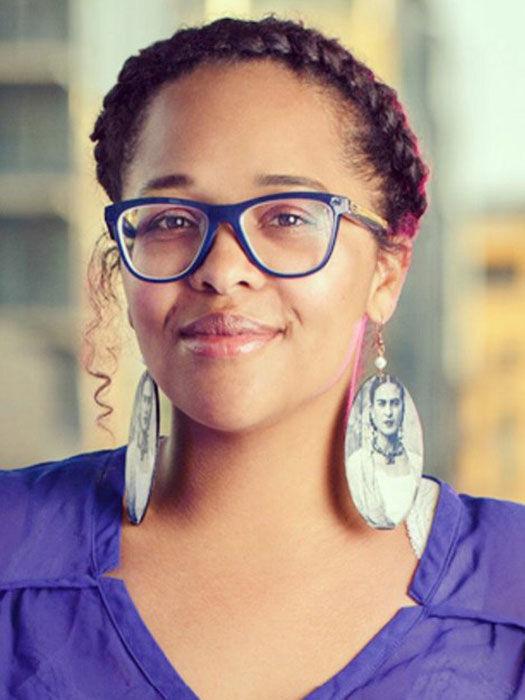
Muldrow
Madison School Board President Ali Muldrow, who is up for reelection but is running unopposed, said interest in serving on the board, or any local office, is like the swing of a pendulum based on the political climate. The district hasn’t faced much public outcry over its COVID mitigation or equity policies.
“Madison is a really progressive city. … And I do think progressives are tired,” she said. “Voter engagement is going to matter a lot, and I do think Republicans in more purple parts of the state are going to work really hard this year to establish contrast campaigns.”
Money and influence

Sen. Ron Johnson is interviewed by a group of reporters after speaking at the Parent Empowerment Rally in Richfield. Johnson called for conservatives to enter into local, typically nonpartisan races such as school bard elections, to build grassroots Republican candidates.
Johnson, who is up for reelection in November and spoke at Saturday’s rally, had previously appealed to the public during an August event in Kenosha to get conservatives on the ballot in every race, including local, typically nonpartisan elections. He urged Republicans to take up the grassroots approach to build enthusiasm ahead of statewide races.
“The reason we’re seeing our children being indoctrinated, the reason things like Critical Race Theory — whether they call it that or not — are being taught in our schools is because conservatives have focused largely on the federal government,” he said Saturday. “They took their eye off the ball of local elections. We can’t do that anymore.”
Rebecca PAC, a committee former Lt. Gov. Rebecca Kleefisch launched in 2020 to support Republican legislative candidates, donated at least $6,400 to school board candidates in 2021 — including $1,000 to Rob Abraham, the La Crosse assistant police chief who won his bid for the La Crosse School Board in April.
Abraham also received $1,200 from the La Crosse County Republican Party to support his bid for the seat, during a time when the La Crosse School District and board were struggling with the decision about whether to have police stationed in public schools.

Quarberg
“For me that’s concerning for at least two reasons, political parties are getting openly involved in nonpartisan races and a political PAC from across the state is throwing money into a local nonpartisan race in La Crosse — that sends some red flags,” said Brad Quarberg, vice president of the La Crosse School Board. “We need candidates who care enough about kids to put their partisan biases aside.”

