


In 2025, the modern Nigerian bridal style has blossomed into something truly spectacular—an art form that seamlessly blends history with fresh innovation. From the elaborate use of aso oke to fabrics crafted entirely from scratch, today’s brides are telling their love stories not only through tradition but also through couture. They are reimagining the fabrics their mothers once wore, pairing them with daring silhouettes, bold textures, and intricate details that rival any global runway. The result is nothing less than a cultural renaissance, stitched together with beads, lace, and silk.
To fully appreciate this evolution, one must first look at the brides who are setting the pace. In recent years, a handful of weddings have sparked conversations both within Nigeria and across the globe. These ceremonies were not just celebrations of love but also powerful showcases of artistry and cultural pride. From Temi Otedola’s Vogue-featured looks to Priscilla Ojo’s regal ensembles, these brides have emerged as muses for a new generation. Their choices reveal how heritage and global design influences now intertwine, creating unforgettable fashion moments that endure far beyond the wedding day.
Then and Now: A Journey of Evolution
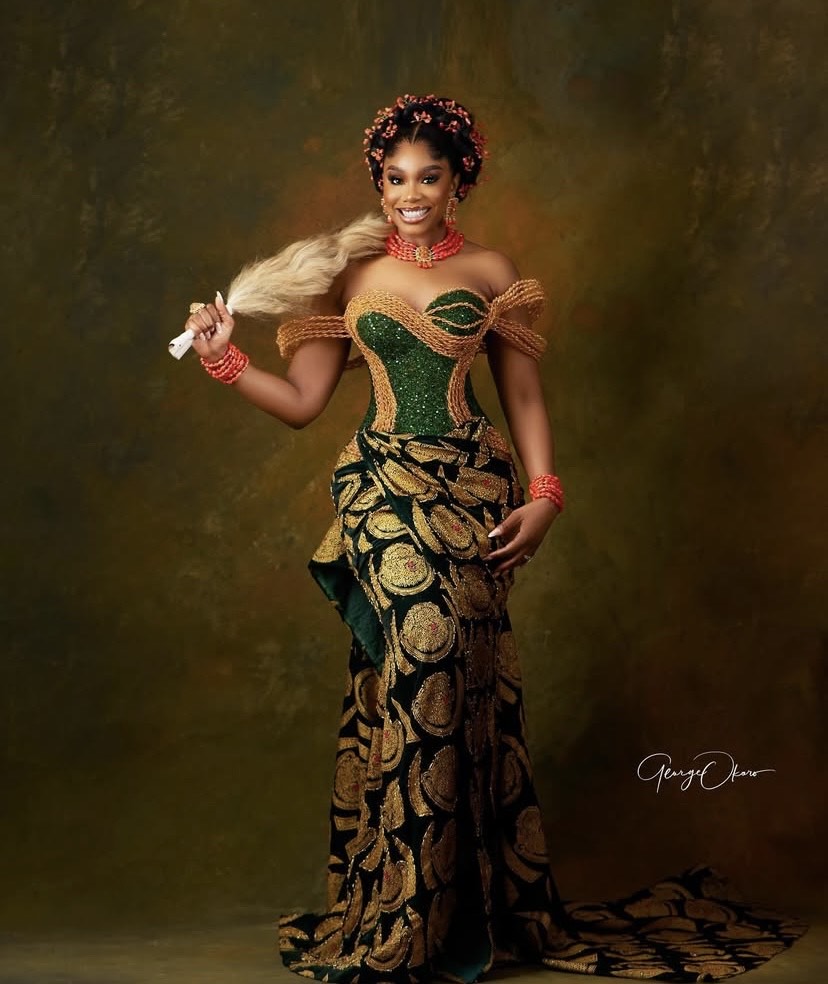
Not too long ago, bridal attire across Nigeria leaned toward restraint. Yoruba brides, for instance, often appeared in aso oke or ankara iro and buba, while other ethnic groups favored wrappers, lace, and similar traditional fabrics. These ensembles carried undeniable cultural weight, yet their silhouettes were predictable, leaving little room for personal reinvention.
Today, however, those same fabrics have been reborn. Lace and aso oke are cut into daring, sculptural shapes; ankara is reimagined through haute couture craftsmanship; and coral beads are no longer mere adornments but serve as both accessories and structural embellishments. Even more striking, Nigerian designers—joined now by international couturiers—are working hand-in-hand with brides to create custom textiles. The results are layered masterpieces, rich with 3D appliqués, metallic embroidery, and handwoven beadwork. This spirit of collaboration has transformed bridal attire into something at once innovative and deeply rooted in culture.
Fabric as a Storytelling Tool
Aso oke, once reserved almost exclusively for Yoruba royalty and traditionally styled as iro and buba, has now emerged as the crown jewel of modern Nigerian bridal fashion. In 2025, designers are reimagining the fabric into sculpted gowns, corseted bodices, and sweeping capes that command attention. More than ever, brides are commissioning bespoke weaves, infused with metallic threads, layered textures, or intricate 3D beadwork, transforming each creation into a singular piece that tells their story.
Temi Otedola: A Vogue Moment for Nigerian Bridal Fashion
Temi Otedola’s #LoveisEazi wedding completely redefined expectations for modern Nigerian bridal attire. Her collaboration with Sohee Park, a London-based designer with Asian roots, marked a true turning point. This was not just a Nigerian wedding; it was a global couture showcase. By weaving Korean embroidery into Yoruba traditions, Temi’s ensembles demonstrated that Nigerian bridal fashion rightfully belongs in the global fashion conversation. Unsurprisingly, Vogue celebrated the milestone, cementing her looks as admired far beyond Africa.
Although she wore four traditional outfits, three in particular stood out as true masterpieces.
Look 1
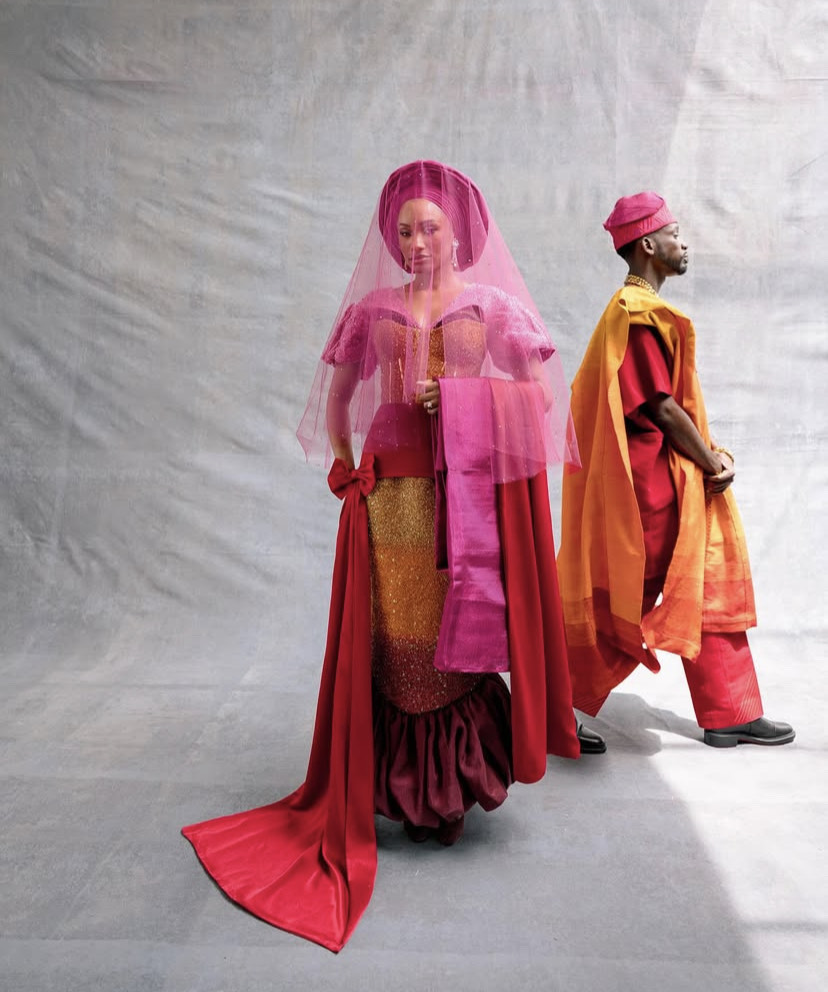
Her first standout look was an ombré creation by Lisa Folawiyo, drawn from years of sketches that finally found their perfect moment. The gown sculpted Temi’s figure with intricate paneling, elevated by Folawiyo’s signature bows, and was hand-embellished for more than 500 hours. The result was a piece that seemed to shimmer with the glow of the evening sun. Its radiant palette, cascading from golden hues into deep reds, paid homage to Yoruba aso oke while pushing it firmly into the realm of couture. With every bead and glimmering detail, heritage fabric was reborn as a luminous masterpiece.
Look 2
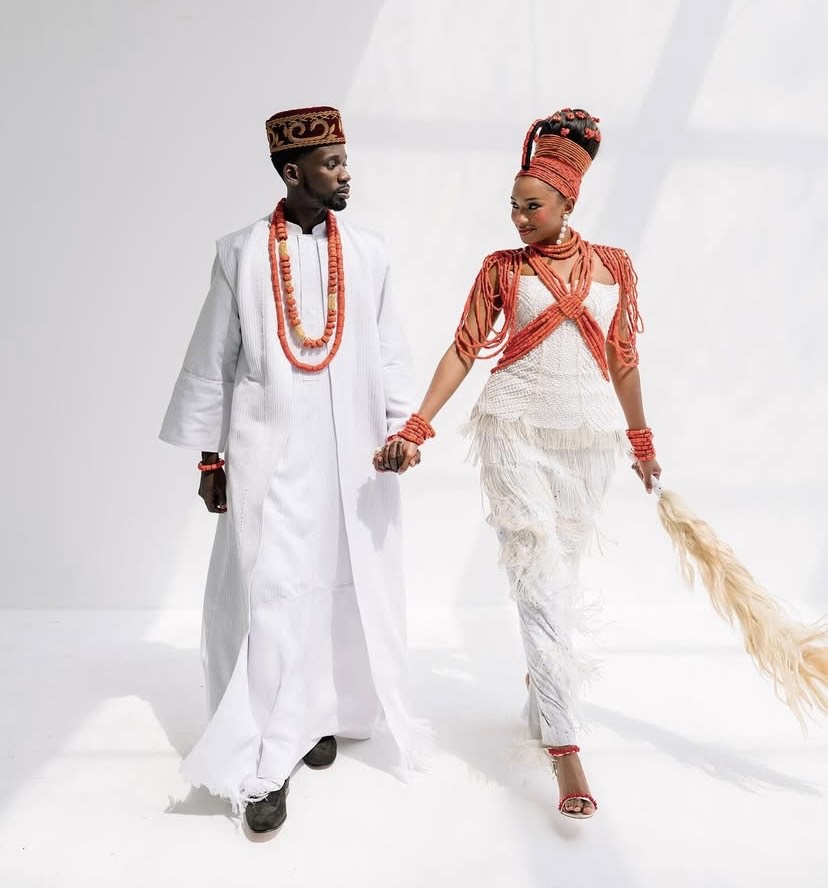
Her second standout ensemble, also designed by Lisa Folawiyo, paid a moving tribute to her late mother-in-law’s Igbo heritage. Drawing inspiration from Akwaocha, Folawiyo reimagined the classic white fabric into a striking two-piece set, lavishly adorned with coral embellishments and delicate fringe detailing. Red coral accessories layered Temi in regal splendor, from the necklaces and hairpieces to the beaded sandals, each element tying the look together in a breathtaking fusion of culture and couture.
Look 3
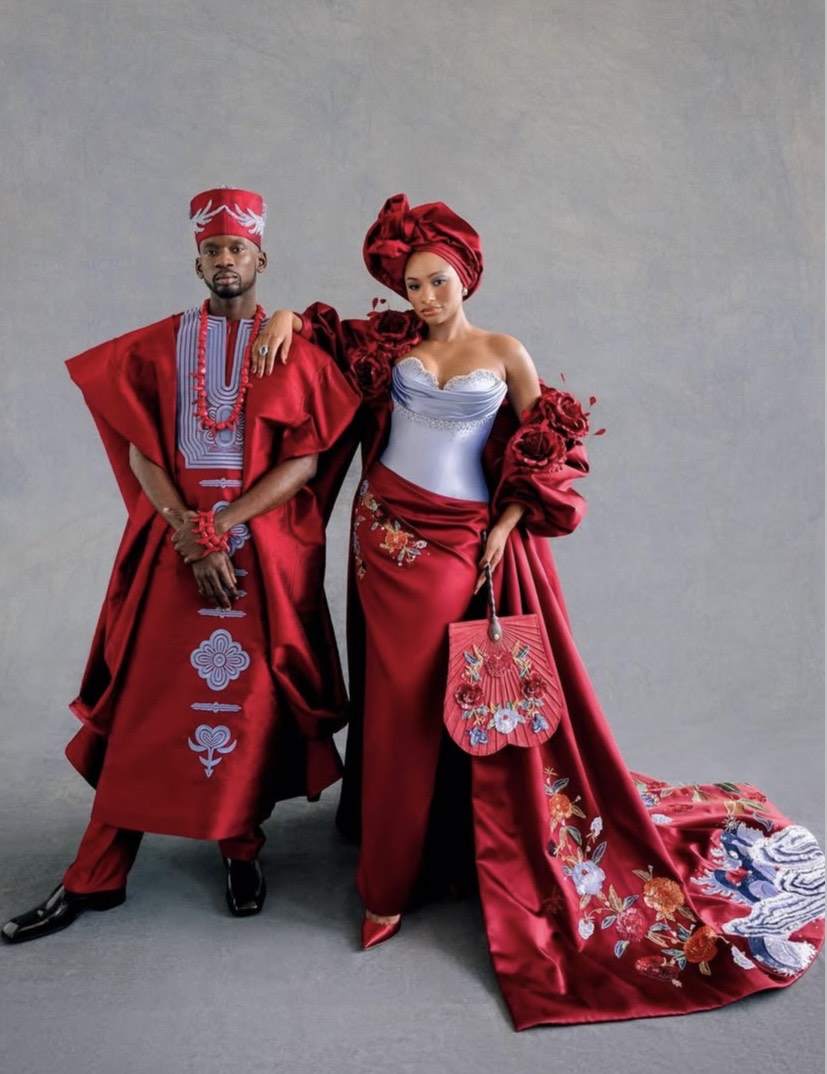
The true highlight, however, came with her collaboration with Sohee Park for one of her reception looks. It was a fusion of Yoruba heritage and Korean artistry that stands as a landmark in modern bridal fashion. At its heart was a dramatic Bordeaux cape, embroidered with handcrafted peonies and butterflies, paired with a Hansan Mos fan, itself a revered Korean heirloom art piece.
The craftsmanship was staggering: seven embroidery artisans, three couturiers, and five handworkers devoted 4,590 hours to the gown and cape, while a master Korean artisan spent 67 hours perfecting the fan. Completed with a deep red duchesse satin skirt, a powder blue strapless bodice, and meticulously embroidered accessories, the look transcended the wedding stage to become a symbol of how Nigerian bridal fashion now commands a place in the global couture conversation.
The rise of modern Nigerian bridal attire is more than fashion; it is cultural storytelling amplified by global visibility. Designers are experimenting with textures, inventing fabrics, and shaping silhouettes that capture attention far beyond Nigeria’s borders. Collaborations with international names, such as Temi Otedola’s with Sohee Park, underscore how Nigerian bridal fashion has become a global language that speaks of heritage, love, and innovation.
In 2025, Nigerian brides are not only redefining tradition; they are also setting the global standard for couture. Yet at the heart of this movement lies the steady pulse of tradition. Fabrics like aso oke, Akwaocha, and lace remain the foundation, even as they are reimagined into forms and stories once thought impossible.
For the latest in fashion, lifestyle, and culture, follow us on Instagram @StyleRave_
—Read also
Inside the Elegant Wedding of Temi Otedola and Mr Eazi: A Celebration Across Three Countries

