


Only a few years ago, much of the automotive industry including Ford Motor Company (F 1.22%) made a sizable gamble that the U.S. consumer would largely skip the hybrid option as the world transitioned from gasoline-powered vehicles to full electric vehicles (EVs). That proved costly and through changes in strategy, cancellation or delays of vehicles, and other special charges, it cost the broader industry tens of billions of dollars.
Despite that rather large speed bump, there are a couple of positive developments for full-line automakers such as Ford and not-so-great news for fully EV-focused companies such as Rivian Automotive (RIVN 2.52%) and Lucid Group (LCID 1.42%).
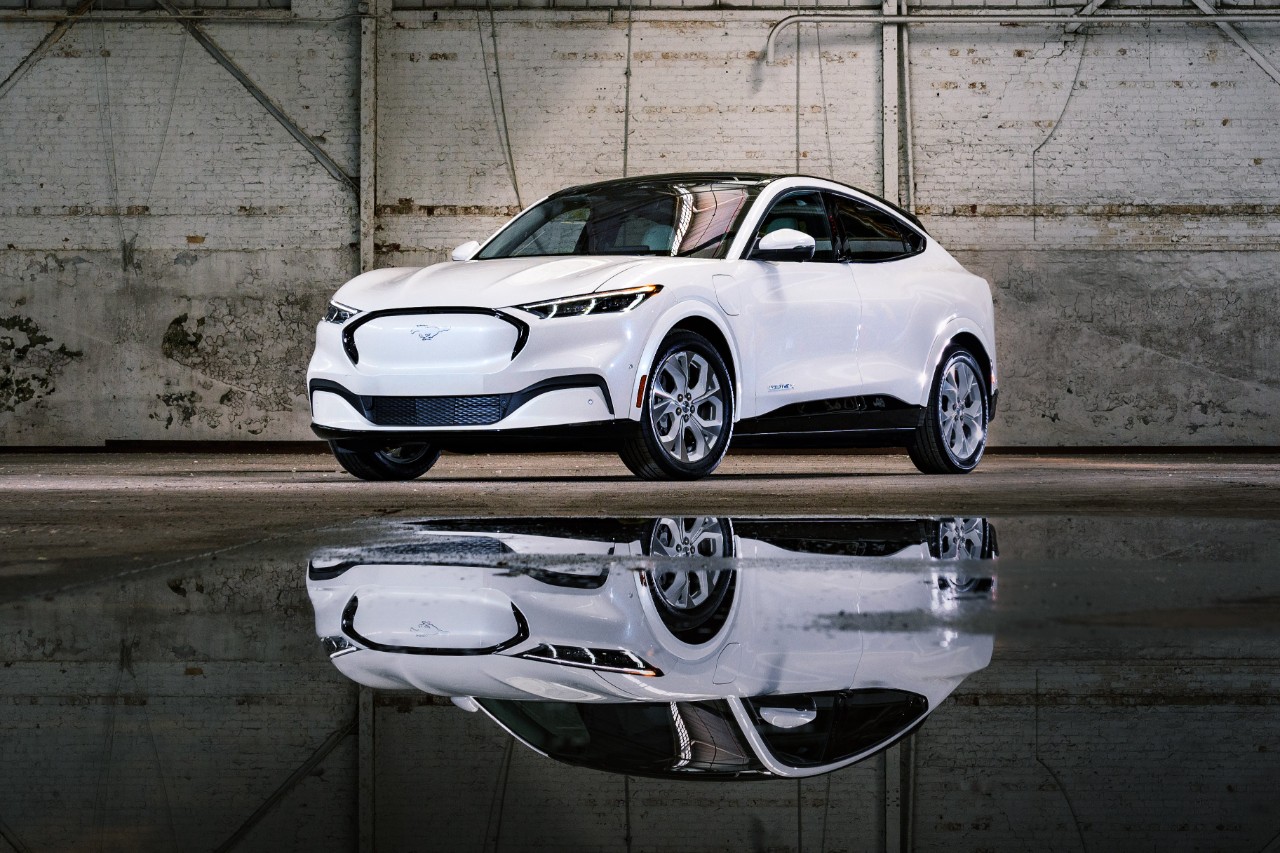
Image source: Ford Motor Company.
Trends are becoming more clear
A few years ago automakers expected a rapid increase in EV sales, similar to trends seen overseas, but growth in the U.S. would prove slower to gain traction than expected and will almost certainly fall well short of the 50% market share initially expected by the end of the decade.
“The key takeaway is that supply and demand are converging, and that’s what is driving sustained growth in hybrids,” according to Stephanie Valdez Streaty, director of industry insights for Cox Automotive. “More models, broader participation, and strong consumer pull driven by fuel savings without the range and charging trade-offs that still give some buyers pause.”
Now gasoline-powered vehicles are expected to still account for 50% of the U.S. market by the end of 2030, a decline from 73% last year, while hybrid EVs are expected to rise 16 percentage points to 34% of the market over the same time frame, according to estimates from AlixPartners.

Today’s Change
(-1.22%) $-0.17
Current Price
$13.40
Key Data Points
Market Cap
Day’s Range
$13.24 – $13.56
52wk Range
$10.68 – $17.78
Volume
275.6K
Avg Vol
60.1M
Gross Margin
7.81%
Dividend Yield
4.42%
Positive developments
Knowing what we know now, Ford investors would have preferred a more balanced strategy between powertrains, but with hybrid demand coming on strong, the full-line automaker will more quickly adapt unlike younger EV makers such as Rivian and Lucid waiting for full EV demand to gain traction in the coming years.
Ford is quickly responding with plans to match evolving consumer demand by offering a hybrid powertrain choice across nearly its full vehicle lineup by the end of 2030. The Detroit automaker is now aiming to drive roughly half of its global sales through hybrid options.
The good news, and the bigger development, is that Ford’s profitability with hybrids is much stronger than with its full EVs, which have hindered the automaker’s bottom-line by the billions in recent years. The progress that Ford has made after being initially surprised by the strong demand from its F-150 hybrid option, has been impressive. By the middle of 2024, many of Ford’s hybrid vehicles were profitable, a fact the company had admitted wasn’t true as recently as a year prior.

Today’s Change
(-2.52%) $-0.42
Current Price
$16.08
Key Data Points
Market Cap
Day’s Range
$15.44 – $16.12
52wk Range
$11.57 – $22.69
Volume
2.9M
Avg Vol
31.8M
Gross Margin
-441.39%
Later, Ford CEO Jim Farley went as far to say that F-150 hybrid margins were higher than its gasoline-powered version. That was an unexpected development but a pleasant surprise. That’s because Ford’s F-Series lineup is responsible for a large chunk of its global revenue, roughly one-third by most estimates, but is estimated to generate a staggering 90% of the company’s net profit.
What it all means
Sure, this transition from gasoline-powered vehicles to full EVs and the in-between options could have gone much more smoothly and been less costly. That said, it’s absolutely a positive development for investors that as hybrids surge and achieve record demand recently, Ford can quickly adapt and push a near full lineup of hybrids within a few short years.

Today’s Change
(-1.42%) $-0.09
Current Price
$5.91
Key Data Points
Market Cap
Day’s Range
$5.86 – $5.96
52wk Range
$4.47 – $33.70
Volume
58K
Avg Vol
17.9M
Gross Margin
-9560.18%
Furthermore, it’s even a bigger development that Ford’s hybrid profitability has come so far, so quickly. Hybrid vehicles appear to be here to stay and poised to thrive in the near term. That’s not great news for Rivian and Lucid currently, but Ford remains well positioned.

