


Gaming desks have quietly evolved from niche accessories into essential home office centerpieces, especially as gaming, streaming, and hybrid work continue to overlap. The rise of ergonomic setups has pushed even legacy furniture makers to rethink what a “gaming desk” should be. In that landscape, the Herman Miller Coyl gaming desk arrives as a serious statement piece, one that signals how far premium design is willing to go to accommodate long-session comfort and cable-heavy lifestyles.
What makes this launch interesting is not just the name behind it, but the intention behind the product. This is not a repurposed office desk being rebranded for gamers. It’s a purpose-built workstation designed to solve real friction points: clutter, posture fatigue, and the constant adjustment of setups for different uses throughout the day.
A Legacy Brand Finally Builds From the Ground Up
Shop here
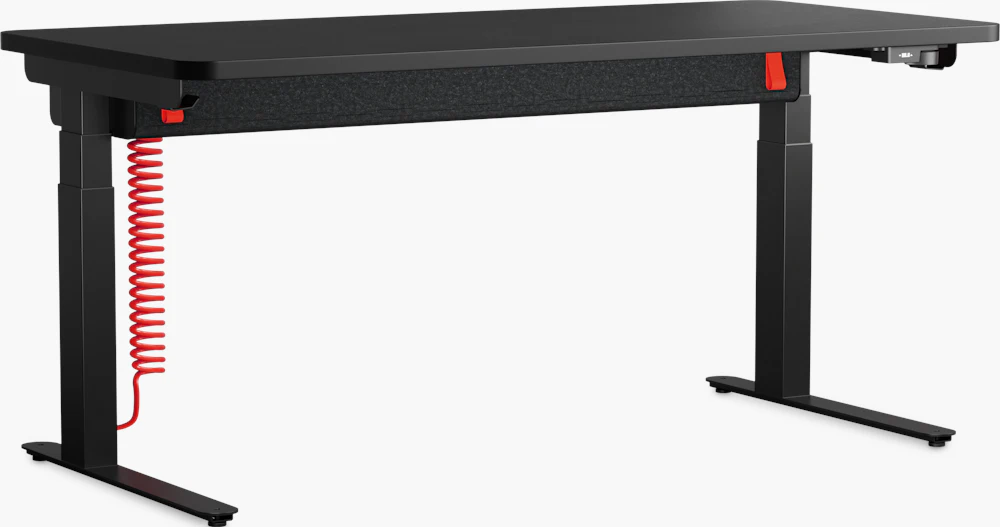
Herman Miller has spent decades defining what good seating and workspace design looks like. From ergonomic office chairs to collaborative workstations, the brand has consistently focused on long-term human comfort over short-term trends. Its earlier steps into gaming, especially through collaborations, felt like cautious entries. But the Herman Miller Coyl gaming desk is different. It represents the company’s first fully dedicated sit-to-stand gaming desk designed from the ground up rather than adapted from existing office furniture.
That distinction matters. Gaming setups today are no longer static. A user might work, play, stream, and even edit video from the same space. The Coyl attempts to unify those experiences into a single surface that adjusts with minimal friction. It’s not trying to be flashy in the traditional “gamer” sense; instead, it aims to be invisible in the best way possible: functional, stable, and intuitive.
Design That Balances Simplicity and Utility
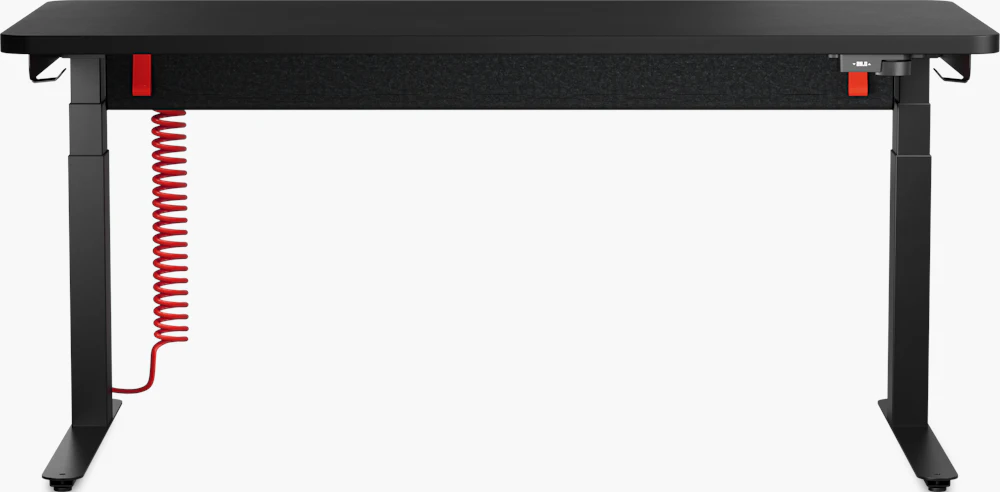
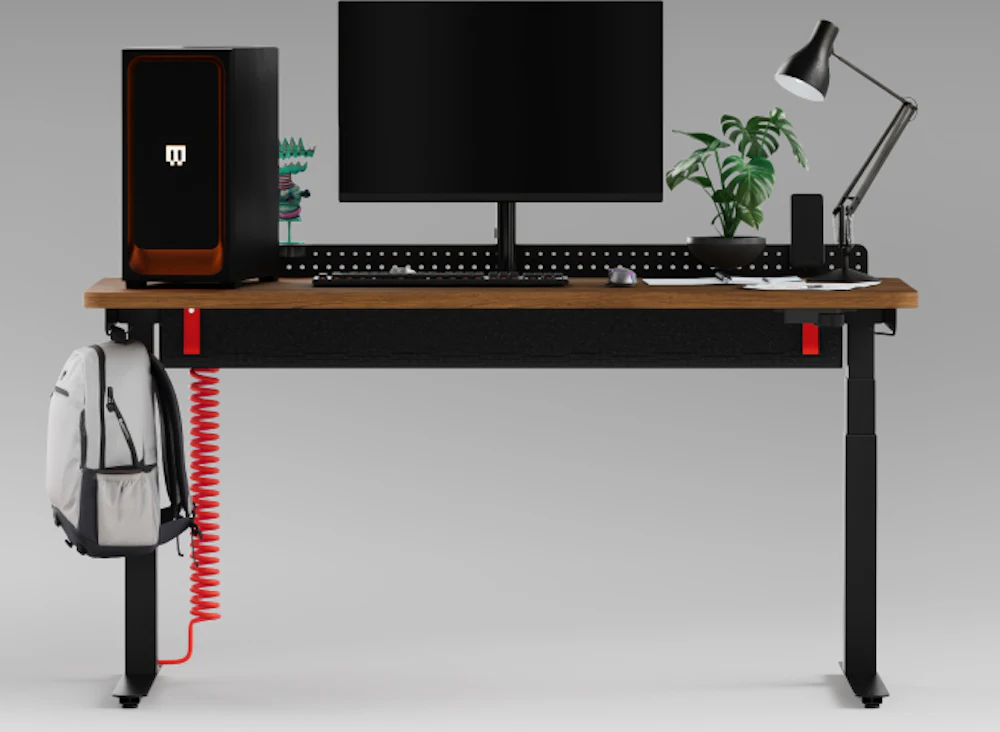
At first glance, the Coyl is understated. Clean edges, muted finishes, and a minimalist frame make it feel closer to a high-end design studio desk than a neon-lit battle station. Buyers can choose from black, white, ash, or walnut finishes, with matching leg colors that keep the design cohesive rather than overly decorative.
But the real personality of the Herman Miller Coyl gaming desk shows up in its details. The bright red coiled cable, arguably its signature visual element, is not just aesthetic branding. It serves a functional role in managing tension and movement for integrated power delivery. It’s one of those rare design decisions that manages to feel both practical and memorable.
This is where Herman Miller’s design philosophy becomes obvious: nothing is added unless it serves a purpose, and even then, it still has to look intentional.
Ergonomics, Movement, and the Rotary Dial Difference
Shop here
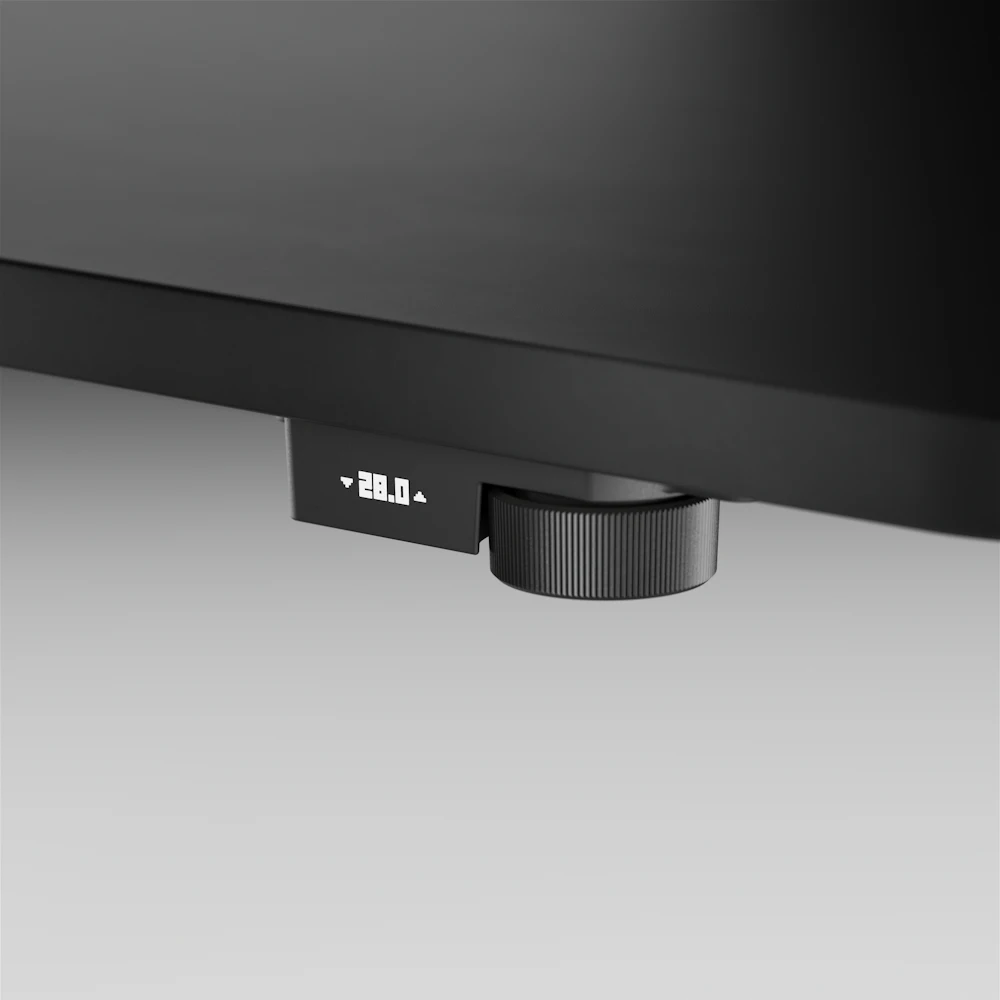
The Coyl’s sit-to-stand system is where it separates itself from typical gaming desks. Instead of relying on a one-touch electric control panel, it uses a rotary dial that allows for more deliberate height adjustments. That may sound like a step backward in a world increasingly driven by automation, but in practice, it encourages precision. Users can dial in exact positions rather than relying on preset jumps.
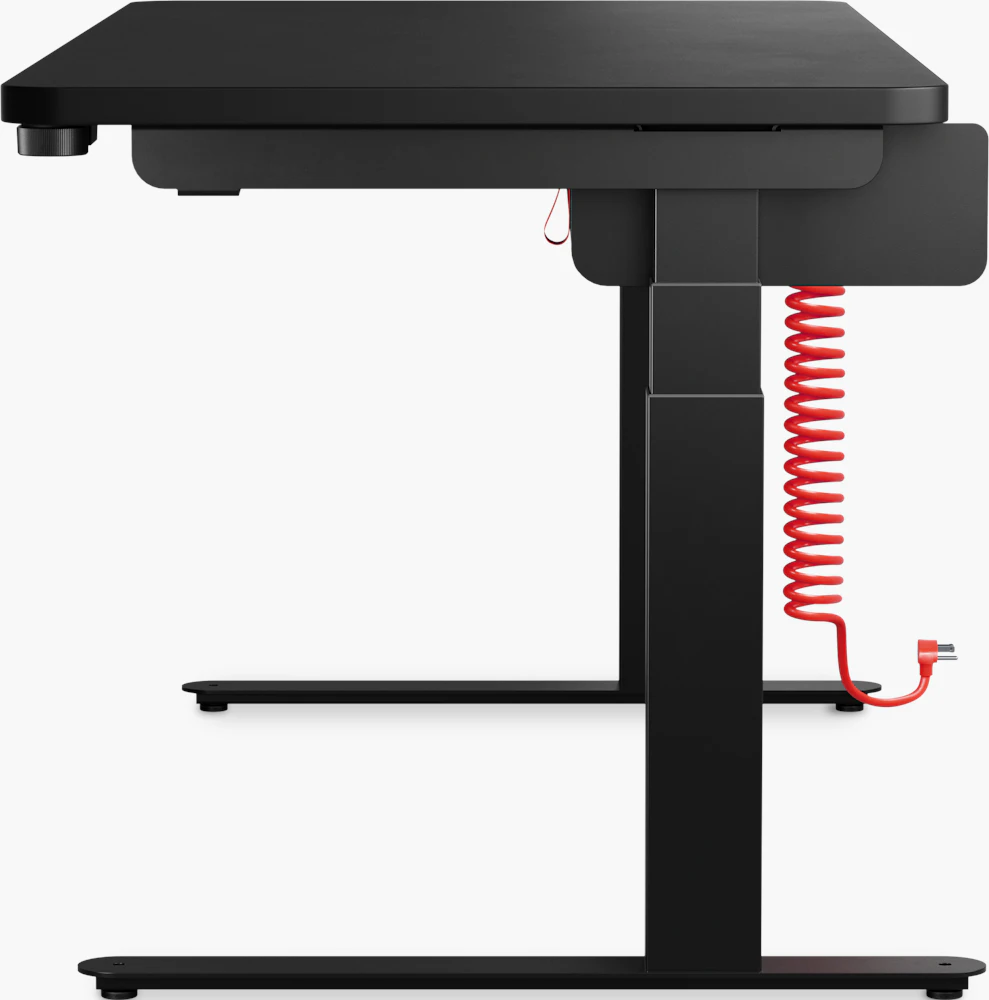
That tactile control is paired with a full-length cable management tray, which is arguably one of the most important upgrades for modern setups. Anyone with multiple monitors, consoles, or streaming gear knows how quickly cables can turn a clean desk into chaos. The Coyl directly addresses that problem rather than treating it as an afterthought.
From an ergonomic standpoint, the Herman Miller Coyl gaming desk feels like it was designed for people who actually spend six to twelve hours at a desk, not just those building aesthetic setups for social media photos.
Pricing, Configurations, and Real-World Value
The base version of the desk starts at around $1,095 and is available through select retailers. From there, pricing scales depending on how modular users want their setup to be.
Add-ons include a cable management trough, a rear shroud for concealment, and a full accessories bundle with mounts for controllers, phones, shelving, and small organizational tools. Fully configured, the system can push well past $1,800.
This pricing structure is important because it reveals the Coyl’s positioning. The Herman Miller Coyl gaming desk is not trying to compete with mass-market gaming desks. It’s competing with premium home office systems and ergonomic furniture ecosystems. Buyers are paying for design coherence and long-term durability, not just surface area and RGB lighting.
A Mature Take on Gaming Furniture
Shop here
The most interesting thing about the Coyl is how seriously it treats gaming without leaning into clichés. There are no aggressive angles or unnecessary visual gimmicks. Instead, there’s restraint, precision, and a clear focus on usability over spectacle.
The Herman Miller Coyl gaming desk ultimately feels like a “grown-up” gaming desk—not because it rejects gaming culture, but because it integrates gaming into a broader lifestyle. It acknowledges that gaming no longer exists in isolation; it now shares space with work, creativity, and everyday digital life.
Is it expensive? Yes. Is it over-engineered for casual users? Probably. But for anyone building a long-term setup that prioritizes comfort, adaptability, and design integrity, the Coyl makes a compelling case for itself. It feels less concerned with chasing trends and more interested in setting a new baseline for what a gaming desk can become when a legacy design house finally takes the category seriously.
Featured image: DWR
—Read Also


