


Maria Vonotna/iStock via Getty Images
Co-produced with “Hidden Opportunities”
We all invest for some long-term goal. The goal is always crafted around reducing the dependency on our day job and achieving early retirement for income investors. When you have a well-defined income stream from our investments, we can afford to spend our time on tasks with less to no monetary incentives, the ones that give us happiness.
The income investing strategy is time-tested and proven to reward investors of all age groups. But several poor decisions can derail investors from the primary goal of securing their financial future. Everyone has made mistakes during their investing career. It could have been paying too much, buying a stock you know nothing about because someone painted a very bullish opportunity, making an ill-timed purchase, or an investment made without understanding the risks involved.
“It’s good to learn from your mistakes. It’s better to learn from other people’s mistakes” – Warren Buffett
Mistakes are part of the natural learning process. Successful investors like Warren Buffett have shown excellent command over their emotions, but even the Oracle of Omaha has made and continues to make costly mistakes. For example, back in 2019, he admitted a mistake saying:
“I was wrong in a couple of ways on Kraft Heinz,” Buffett said on CNBC television. “We overpaid for Kraft.”
Mistakes are acceptable and even inevitable. As long as they don’t jeopardize the ultimate objective of financial freedom. No one wants to end up working for five more years because they miscalculated their retirement needs. Or worse, no one wants to go back to work a few years into retirement due to poor choice of investments.
This article discusses a few common mistakes investors make, which could snowball into severe challenges for your financial independence.
1. Underestimating the power of dividends
Dividends have been a significant contributor to the total market returns. Dividends have contributed almost 41% to the S&P’s total return in the past 90 years! The contribution has been more significant during periods of war, high inflation, and recessions.
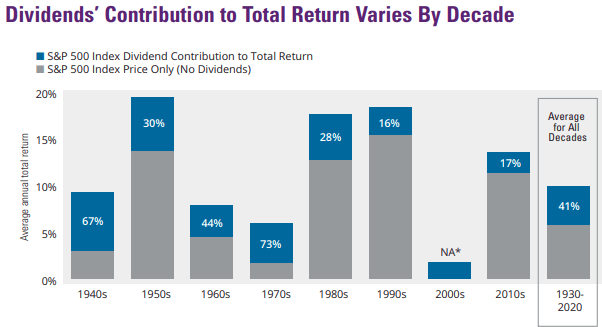
– Source: hartfordfunds.com
Many investors deem dividends a highly inefficient form of capital return due to double taxation of the income. First, the corporation is taxed on the profits; then, the shareholders are taxed on the dividends received.
These investors prefer their companies to invest internally and achieve more growth. But Merger & Acquisition is hardly an efficient form of capital return. There are lawyers, investment bankers, underwriters, brokers, and not to mention studies telling us that 70-90% of acquisitions end up failing.
At the end of the day, it is an individual preference – do you want to receive the cash so you can do whatever you want with it, or would you rather have someone deploy the money in whatever way they think is best? On my path to financial independence, I certainly prefer getting the return in cash to make my own investment decision.
Every dividend I receive, I can choose to reinvest in the same company, into a different company, or I can take it out and spend it, an option that I believe is extremely underrated! The point is, I get to choose where that money is best spent for my unique personal goals.
2. Overpaying for the dividend
You are into dividend investing; that’s great! Buying a dividend stock is purchasing an income stream, and a quality dividend-paying company is a gift that keeps giving for years. However, timing is critical to get the best bang for your buck.
Our bullish stance on Enterprise Products Partners (EPD) is no secret. It was discussed in our recent webinar on top picks for 2022. EPD is a quality MLP with excellent asset monetization and impressive history of rewarding shareholders. But let us look at EPD’s income generation based on the valuation at the entry.
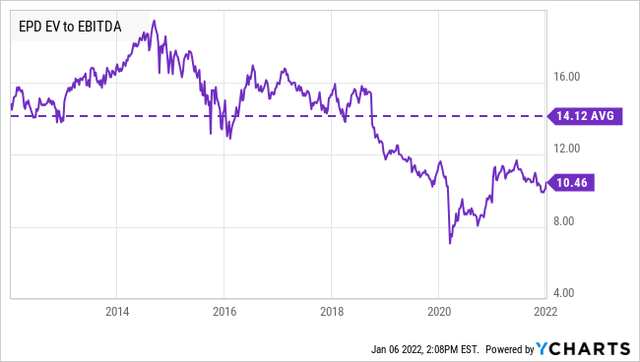
EPD is a bargain for its income TODAY. It has not always been the case.
Suppose someone purchased EPD in 2015 when it was trading at the higher end of its 10-year valuation; they would have been collecting on average $467 annually.
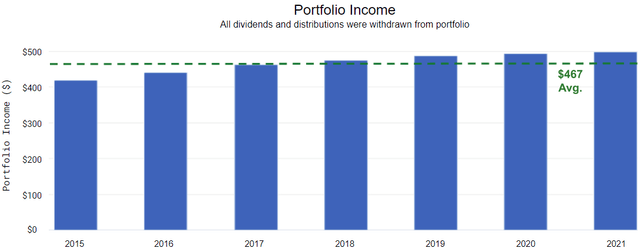
– Source: portfoliovisualizer
Not bad, but if the same stock were purchased in 2012 when it was trading close to its 10-year average valuation, your annual paycheck would have been almost 50% more.
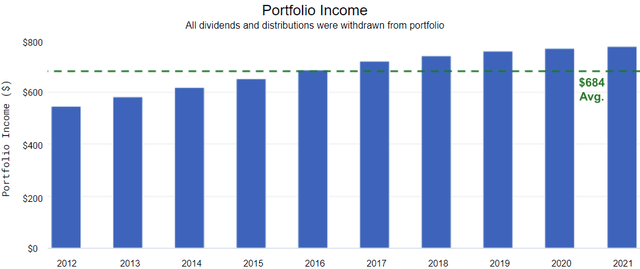
– Source: portfoliovisualizer
Buying quality opportunities at cheap prices is key to getting the most out of your investment. Today, EPD is significantly undervalued, making it a fantastic opportunity to lock in an 8.0% yield (based on the dividend increase announced Jan. 6th). This is what we do at HDO; we find high-quality undervalued opportunities to lock in high yields to amplify our passive income. And we try to be cautious and not overpay to purchase a stock for its dividend.
Note: EPD is an MLP that issues a K-1 tax form.
3. Buying a stock just because it has a high yield
This may appear to contradict #2, but please keep reading. In practice, it isn’t the same.
A stock can be cheap due to numerous reasons. And when a stock is cheap, its yield is automatically much higher, making it attractive to investors. Aside from bear markets and market sell-offs, on a high level, there are two reasons for a stock to be cheap
-
Market irrationality or short-term sector headwinds or sentiment shift.
-
Declining business fundamentals, fiercely competitive landscape, and/or a struggling business.
As income investors, we must distinguish between the two. The former is an opportunity to lock in high yields and get paid to wait for capital upside. The latter is a slow erosion of invested capital and a path to future dividend cuts.
Sometimes the former can turn into the latter over time due to various reasons, including but not limited to changing regulations, evolving technology landscape, and the generational shift of consumer preferences. It is paramount to monitor your portfolio and evaluate the health of your companies to ensure the sustainability of your income. Make sure you keep your eye on macro-economic developments and your individual holdings.
4. Getting emotionally attached to your investment
I love and respect the theory by Phillip Fisher – A stock is part ownership in a business. The spirit of the advice is for investors to thoroughly understand the company and all the risks it brings. However, where I think we should draw the line on the theory is the emotional attachment to the investment.
As much as I like to consider myself a part-owner of the companies in my portfolio, it is paramount to remember that I am in no position to make any decisions. Sure, as a shareholder, I get to vote on significant corporate-level changes, but my vote is a relatively small one. Also, no one asks the investors before proceeding with equity offerings, acquisitions, divestitures, and dividend cuts.
For income investors, stocks are vehicles to produce predictable income. You purchased a certain annual income, and if there is any risk to that, it is critical to move on to another opportunity. One of the big advantages of owning publicly traded stocks is that you can cut your losses and move on to greener pastures in a moment. An advantage you don’t have when you actually own a portion of a private business.
Getting emotionally attached to an investment despite knowing it no longer serves the purpose of generating current income is a poor strategy. It compromises the sustainability of your income, introduces several uncalculated risks for your capital, and jeopardizes your financial freedom. If you find a better opportunity that has better return potential with similar or lower risk, you should swap.
5. Lack of diversification
Diversification is the golden rule of income investment, and it becomes critical when your financial security depends on your portfolio (i.e., in retirement or early retirement). It simply means not putting all your eggs in one basket to ensure that your income is stable.
Decades of stock market performance analysis show that investors accept two kinds of risk when investing in the market. Systemic risk – which is also known as market risk. No matter how golden your investment, it does correlate with the broader market to a reasonable extent. The second kind is concentration risk, which can be reduced significantly through diversification.
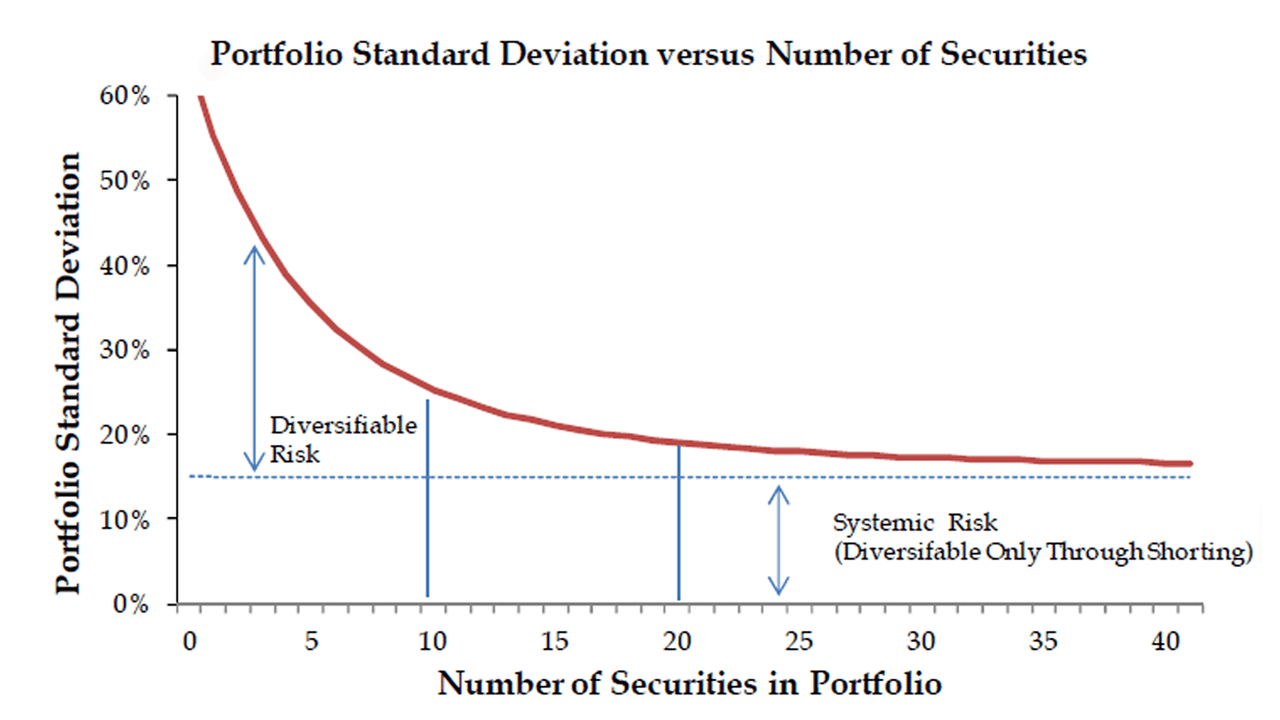
– Source: easyportfol.io
Studies tell us that owning over 40 stocks in your portfolio considerably reduces the concentration risk and allows your portfolio to perform well despite headwinds for specific companies or industries. When it comes to dividends, diversification is much-needed risk mitigation.
You might have heard the term Widows and Orphans stock – the definition is a stock that one can buy and hold forever since they offer a generous dividend and a reduced risk of losing money. The truth is – there are no widows and orphans stocks.
Look at General Electric (GE). For years the company was considered a safe dividend stock. Millions of retirees depended on the quarterly payments either through direct stock ownership or through thousands of pension and other income funds that held GE in their portfolio. But the trusted dividend payer disappointed everyone by almost eliminating the dividend in 2018.
Make sure you spread your nest egg across multiple high-quality securities so, in the event of a disturbance to the fundamentals of a few, your income stream, for the most part, remains intact.
Personally, I suggest following the Rule of 42. Target to own a minimum of 42 dividend-paying stocks. This isn’t something you have to do overnight, don’t sacrifice due diligence just for the sake of diversification! Make sure you take your time and identify quality opportunities. You might start with only 20 or 25 picks. But over time you will be able to identify more, and if you’re like me, you will find that you own substantially more than 42!
Conclusion
You worked hard to build your savings; now, let your savings empower your pursuits. You are the captain of your retirement planning ship. From time to time, the seas can get rough. Being diligent can help, but learning from others’ expertise and experience can save you a lot of costly trouble and a potential shipwreck.
This article discusses income investors’ five significant mistakes that could derail their planned retirement if not cause a retirement shipwreck. We are thankful to have a community from all walks of life, but with a common objective – to produce sustainable income from investments. Not everyone invests the same, so we learn from each other’s success and, most importantly, each other’s mistakes to grow together in our unique ways.

