


Four years ago, I made one of the biggest changes of my life. In October 2020, I underwent the “big chop,” trimming my chemically altered hair to the root for my natural texture to make a triumphant return. Going back to natural coils also prompted a deep edit of the hair products I used daily and required relearning how to care for them. In truth, I wouldn’t have known where to begin my natural hair journey if not for the guidance of trusted hairstylists who taught me about celebrity hairstylist and educator Andre Walker’s popular curl-typing system.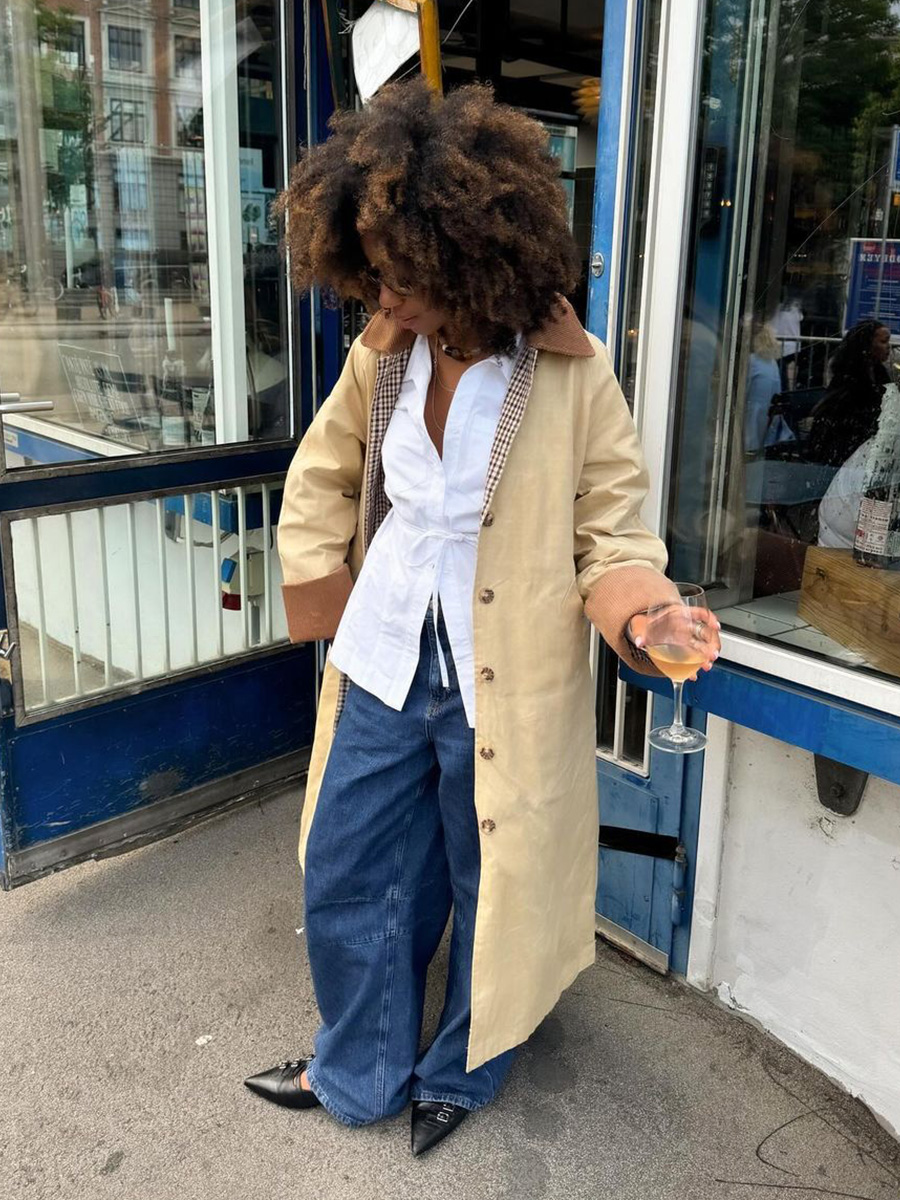
To get a better idea of what the different curl types are and what each needs to thrive, I tapped Maria Sotiriou, curl specialist and founder of Silke London, and celebrity hairstylist Sophie Rose Gutterman to share the perfect curly hair routine for your needs and their favourite products designed to enhance curls of all types. Whether you’re looking to completely revamp your haircare routine or have yet to be introduced to your hair type, they’ve got you covered. Keep scrolling to learn all about the different hair types and what you can do to make yours thrive.
The Different Curl Types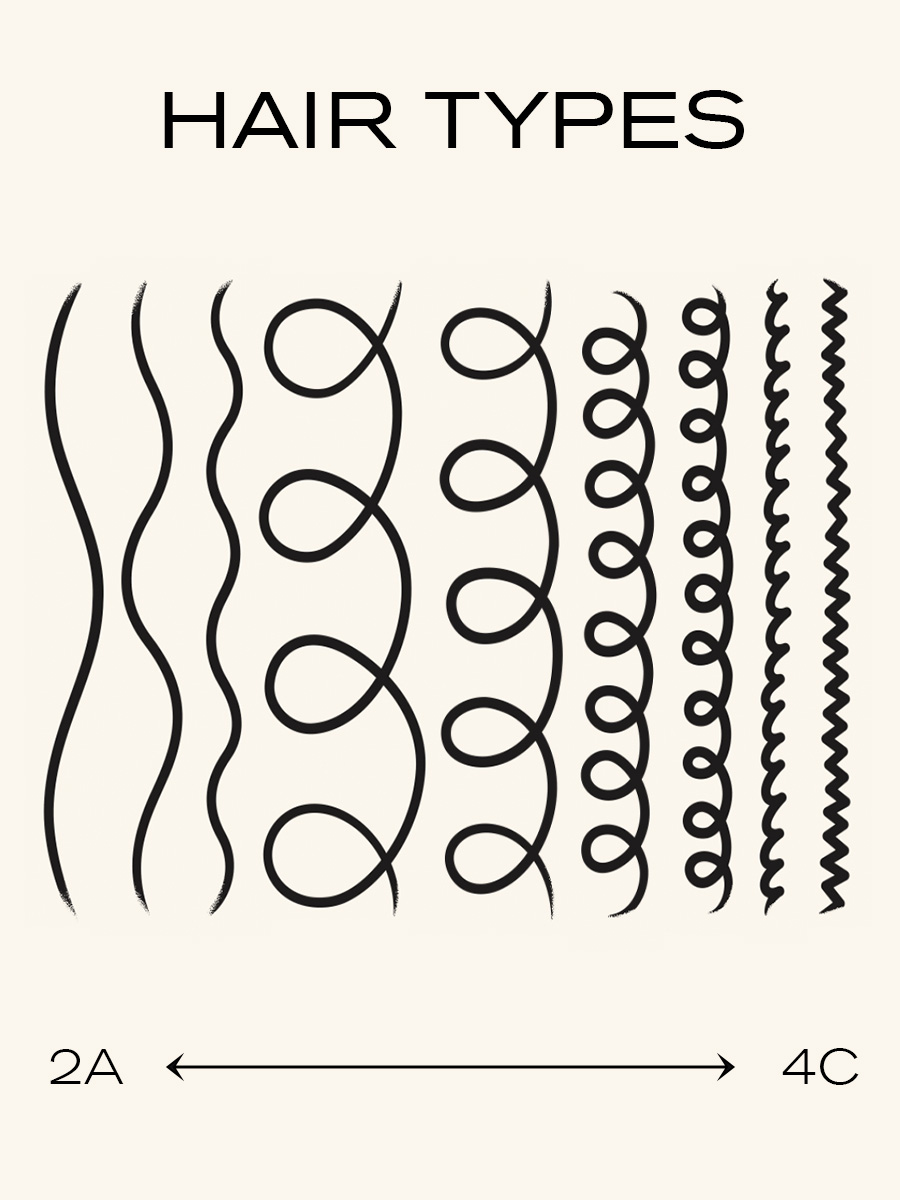
“Curly hair” is an umbrella term used to describe hair with tighter textures and the pattern of individual hair strands. The texture of each is categorized as being fine, medium, or coarse. “Each category is determined by the circumference of individual strands,” Sotiriou explains. A hair type is assigned to determine how we expect the hair to act. “1a, 1b, and 1c hair is straight hair and will probably be difficult to style and hold a curl, whereas 4c type hair will be coily, but the texture can be fine and delicate even though you might not think it is,” she says.
If you’re unsure of where your strands fall on the spectrum, you’re in luck. Sotiriou tells me there’s a quick trick to revealing the nature of your hair. “The easiest way to determine curl pattern is by looking to see if the curl rotates round and back to sit just below the curl above. That would probably be coily hair,” Sotiriou says. “If the hair curls around but drops lower when moving into the next curl, that is probably curly hair. Finally, if the hair doesn’t curl back around but drops into a bend, that is wavy hair.”
Is it possible for there to be different curl types on a single head of hair? According to Gutterman, not only can someone have multiple curl types in different locations, but they can also change over time. “It can be [more] curly, and the texture over time can get straight or be different from heat damage, chemicals, or even taking hormonal supplements,” she explains. It’s also helpful to know if your curls are high or low porosity, since water and products can enter the hair but also leave it easily. “Hair porosity will play a big role in how much product you need. Depending on how well your hair retains water, you may have to use a more hydrating leave-in,” says Gutterman.
Now that you know what to pay attention to, keep scrolling for an introduction to the different curl types.
Type 2 (Wavy Hair)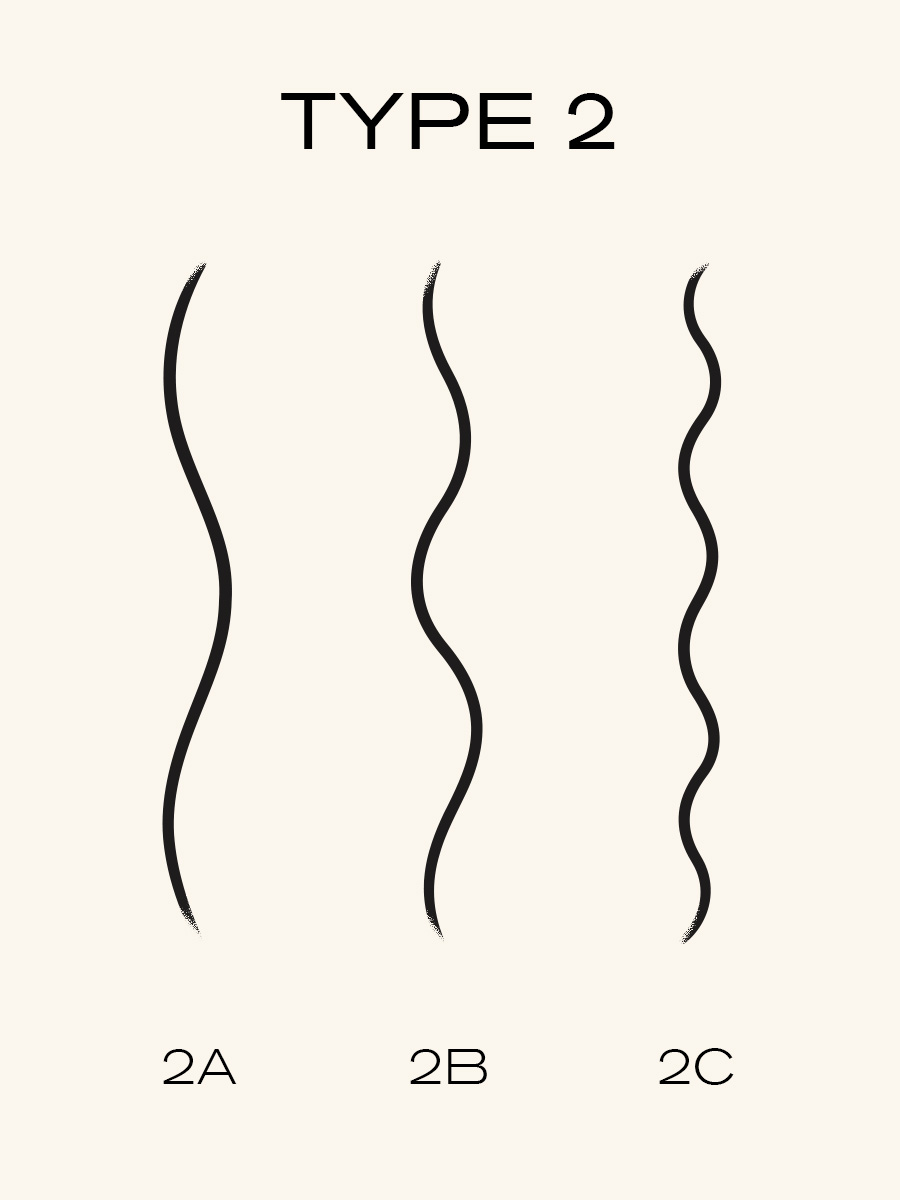
Type 2 curls range from fine to coarse textures, are bendable, hold their shape, and grow in an S-shaped pattern from the scalp. To extend the longevity of styles with type 2 curls and reduce the chance of flattening, try diffusing your curls for maximum volume and definition. Then, finish off with a lightweight holding spray.
2a: This curl type features a fine texture that can be easily straightened. It also tends to lack volume at the root. To give the hair more volume and fullness, consider using light hair mousse to add some fullness at the base and pump up the volume without weighing down your strands.
2b: Lying flat at the crown with defined S-shaped waves starting from mid-length, the strands of this hair type have a thicker diameter than 2a. To play up your natural waves, try using a sea salt texturizing mist.
2c: Because the 2c curl type features S-shaped bends that are defined at the root and thick, they’re susceptible to frizzing. To keep your curls well-maintained and defined, use a non-lathering, sulfate-free co-wash between washdays that won’t strip natural oils and moisture away. Layering styling cream with mousse will lock in moisture and add hydration.

