


DJI’s RS 4 Pro looks unbeatable on paper, but if you’re a solo creator, it might actually slow you down. Shooting TikToks, Reels, or YouTube videos alone? You know a gimbal is your best friend — it’s what keeps your shots smooth while you move, chase B-roll, or film interviews on the fly. That’s why the DJI RS 5 vs DJI RS 4 Pro debate is so relevant right now.
DJI just released the RS 5, following the RS 4 and RS 4 Pro from April 2024. Both look impressive, but they’re built for very different creators: one is quick, smart, and solo-friendly; the other handles heavier gear and more complex setups. Pair either with aerial clips from the DJI Mavic 4 Pro, and you’ve basically got a full kit for ground-to-sky shots, filmed entirely by you.
So instead of asking which gimbal is “better”, the real question is: which one actually works for solo shooting? That’s what I’ll break down in this guide.
DJI RS 5 vs DJI RS 4 Pro: Who Each Gimbal Is Best For
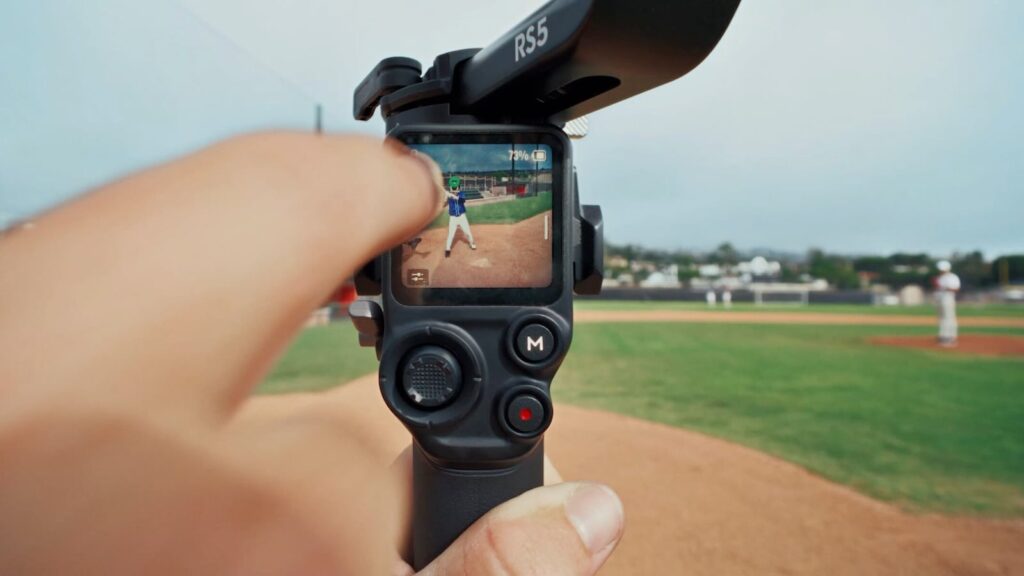
While these are some of DJI’s latest gimbals, I’m going to be honest with you: DJI RS 5 and DJI RS 4 Pro were designed for different users. Yep, that’s right, not the same type of buyer. Let’s break down who they’re for right away to avoid confusion.
Who’s the content hustler of the pair? It’s the DJI RS 5. This gimbal boasts a lightweight design and swift subject tracking for faster turnaround on social feeds. Sleek and easy to use, it can keep you independent, making solo filming a real possibility.
Meanwhile, the RS 4 Pro is the artist of the two, designed for filmmakers with a heavy kit. Supporting cameras up to 10 pounds, it shines during independent reporting or movie-making, but it isn’t the easiest for a one-person workflow.
I’m going to say that most solo creators don’t need a studio-in-a-box; they need something that moves with them without slowing them down. But of course, it all depends on what you create. Let’s compare the DJI RS 5 and the RS 4 Pro across every category to see which one best fits your solo setup.
DJI RS 5 vs DJI RS 4 Pro: Stabilization
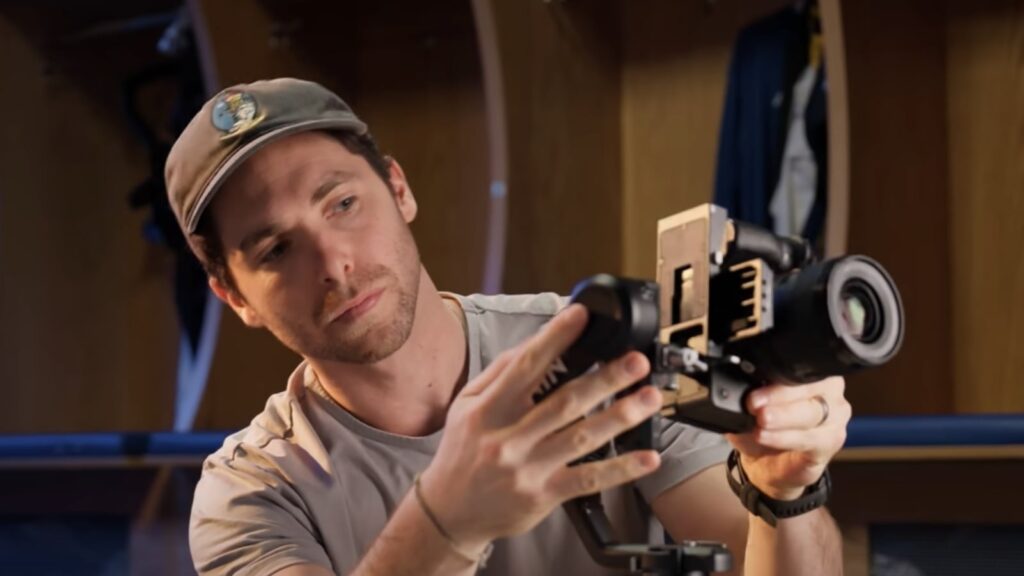
One of the main reasons creators invest in a gimbal is stabilization. Footage immediately looks unprofessional if it’s shaky during a walk or wobbly when tracking a subject. That’s exactly what gimbals fix—and it’s where the DJI RS 5 vs RS 4 Pro debate starts to matter.
DJI RS 5
The DJI RS 5 uses DJI’s newer 5th-generation stabilization, and in real use, that extra motor power is noticeable. DJI says there’s a 50% boost in peak motor torque compared to the RS 4. From a creator’s perspective, that mostly shows up when you’re moving faster. Walking shots feel steadier, and the gimbal just feels like it has more headroom before things start to wobble. Vertical shooting is also better, which matters a lot if most of your content is headed for TikTok or Reels.
One feature I really like is the on-screen Z-Axis indicator. It shows you, in real time, how much vertical movement you’re introducing as you walk. When I’m filming solo, that kind of feedback is genuinely helpful — it reminds me to slow down or adjust my steps. It’s not flashy, but it’s one of those subtle upgrades that actually improves your footage instead of just looking good on a spec sheet.
DJI RS 4 Pro
The DJI RS 4 Pro, on the other hand, relies on DJI’s proven 4th-generation RS stabilization algorithm. It balances strong stabilization and natural camera movement. Footage stays smooth without feeling locked-in or robotic, giving you that cinematic feel.
It’s optimized for a wide range of scenarios, like running, low-angle tracking, and sports. Vertical shooting is also solid, although it doesn’t match the RS 5’s extra motor torque. Still, for most solo creators, the RS 4 Pro delivers stable, professional-level footage that rarely lets you down.
Verdict: If you need maximum control and smart solo-friendly tools like tracking feedback, the RS 5 edges out the RS 4 Pro. But if you prioritize natural movement and don’t need the extra torque, the RS 4 Pro is still a rock-solid choice that’ll handle nearly every shoot you throw at it.
DJI RS 5 vs DJI RS 4 Pro Tracking and Autofocus
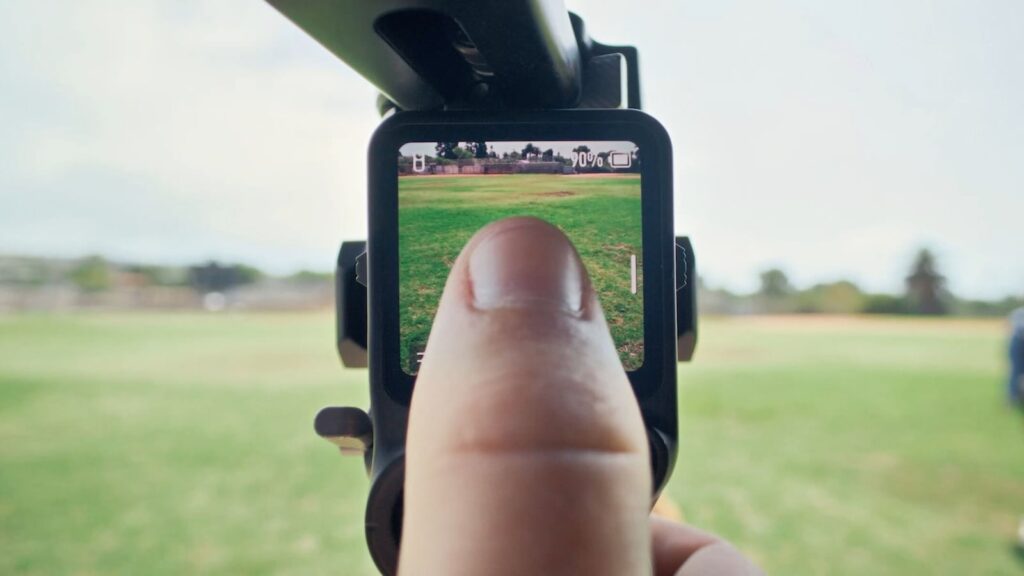
If you film yourself or fast-moving subjects, tracking can make or break a gimbal — especially when you’re working solo. This is where the DJI RS 5 vs DJI RS 4 Pro comparison gets interesting, because they approach subject tracking very differently.
DJI RS 5
The DJI RS 5 introduces improved subject tracking. It works like this: once tracking is locked, the gimbal keeps you centered in the frame while you move, whether you’re walking toward the camera or shifting side to side. For talking-head content, vlogging, or social clips where you’re both the talent and the operator, this kind of built-in tracking support is super useful.
DJI RS 4 Pro
The DJI RS 4 Pro, on the other hand, leans heavily on its LiDAR autofocus system. Instead of focusing on tracking faces or bodies directly, it uses LiDAR to maintain extremely accurate focus — even in low light or busy scenes where traditional autofocus can struggle. In practice, this works best when you’re using supported lenses and more complex camera setups, especially for commercial or narrative work.
Verdict: If your priority is being hands-free and staying in frame, the RS 5 feels like the best gimbal with subject tracking for solo creators. If pinpoint focus accuracy matters more than following a subject’s movement, the RS 4 Pro’s LiDAR autofocus still has a big advantage — it just feels more geared toward advanced or crew-based shoots.
DJI RS 5 vs DJI RS 4 Pro Payload and Camera Compatibility
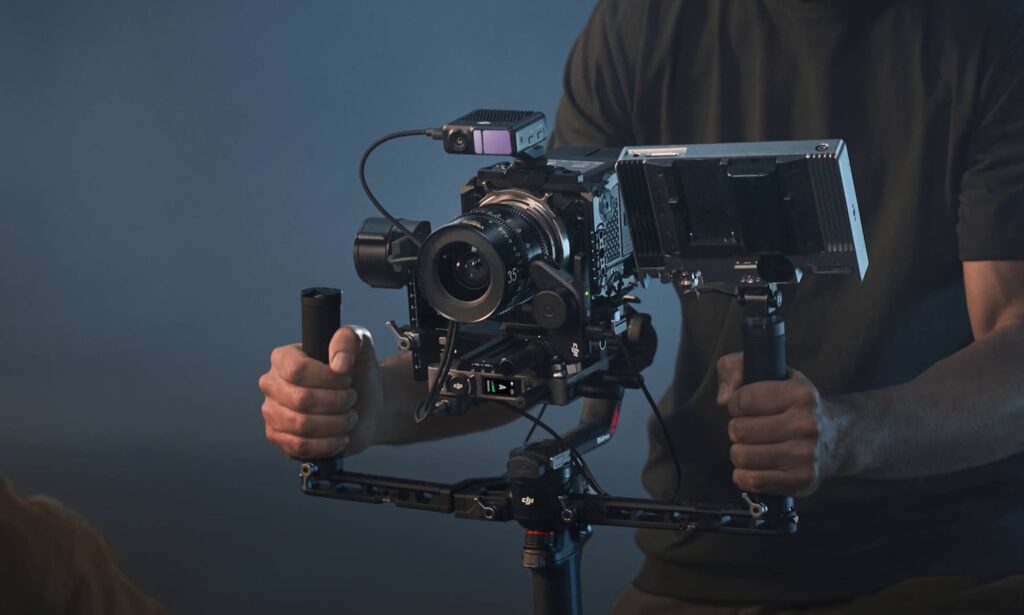
Payload capacity and camera compatibility matter more than most people realize, especially once you start adding heavier lenses, microphones, or external monitors.
DJI RS 5
The DJI RS 5 payload is designed to comfortably handle popular mirrorless setups. Think cameras like the Sony A7 IV or A7S III paired with a mid-range zoom. Or Canon EOS R6 and R8 setups with RF lenses. Even Fuji shooters using the X-T5 or X-H2 won’t feel limited here. For most solo creators, vloggers, and hybrid shooters, the RS 5 has plenty of headroom.
DJI RS 4 Pro
The DJI RS 4 Pro payload, though, is where things step up. It’s clearly built for heavier and more demanding rigs — full-frame cameras with large lenses, cine glass, and additional accessories. Sony FX3 and FX6 builds, Canon EOS R5 with heavier RF zooms, or more decked-out Fuji rigs feel right at home on the RS 4 Pro.
Verdict: In short, both gimbals offer excellent camera compatibility, but they target different users. If your setup is relatively compact and creator-focused, the RS 5 is more than enough. If your rig is starting to feel like a small cinema build, the RS 4 Pro is the safer long-term investment.
DJI RS 5 vs DJI RS 4 Pro: Battery Life and Charging
Battery life is one of those things you don’t think about until you’re halfway through a shoot and scrambling for a charger (been there).
DJI RS 5
The DJI RS 5’s 14-hour battery life is solid for day-to-day creator use. It easily lasts through multiple shooting sessions, and more importantly, it supports fast charging, becoming fully charged in just an hour. That means even a short charging break can give you enough power to finish filming — a big win if you’re shooting on location or hopping between spots.
DJI RS 4 Pro
The RS 4 Pro approaches power a bit differently with its dedicated battery grip. The DJI RS 4 Pro battery grip offers an impressive 29-hour runtime, according to DJI, which is great for long, continuous shoots. But Reddit users report significantly reduced battery life when the LiDAR is on. The trade-off is size and weight — it’s not something you’ll forget you’re carrying. Also, the RS 4 Pro reaches a full charge in 2.5 hours, an hour and a half longer than the DJI RS 5.
Verdict: When it comes to gimbal charging time, both models perform well, but the RS 4 Pro (officially) far outpaces the RS 5. However, fast charging and lighter weight give the RS 5 a practical edge. If you’re filming in shorter bursts and value quick top-ups, the RS 5 feels more convenient. If you need all-day power, the RS 4 Pro’s battery setup makes more sense.
Vertical Shooting & Social Content
One thing I didn’t realize until I started using a gimbal regularly is how much vertical shooting actually matters — especially if you’re making content for TikTok, Reels, or Shorts every week.
DJI RS 5
With the DJI RS 5, the vertical mode feels like it was designed for social creators. It’s quick and intuitive — loosen a knob, flip the axis, and you’re shooting vertical without hunting for extra plates or adapters. Once you’re in vertical mode, the stabilization holds up nicely. That means you won’t lose momentum just because you switched orientation.
DJI RS 4 Pro
The RS 4 Pro also supports vertical shooting, but it doesn’t feel as seamless. You still have to go through physical steps of loosening the axis lock knob, detaching the plate, and rotating the camera. That tiny extra hassle adds up when you have to do it multiple times per shoot. For me, that interruption — even if it’s just 30 extra seconds — can break a creative rhythm.
Verdict: if vertical social content is part of your everyday workflow, the RS 5 makes it feel natural instead of an extra task every time you want to switch.
Accessories & Ecosystem
Here’s where things can get a little gear-nerdy, but also very practical if you actually use these extras.
DJI RS 5
With the DJI RS 5, the most useful add-ons for me are things like the Electronic Briefcase Handle and the DJI Focus Pro motors. They don’t feel extra because they make solo shooting easier: smoother angles, quicker control, and less reliance on an assistant. Bluetooth shutter support for Panasonic and Fuji is another convenience that saves me from lugging extra cables.
DJI RS 4 Pro
On the RS 4 Pro, the ecosystem is undeniably deeper, especially with LiDAR autofocus, dual focus & zoom motor support, and DJI Transmission options. But, I’ll be honest, most of those accessories feel like they belong in a studio or network shoot rather than a shoot-on-the-fly solo setup. They’re amazing if you’re building a serious cine rig or working with a small crew, but if you’re just trying to film weddings, travel content, or social videos on your own, the barrier to entry feels higher — both in cost and setup time.
Verdict: Don’t chase accessories for the sake of it. The ones that help you shoot better by yourself are worth it. Unless you have a small crew helping you, the RS 4 Pro won’t make your life any easier.
Verdict: Best Pick for Solo Creators
So here’s the honest takeaway after using both of these gimbals in real-world solo scenarios:
For most solo creators, especially those filming short-form content, the DJI RS 5 feels like the better overall fit. It’s lighter to carry, easier to switch to vertical mode, has smart tracking that feels intuitive, and fast charging. Meanwhile, stabilization happens automatically, keeping you in your creative flow rather than interrupting it.
That said, if your work demands heavier gear and professional focus/zoom control (things like RED cameras, cinema lenses, or multi-camera setups) then the RS 4 Pro is the better choice. It’s more of a mini production rig than a solo storyteller’s tool.
What I’d buy and why:
| Payload Capacity | 6.6 lbs | 10 lbs |
| Weight | 1.46 kg with battery grip | 1.8 kg |
| Tracking AI | Enhanced Intelligent Tracking Module, touchscreen subject selection, ActiveTrack for people, vehicles, pets | LiDAR autofocus, ActiveTrack Pro, long-distance subject lock, dual focus & zoom motors |
| Stabilization Algorithm | 5th-Gen RS Stabilization | 4th-Gen RS Stabilization |
| Vertical Shooting | 3rd-Gen Native Vertical Shooting | 2nd-Gen Native Vertical Shooting |
| Handles & Controls | Electronic Briefcase Handle with joystick & camera control, fine-tuning knobs | Standard handle, dual Focus Pro motor support, joystick & lens control |
| Battery / Runtime | 1-hour full charge, 14-hour standard, 30-hour with BG70 grip | Longer with BG70 grip (up to 29 hours), slower standard charging |
| Camera Compatibility | Sony, Canon, Nikon, Panasonic, Fujifilm (mirrorless & mid-weight setups) | Heavier mirrorless & cinema setups (RED, FX6, full-frame mirrorless) |
| Quick-Release System | High — lightweight, fast balancing, intuitive controls | Medium — heavier, more setup, better for two-person crews or heavy rigs |
| Ease of Use for Solo | High — lightweight, fast balancing, intuitive controls | Medium — heavier, more setup, better for two-person crews or heavy rigs |
| Pro Features | Optional DJI Focus Pro Motor, SDR Transmission support, Bluetooth shutter for Panasonic/Fujifilm | Full DJI Focus Pro ecosystem, LiDAR autofocus, dual motor zoom/focus, video transmission, extended professional control |
DJI RS 5 vs DJI RS 4 Pro — FAQs
Is the DJI RS 5 worth it for solo creators?
Yes — especially if you care about quick setup, intuitive controls, and vertical shooting for TikTok/Reels. Its smart features and fast charging make solo workflows easier.
Is the DJI RS 4 Pro overkill for vloggers?
For most vloggers, yes, especially if your camera and lens combinations are lightweight. The RS 4 Pro its better for heavier setups and professional focus systems, not run-and-gun content.
Which DJI gimbal is best for TikTok and YouTube?
If your priority is short-form vertical content, the RS 5 wins because it makes vertical shooting less of a hassle and more seamless.
Can the DJI RS 5 handle professional cameras?
It can absolutely handle mainstream mirrorless setups from Sony, Canon, Nikon, Panasonic, and Fuji. But if you’re running cinema cameras with big lenses and accessories, the RS 4 Pro gives you more headroom and torque.

