


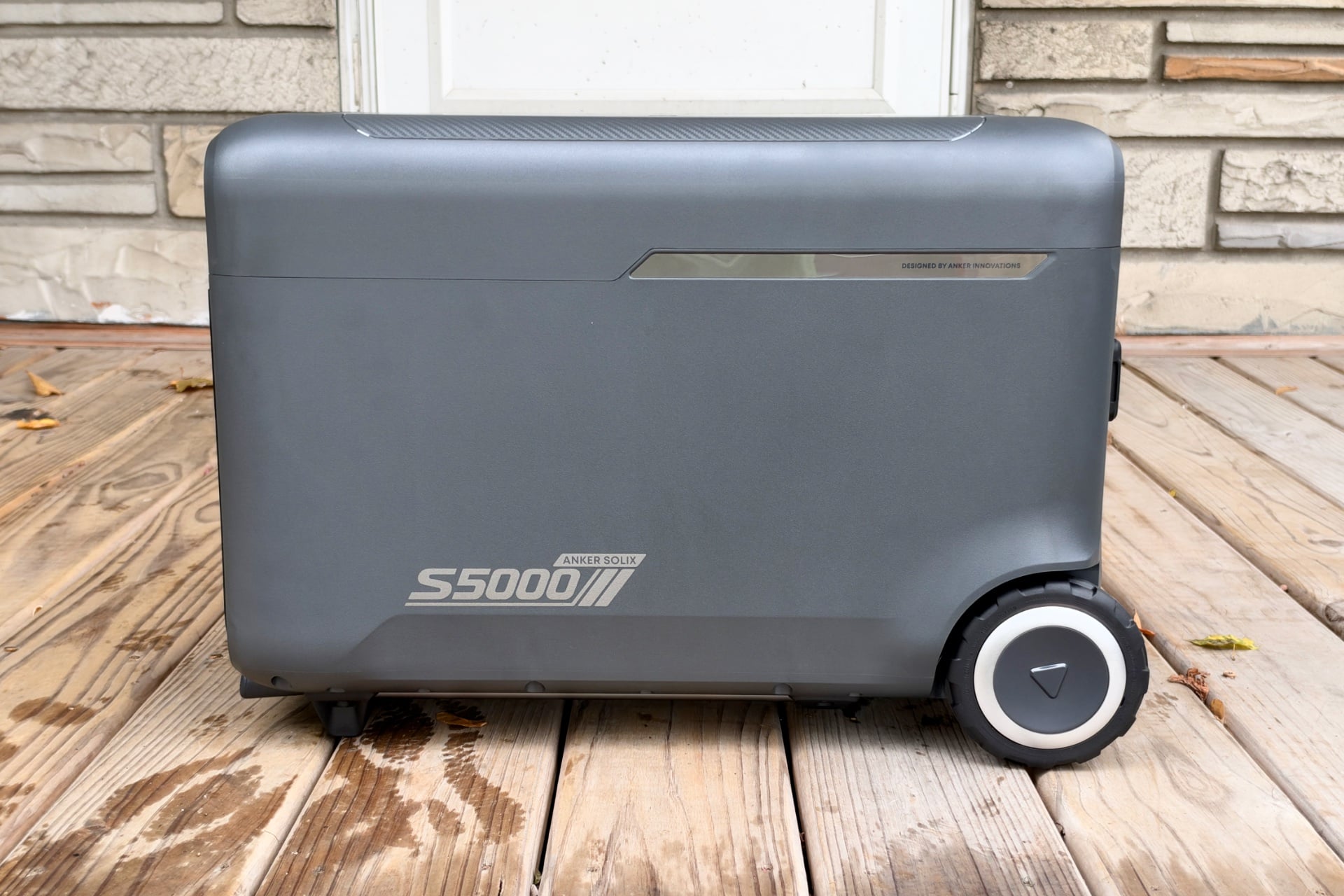
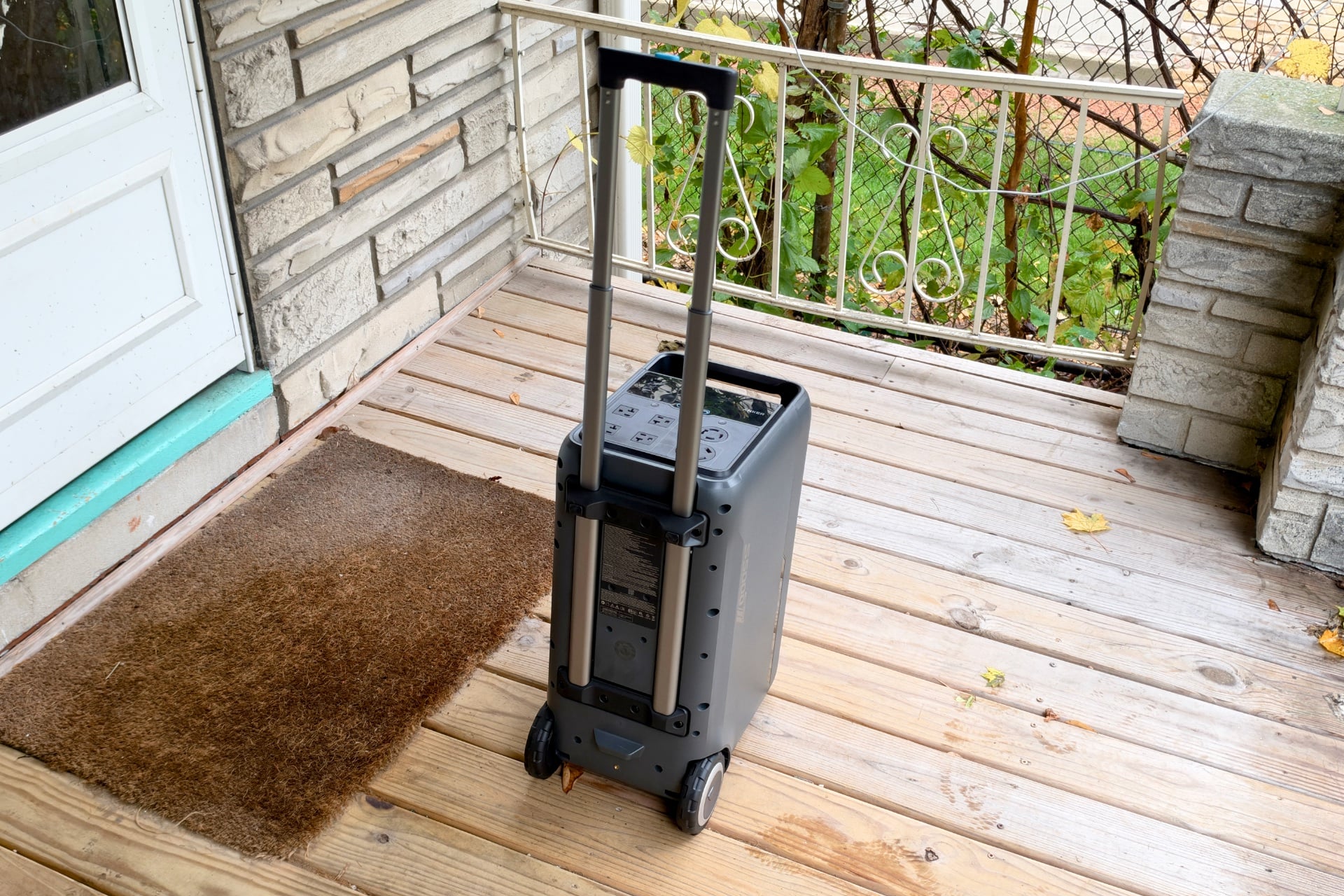
The Anker Solix S5000 is small and light for a big, heavy battery. It’s a 5kWh device that weighs under 100 pounds and measures just 22 inches on its longest side, making it just a bit bigger than most carry-on luggage. It even has wheels and one of those telescoping handles you’d drag a suitcase around the airport with.
That size and weight are a big part of the appeal. Rather than pitching the S5000 as a rugged backup battery for the RV-and-camping set—you can use it for that if you keep it clean and dry, though—Anker sells it purely as a home backup battery for keeping appliances and other home equipment running during an outage. One Anker claim on the S5000’s product page is that it can “power your home for 48 hours,” which is overselling things a bit.
Anker Solix S5000
A capable enough battery that’s easier to tote around than most competing options.
- Lightweight for its category
- Easy to move around
- Expandable to 12kWh
- Low idle wattage
- Lots of handy settings
- 240V outlet requires an adapter for appliances
- It’s still a big, heavy battery
- Overkill for basic home backup
- Not enough capacity for whole-home backup
I came into this review feeling like 5kWh might be overkill. When I reviewed the 2kWh Solix S2000, I was able to run a fridge off it for nearly two days straight, which is longer than most power outages I’ve experienced. And so, going in, I wanted to answer one question: is a much heavier battery with more than double that capacity practical? For me, probably not, but for those who want the extra peace of mind that comes with a very high-capacity, portable power station, the answer might very well be yes.
The best form factor for this sort of thing
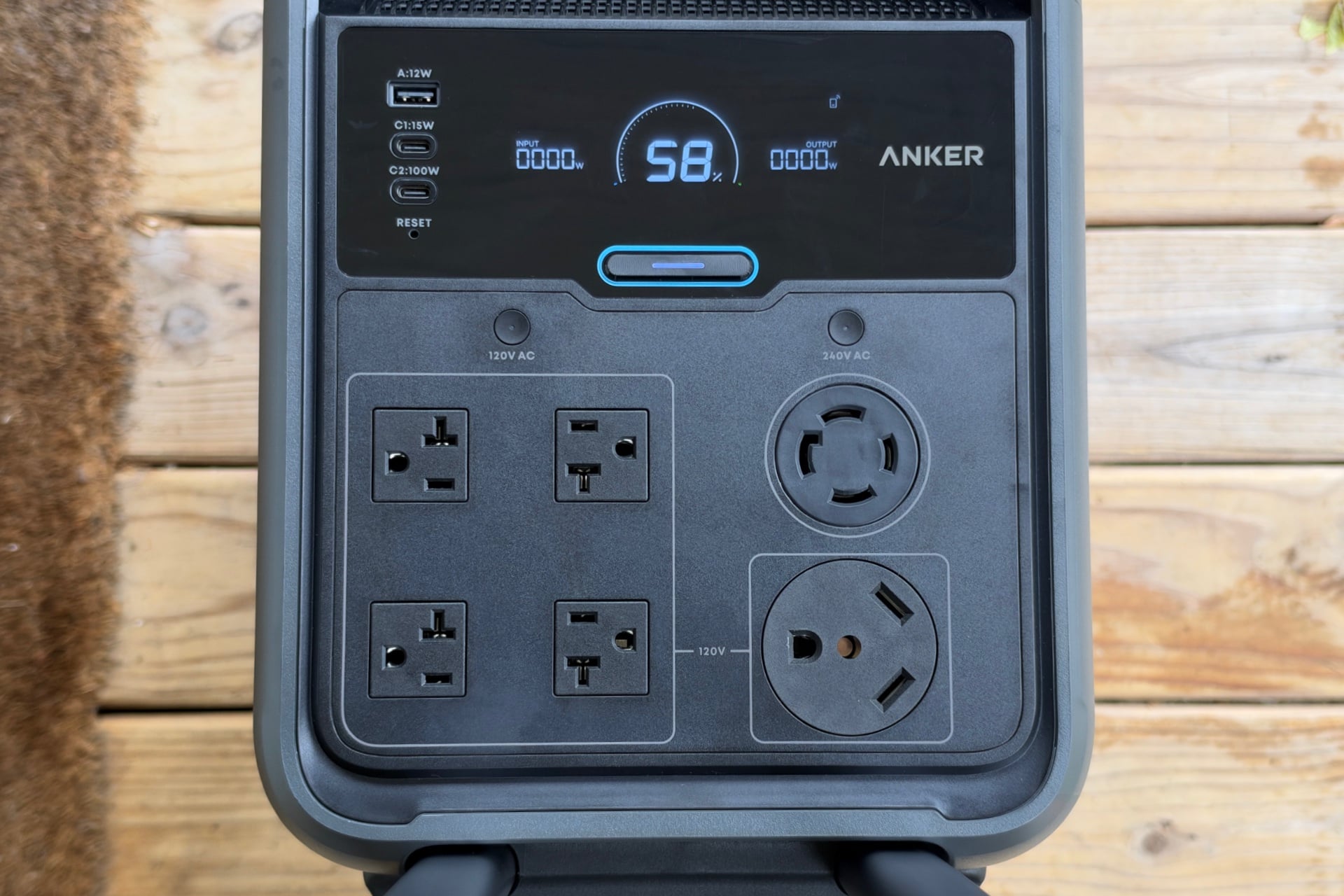
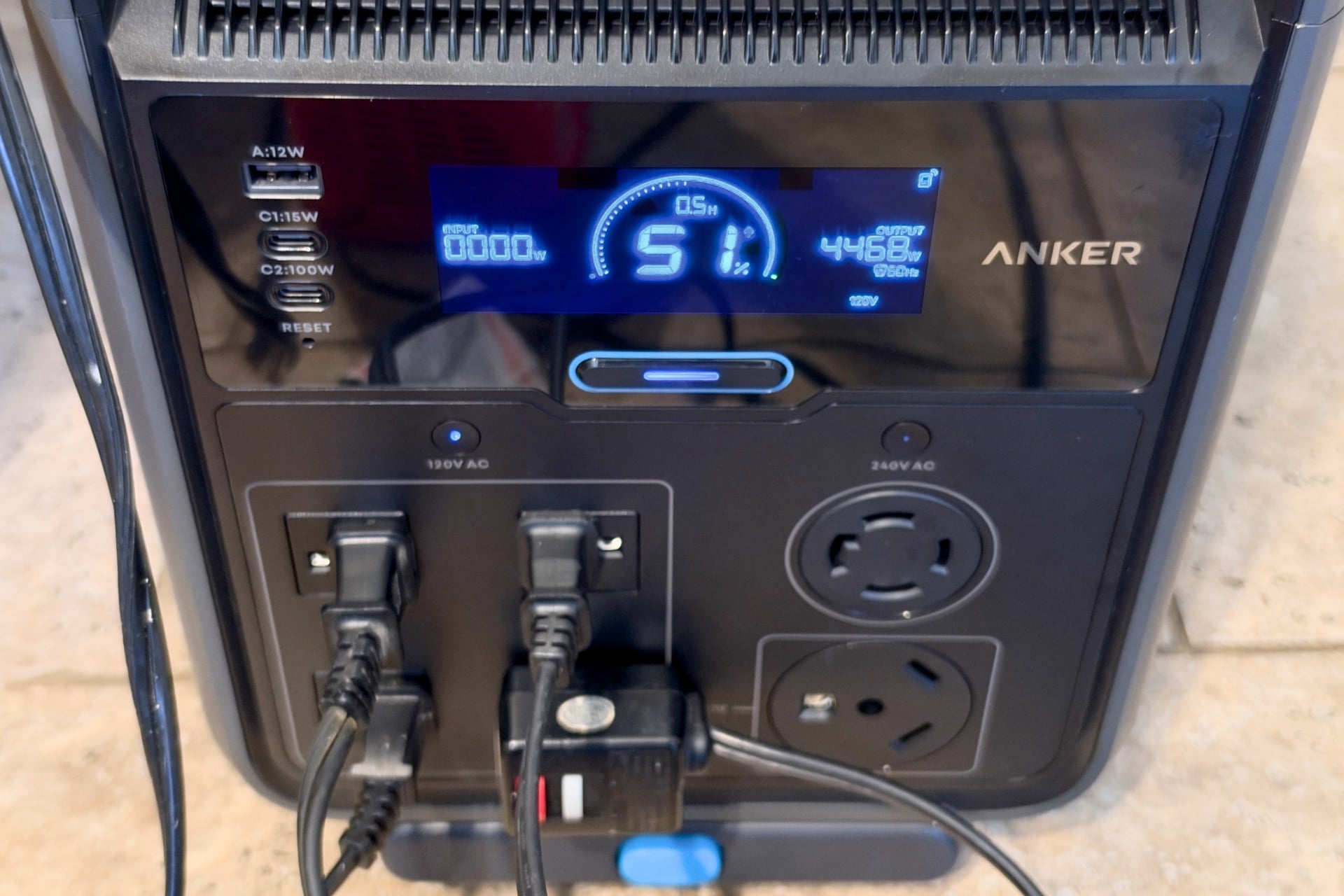
I might naysay the necessity of the Solix S5000, but it’s nevertheless quite nice for what it is. It’s essentially an oversized version of the Solix S2000, but with a different port count and arrangement and more than double the capacity. It features a similar long-body design with ports on the front and back and handles at the top for grabbing and lifting. On the front are four 120V three-prong AC outlets, one fewer than the S2000, which has five split between the front and the back.
Also on the front are a 120V TT-30 outlet, which is typically used with RVs, and a 30A, 240V NEMA L14-30 receptacle. The S2000 has neither. That L14-30 port is for things like backup power transfer switches—if you have one, you can connect it to the S5000 and switch to it in an emergency. Handy, but expect to heavily curtail your electricity use if you want it to last more than a few hours.
Like the S2000, the S5000 also has two USB-C ports (one 100W, the other 15W) and a 12W USB-A port on the front. Next to these, an LCD display shows the battery’s current charge, input and output wattages, an estimate of how long the unit will take to recharge or discharge, and other info.
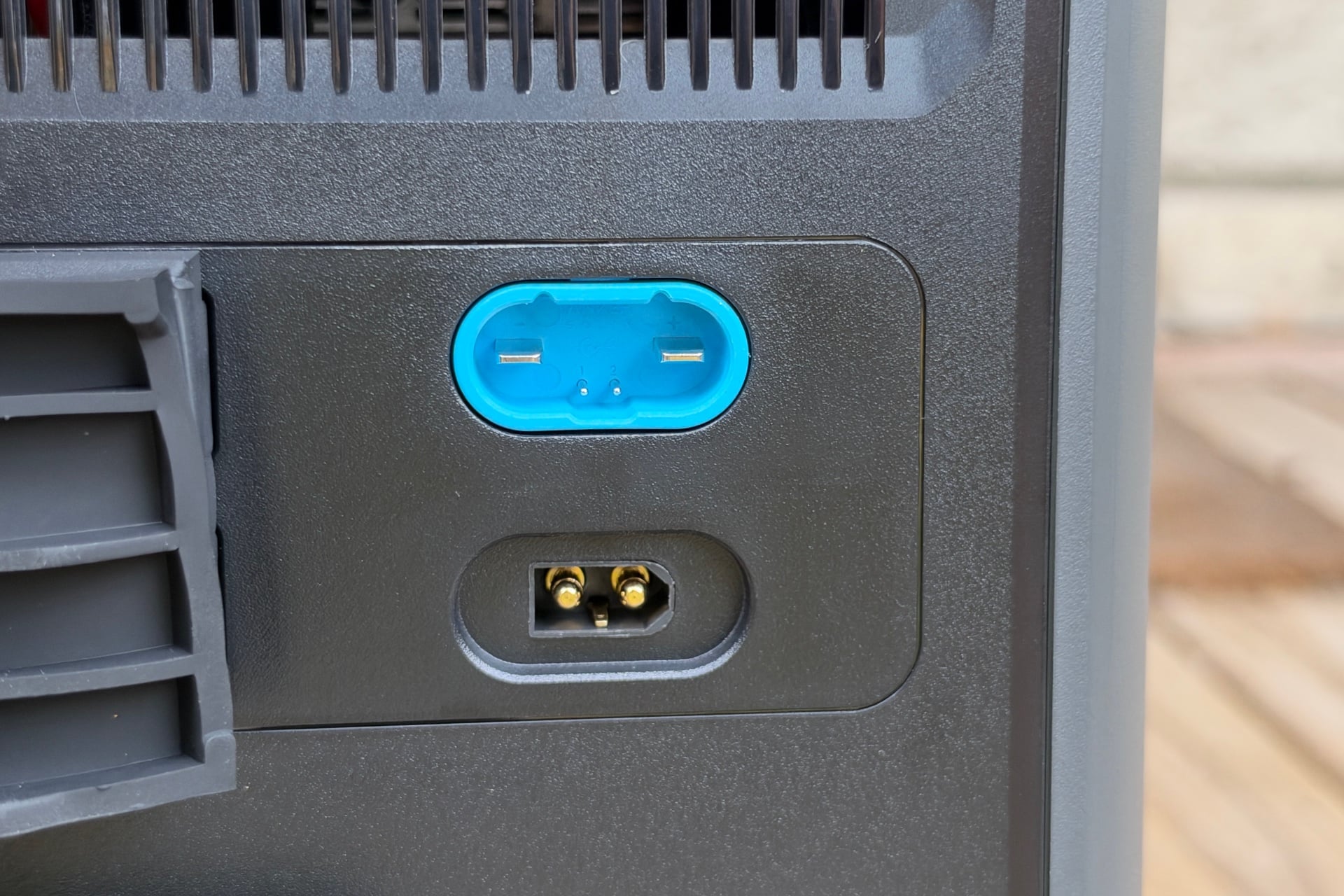
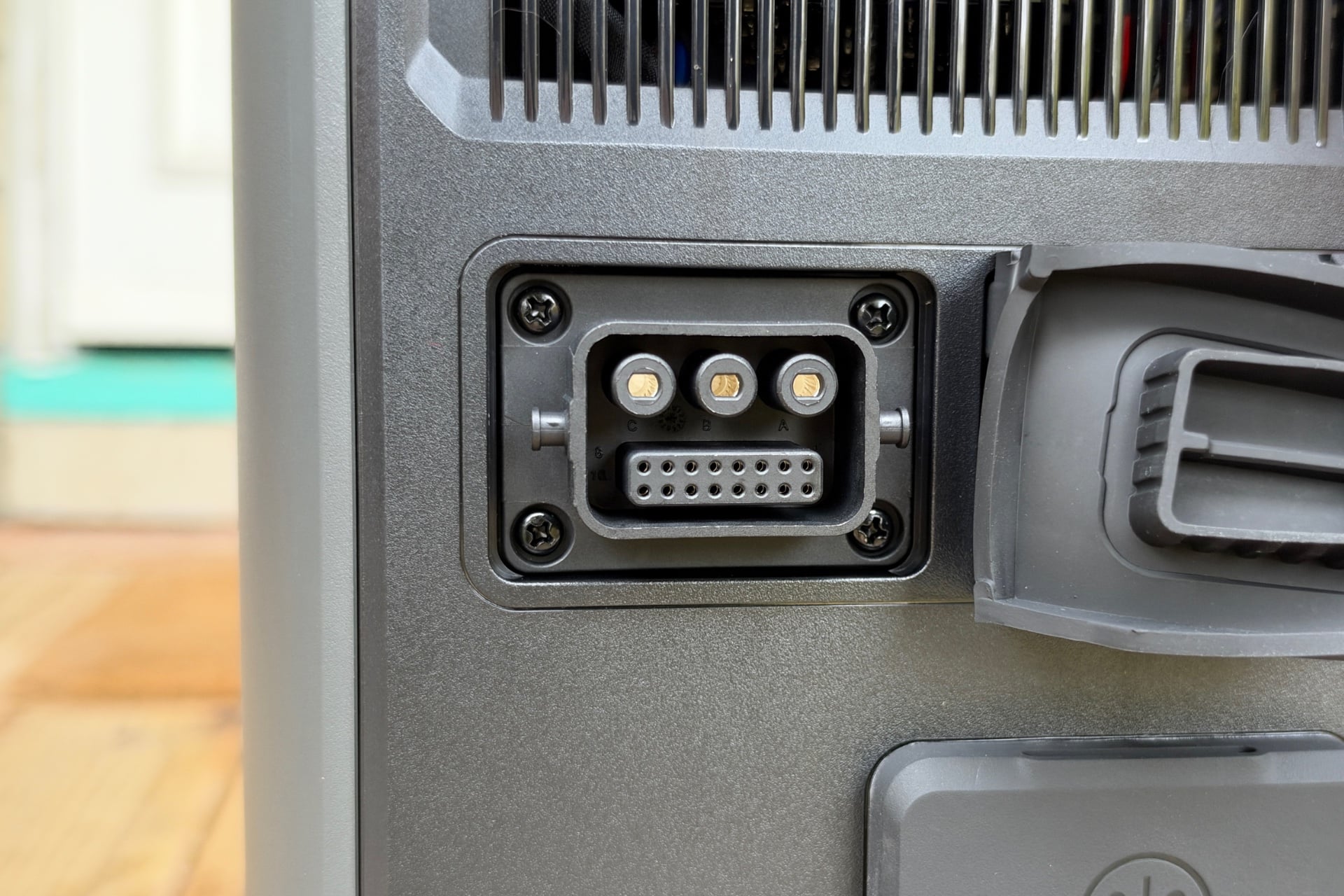
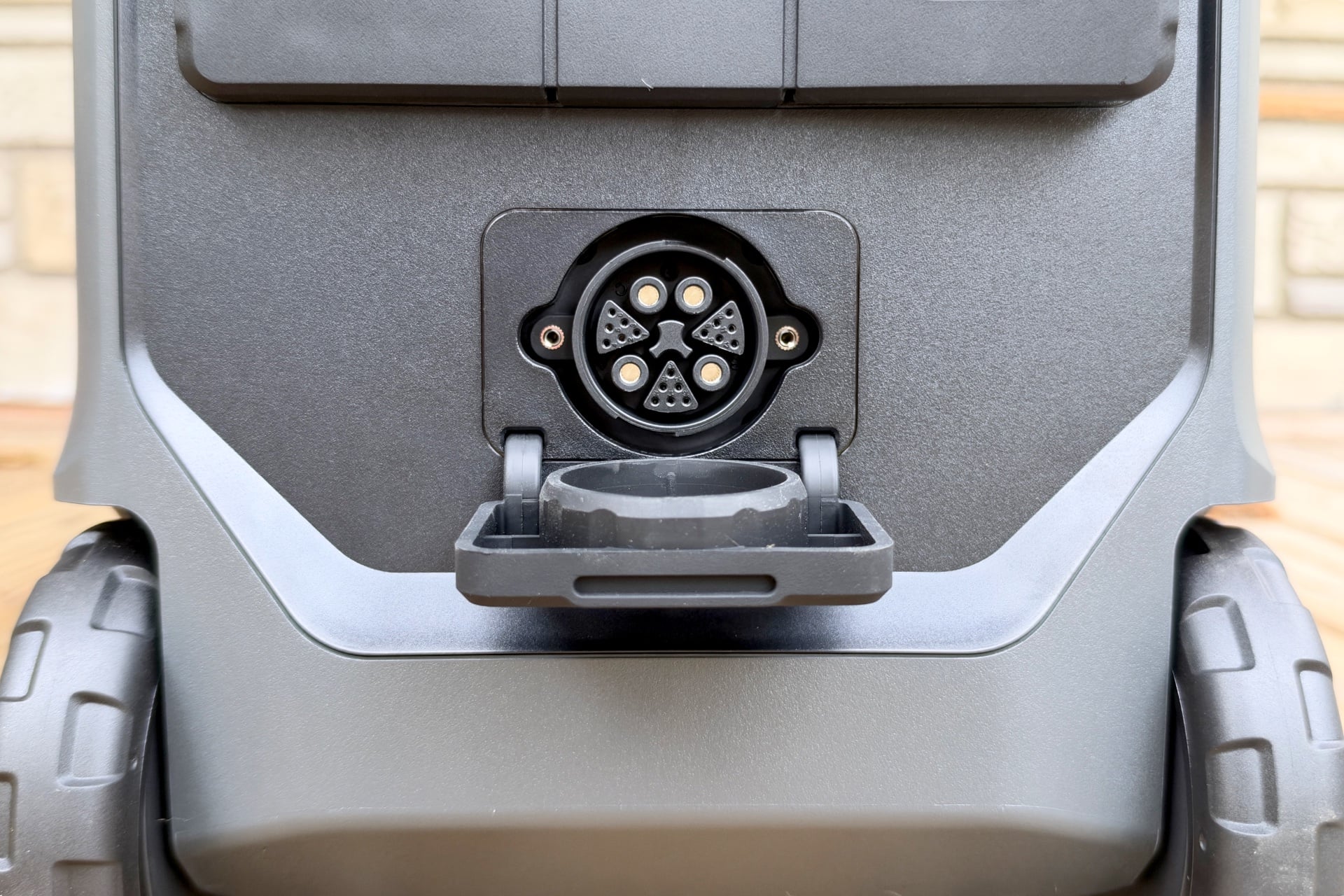
In the back are all of the S5000’s various charging ports. Those include a DC port that can be used, for instance, with Anker’s Solix BP5000 batteries—the S5000 is expandable up to 12kWh—a proprietary 2,000W Anker solar charging port, and a standard XT-60 solar port that can accept up to 1,000W of power. That’s also where the device’s own four-prong charging port lives.
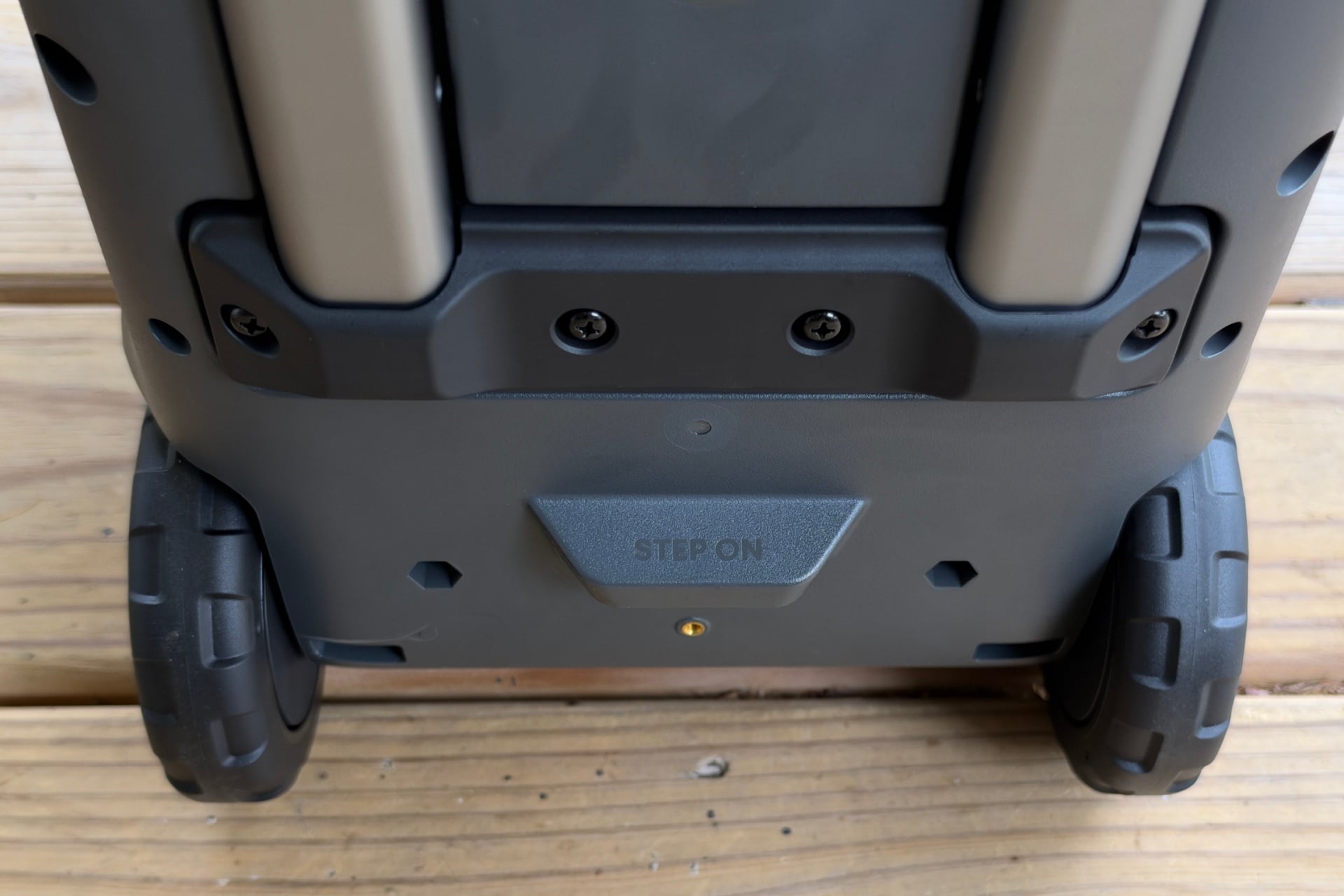
At the bottom of the S5000’s front end is the suitcase-style telescoping handle I mentioned at the top of the review; press a button in the middle, and it pops out, ready to extend. The handle was sturdier than I expected and gave me plenty of back-saving leverage to lift one end and cart it around. When I did need to actually carry the battery, I liked that my knees and shins weren’t smacking into it, courtesy of its 15-inch height. That would be less likely with taller devices like the 25-inch-high Jackery Explorer 5000 Plus, especially since Jackery’s battery weighs 135 pounds.
Settings aplenty
Although the S5000 is perfectly usable without a smartphone, you can connect it to the Anker Power app for easy control of its settings. Pairing is quick and easy—power on the battery, tap the “+” button on the app’s home screen, then tap a picture of the battery when it appears. Punch in your Wi-Fi information, tap “Start,” and you’re ready to keep tabs on power stats and tweak settings.
The home screen presents a render of the S5000, with its middle section hollowed out to show a light blue block of color that sinks to the bottom as it’s drained. Superimposed on that are the current charge percentage and the temperature, which you can toggle between Fahrenheit and Celsius. Beneath the render is information on which ports are in use and how much power they’re drawing (along with voltage and current), the estimated time the device will last at the present load, and more. In this section, you can do a few other things, like turn the AC ports on or off, toggle the LCD display, and schedule when the AC ports are active. A button further down takes you to the battery’s charge and discharge history, where you can see how much power it has dispensed or gained over days, weeks, months, and years on a bar chart.
A mode-switching button beneath a graphic of the S5000 lets you choose the battery’s behavior and takes you to a “Power Usage Scenario” screen. By default, it’s in UPS mode, which keeps the battery topping itself off while also supplying power to whatever’s plugged into it but switches to the S5000’s battery only when power goes out. Anker says this switch only takes 10 milliseconds. I’m not equipped to confirm the exact timing, but when I unplugged it while it was powering a lamp, I saw only the briefest of flickers.
“Time of Use Mode” also allows you to schedule charging when electricity is cheapest and discharging when it’s more expensive—a potential money-saver if your electric company offers a time-of-use plan, though I would only recommend it if you’re already accustomed to that lifestyle. The feature works, but without expansion batteries, I don’t think most S5000 users will see much in terms of savings.
Throughout the rest of the app, you’ll find a smattering of settings like silent mode, which quiets the fan down by lowering charging power, although I found said fan to be almost unnoticeable even under heavy load. There are also power-saving options, such as automatic timeouts for functions like the screen or AC ports, and you can set the charging wattage between 100W and 1,800W—useful if your home has older wiring and you don’t want to risk a fire from overheating it. Overall, the S5000’s software is pleasantly robust, similar to those Jackery offers on the HomePower 1000 Plus v2 I recently reviewed. The only thing the Jackery battery has that I wish the S5000 (this applies to the S2000 as well) had is the ability to switch off or prioritize specific sets of AC ports; with Anker’s batteries, it’s all on or all off.
See Anker SOLIX S5000 at Amazon
Plenty of power for targeted home backup
Anker says the Solix S5000 can output a steady 4,500W, with brief surges up to 8,000W. I didn’t have a good way to test the surge capability but tested steady output with a small space heater, a waffle iron, a hair dryer, and a toaster oven cranked as high as it would go. Wattage fluctuated between 2,000W and 4,500W as heating elements switched on and off over about ten minutes, and the S2000 held steady throughout. During this test and others, I was pleasantly surprised that the fan stayed quieter than that of any other portable power station I’ve tested.
As nice as being able to get 4,500W on demand from a battery backup is, that number is still low for such a high-capacity device. For instance, the Explorer 5000 Plus, also a 5kWh power station, can output at a steady 7,200W and surge up to 14,400W. Most won’t need that kind of output from portable home backup batteries, though. For me, the S5000’s compact, lightweight chassis more than makes up for its lower power output—it’s just a more convenient product to use and live with in a smaller home.
Another benefit of the S5000 is its active idle power draw—that is, how much energy it uses to power its internal systems. Anker says the S5000’s internals draw just 8.8W when it’s on but not actually supplying power to anything. That’s stellar, considering many, if not most, larger power stations use upwards of 50W just to power themselves. I tested that by leaving the S5000’s AC ports active with nothing plugged in—after 144 hours, it had used 1,256Wh, or about 8.7W per hour. I also powered a chest freezer from the S5000 alone for around 114 hours, disconnecting it when the battery had dropped to 6%. Doing some back-of-the-envelope math, the battery lost about 4,722Wh of its 5,024Wh capacity over that time, 3,520Wh of which went to powering the freezer, which drew an average of 30W per hour. That left about 1,202Wh dissipating as waste heat, or 10.5W per hour. Again, stellar.
I hardly had any complaints while testing the S5000, but there were minor issues worth mentioning. The 100W USB-C port didn’t actually output a full 100W to an Anker Prime 300W power bank during my first two days of testing—the power bank drew only around 60W, even though it pulled 100W when I tested it with wall power. That seemed to resolve itself later in testing, though: it pulled the full 100W (well, 97W) when I tried again. The S5000 also charged itself at about 1.65W, rather than the 1.8kW it’s advertised to use. It went from 6% to 100% in 3.5 hours, which is slower than the 3.1 hours Anker claims. Regarding that discrepancy, the company reviewed my review unit’s logs and found that it was receiving “a little below 120V at the time, so the actual charging rate comes in slightly lower.” That’s not surprising; I’ve seen it when testing my outlets in the past.
Small and light wins the day
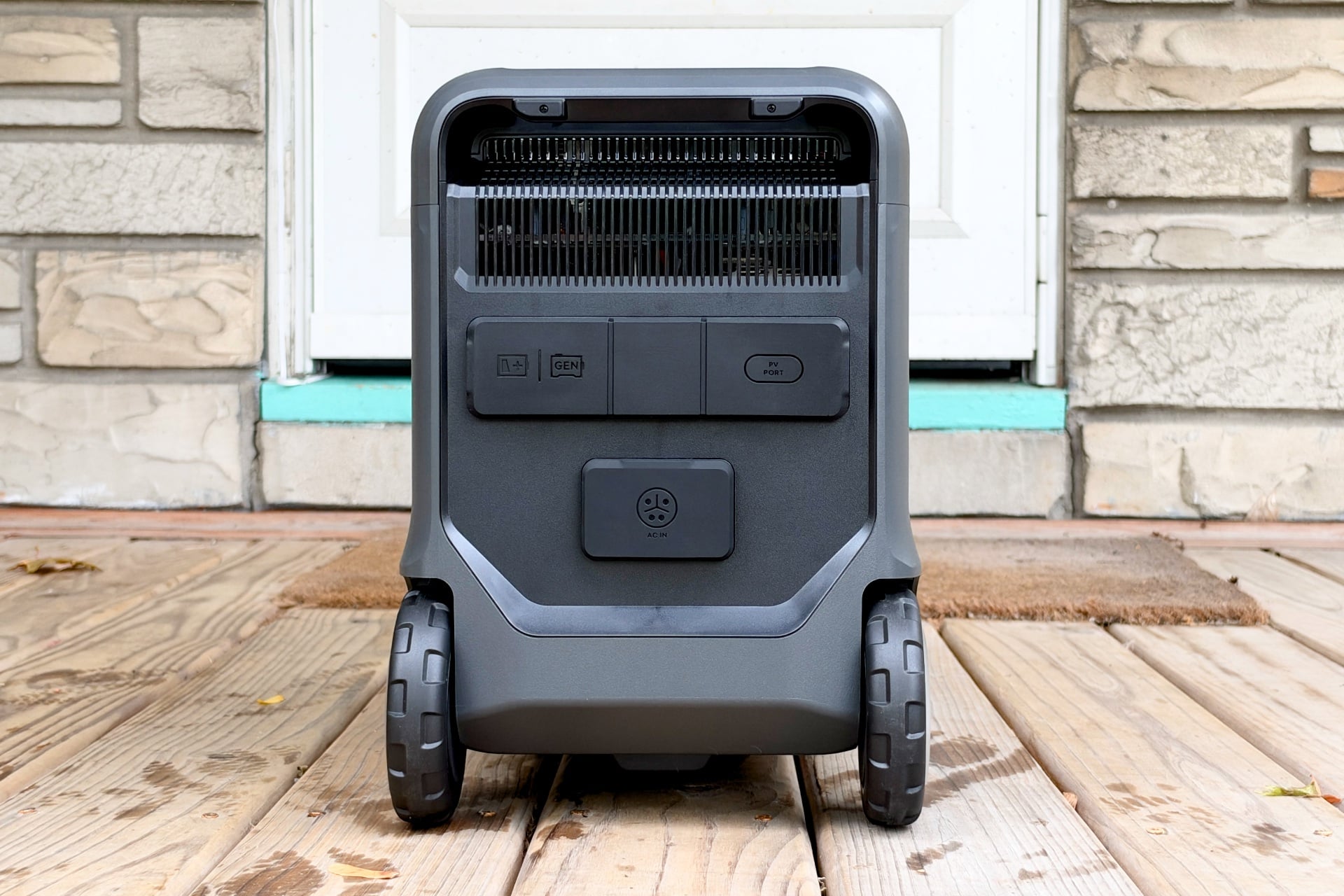
Were I in the market for a 5kWh battery today, I would definitely consider the Anker Solix S5000. Its 4,500W continuous output, while not the highest you can find, is still more than enough for most normal household needs. What really appeals to me are its compact design and portability. Ninety-seven pounds may sound heavy if you’re unfamiliar with this space, but the few other 5kWh power stations that exist, and even some 4kWh models, are heavier. That, along with the battery’s physical dimensions, just makes it easier to get around and find a home for the device when you want to use or store it.
Some folks will balk at the S5000’s 4,500W of continuous output, which is quite a bit less than the 7,200W offered by devices like the Jackery HomePower 5000 Plus. Though the S5000 could easily handle appliances like a refrigerator or a dishwasher, 4,500W isn’t enough for many electric dryers. And even if it were, Anker’s battery doesn’t feature the right type of 240V AC outlet to support that type of gadget without an adapter. I’m not sure either battery would last through a whole dryer cycle anyway.
If that doesn’t bother you, there’s one more calculation to make before buying the S5000, or any high-capacity battery like it: is it worth spending thousands of dollars to keep your fridge or other appliances running during an extended power outage? It was nice that this device kept my chest freezer going for almost five days, but I couldn’t tell you how long it’s been since I’ve actually needed that much backup power. That’s my experience, but yours might differ (an editor I work with mentioned having weeklong power outages after thunderstorms in rural New England!), in which case, the peace of mind of having a device like this could be well worth the money if it means being able to power your fridge and not having to throw out all of your food. If you’re dead set on a 5kWh battery and don’t need the 7,200W offered by the HomePower 5000 Plus and other similar batteries, the S5000 is a great choice.

