


Ice Universe posted a prediction over the weekend that I’ve been arguing with in my head ever since. The leaker expects Apple’s next Pro iPhone to arrive with a curved screen, “or at least one that looks curved,” and he thinks Android brands will follow it straight back to the shape they spent years sanding off their flagships. His bigger gripe is with the industry itself. Phone design keeps looping, and every loop seems to get shorter.
He’s right about the comeback… but the word dramatic? I’d say Android never fully let go of curved glass, and what disappeared was the confidence to put that glass on an expensive phone. An iPhone with soft edges hands the confidence straight back.
The hedge hiding in the leak
Not every curved screen has a curved display. Honor’s explainer makes that distinction between waterfall panels that bend down the sides and 2.5D glass that curves over a flat OLED. The latter is cheaper to make and far less annoying when you need a screen protector. That’s the design I’d expect from Apple on the iPhone 20 Pro (four curved glass edges, with a flat display sitting underneath).
I’d also look twice at Liquid Glass. Ever since iOS 26 started nudging apps to keep controls away from the screen edges, I’ve suspected Apple was clearing the runway for exactly this kind of hardware. I carry an iPhone every day, and the extra breathing room at the sides of my apps would make a lot more sense with a curve waiting at the end of it. Call it a hunch with decent circumstantial evidence.
Motorola never got the flat memo
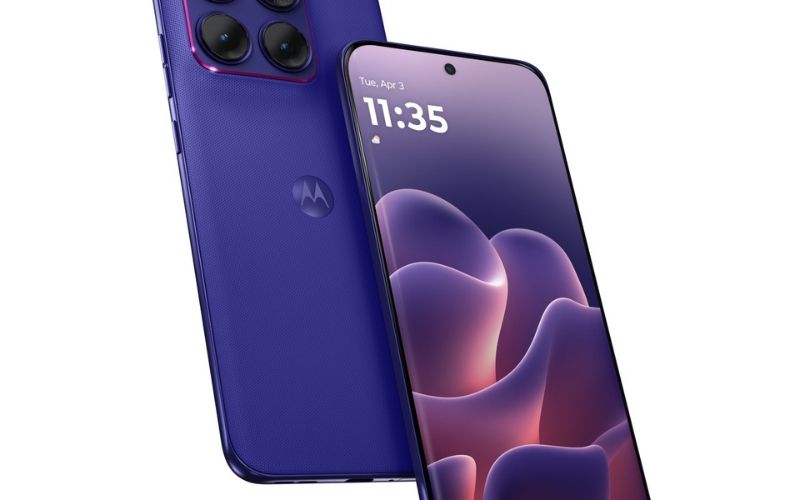
While everyone else seems happy with flat screens, Motorola gave the Edge 70 Fusion a 6.8-inch quad-curved display back in March. It also calls the 144 Hz Pantone-validated panel an industry first.
I’m less convinced by the advertised 5,200 nits. That’s an impressive number on paper, but I’d rather see what the screen does outdoors than trust a peak-brightness figure.
The armor is what I respect. IP68 and IP69 ratings plus MIL-STD-810H testing on a Snapdragon 7s Gen 3 phone tell me Motorola heard every fragility complaint and chose to fight them. Still, the Edge family splits people in a way Motorola should worry about. The Edge 60 Pro is a bargain I’d happily point friends toward, yet I can easily picture someone loving everything about an Edge 50 Pro except its sides and trading down to the flatter Edge 70 for that reason alone.
HONOR kept bending glass too. The Magic6 Pro pairs a quad-curved 6.80-inch screen with Honor’s NanoCrystal Shield, which the company says is ten times more drop-resistant than standard displays. I’d want to watch that drop test before repeating the multiplier with a straight face. Vivo’s X200 Pro and OPPO’s Find X8 Pro both curve on four sides as well, and both prove the shape still has a place at the top of a lineup.
Curves fell down the price ladder
Phones like the Realme GT 6T brought curved edges back to the mid-range a couple of years ago, and that’s where the trouble started.
Chinese buyers have always liked curves, so the expensive phones there got them first and the cheap ones followed. Then the cheap ones caught up completely. The iTel S25 Ultra sells curved glass as its headline feature at around $150, and the Tecno Pova Slim squeezes a 6.78-inch 3D curved AMOLED into a body 5.95mm thick with a modest Dimensity 6400 inside. Xiaomi’s Civi 3 has curved sides that do little beyond edge lighting effects.
Once a phone that costs less than a nice pair of earbuds wears the curve, a $1,200 flagship can’t use the same curve to look expensive anymore, and I think that loss of status, much more than the cracked screens and the fussy protectors people love to cite, is why Samsung and Google walked away from it when they did.
Apple undoes that in one keynote. Nothing makes a design feel premium faster than an iPhone adopting it, and Android product managers know the pattern by heart.
Samsung named a phone Edge and made it flat
Samsung’s Galaxy S25 Edge is 5.8 mm thick and weighs 163g, and its front glass is Gorilla Glass Ceramic 2 laid over a flat 6.7-inch display. Samsung’s press release talks about the “optimally curved edges” of the titanium frame. So the curve moved to the metal, and the name now promises something the screen doesn’t deliver. I find that hilarious.
I do miss the old designs, though. The Galaxy S6 Edge and S7 Edge made curved screens feel like Samsung’s thing. I still haven’t seen flat glass recreate that feeling.
The appetite hasn’t gone anywhere, and neither has the resistance. Anyone who came up through the S7 Edge would happily take curved glass back, while anyone who rode the S24 Ultra and S26 Ultra into flat territory would call it a step backward. Samsung can’t satisfy both groups. Apple can give it cover to try, and my guess is an Edge-branded phone is where Samsung tests the water.
The complaints were fair
Curved glass looked stunning in marketing renders, but real-world physics ruined the party. Cases for phones like the Note 10+ and S22 Ultra had to be cut low, leaving the vulnerable side rails exposed to drops (Pixel 6 Pro glass shattered even beneath expensive UV-cured shields).
The accidental touches would drive me crazy. I play Call of Duty on my iPhone, so I can already imagine my palm triggering some random action while I’m trying to win a firefight.
Gentle curves already won the argument
Look at which curved phones people refuse to give up. The Pixel 7 Pro still has a loyal following years later, despite a Tensor G2 chip that has aged badly. Those owners aren’t hanging on for the processor. They’re hanging on for the way the phone feels in the palm.
The OnePlus 12 makes the same case with an even smaller curve. It’s subtle enough that glare and ghost touches stop being an issue, and swiping back off the edge picks up a nicer feel than flat glass offers. The Magic6 Pro follows the same rule, with a curve that stops well short of the full side. Samsung had it figured out once with the Galaxy S9 and S20, whose slight two-or-three-millimeter roll let a case lip stay lower, so taps right at the edge of the screen never hit plastic first. I’d call that the most underrated argument for a curve, and it gets lost every time someone brings up the waterfall.
Modern Chinese flagships have landed on a look that seems flat and feels slightly curved under your finger. That’s the template I’d expect Apple to polish, and it’s the one Android will copy.
Counterpoint’s numbers say the panels are ready
Counterpoint Research’s latest display report, published November 9, is grim for the industry overall. OLED smartphone panel shipments should fall from 894 million units in 2025 to 829 million this year, with the memory shortage squeezing everyone. Rigid OLED drops 24%. Flexible OLED, the kind any curved phone needs, slips only 3%.
I’m the foldable obsessive on our team, so I noticed the other figure first. Foldable and rollable panels are set to grow more than 23% this year. A lot of the flexible-OLED ambition that used to go into curved edges has been feeding hinges instead, and an iPhone curve gives panel makers like Samsung Display, LG Display and BOE one more reason to keep those lines busy.
Precedence Research puts the curved display device market at $13.00 billion in 2026, climbing to $43.96 billion by 2035. I wouldn’t lean on it, since TVs and monitors carry most of that forecast and phones get lumped in.
A 34-inch monitor makes the case against steep curves
Your desk might have the final say on monitor size. A 2024 Applied Ergonomics study tested 24-, 34-, and 40-inch displays and found that 75% of participants didn’t have enough desk depth to accommodate the 40-inch model’s stand. The extra head movement also wore people out, making the 34-inch display a more comfortable choice.
A large screen is where the curve starts to make sense. Phone edges are easy to reach with your thumb, and a softer curve can make the glass feel nicer to hold. I’d bet on that design coming back.
Where I’d put my money
Apple ships a phone that looks curved next year, and within a cycle Samsung puts curved glass back on a flagship it would have kept flat. Waterfall screens stay dead. The new curves will be shallow, four-sided and kind to protectors, and Motorola gets to be smug about it. My one worry is the repair bill. Apple’s involvement won’t make a curved panel any cheaper to replace, and the first cracked iPhone 20 Pro invoice will travel faster than any keynote clip.
The happiest people will be the ones still nursing Pixel 7 Pros because nothing newer feels right in the hand.

