


Apple’s MacBook lineup may be growing from both ends. TrendForce expects the company’s notebook shipments to rise 7.7% in 2026, with the budget-friendly MacBook Neo alone reaching around 4–5 million units. The timing makes sense too—entry-level PCs are getting pricier as memory shortages ripple through the industry. Now, MacBook Ultra rumors suggest Apple could be heading in the opposite direction.
If Apple does introduce a tier above the Pro lineup, it could end up being the most powerful and expensive MacBook yet. But that also raises a question—do power users even need more than a MacBook Pro?
Apple is doing what Apple does—going upmarket
Here’s my hot take that might disappoint Apple loyals. The MacBook Ultra is less about giving power users something they need and more about Apple’s deliberate march toward premium-ifying everything. Think about it—they just dropped the $599 MacBook Neo at the low end, and now they have a potential $3,500+ machine in the works.
The OLED display—the one feature I’m excited about
Out of everything rumored, the hybrid OLED display is the upgrade I find compelling. The technology combines a glass substrate with thin-film encapsulation for improved brightness, contrast, and power efficiency. I know how good Apple’s displays already are—but tandem OLED on the iPad Pro is something else. It’s the kind of upgrade you can’t unsee once you’ve seen it. Deep blacks, richer colors, better power consumption—I’m in.
Touch screen on a MacBook: who is this actually for?
Touch screen on a clamshell laptop is an idea I keep wanting to be excited about and just… can’t get there. macOS would adapt contextually—tap a menu bar item and it expands into larger, touch-optimized controls, says Mark Gurman. That sounds clever in a demo, but I’ve seen enough smudged Windows touch screen laptops to know that optional input methods have a way of becoming mandatory annoyances.
I do see where touch inputs helps. Think lighting designers who run touch-heavy console software, photographers retouching on location, or anyone who’s been carrying a separate iPad just for Apple Pencil access. For some niche professionals, a touch-capable MacBook with macOS could solve a problem. But for the rest of us—writers, coders, general professionals—it’s a feature we’ll pay for and never use.
My bigger concern sits with thermal and structural limits. The Touch Bar failed for a reason. Apple has a history of testing laptop input ideas and then stepping back. I remain skeptical this one sticks.
Thinner design—the part that makes me nervous
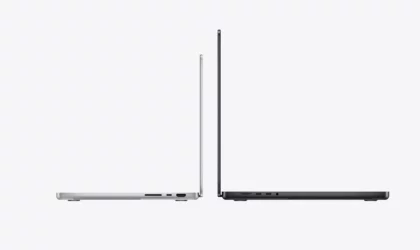
Apple MacBook Pro with M5 Pro
There’s a push to make the MacBook Ultra significantly slimmer, channeling the same energy that gave us the ultrathin iPad Pro. However, I’m not on board with that direction. The MacBook Pro got thicker in 2021, and that wasn’t a mistake—it brought back ports, improved thermals, and made the machine a workhorse. Making it thinner raises uncomfortable questions. What gets sacrificed? Battery? Airflow? MagSafe?
The 2015 MacBook Pro thinness experiment is still a scar on the community’s collective memory. If Apple achieves slimness through clever OLED panel design without gutting the port lineup or thermal performance, great. But thinner as a selling point for a laptop positioned above the Pro strikes me as misreading what the target buyer wants.
John Ternus (who will become Apple CEO in September) sits at the center of that tension. Current and former Apple employees and executives who have worked with him say he’s reshaped parts of Apple’s hardware lineup, steering it away from the era where thinness and polish often came at the expense of performance and usability. And in that sense, the MacBook Ultra is a quiet referendum on what Apple’s hardware identity is becoming.
Dynamic Island: fine, but not a reason to buy anything
Replacing the notch with an interactive Dynamic Island sounds like a nice quality-of-life upgrade, especially since the current notch physically intrudes into the menu bar. But let’s be honest—this is cosmetic refinement dressed up as a feature. It’s not bad, it’s just not the thing that makes me open my wallet.
M6 chips—the part that justifies the name
If there’s an argument for calling this machine “Ultra,” it might live in the silicon. The expected M6 Pro and M6 Max chips, built on TSMC’s 2nm process, promise tighter integration of CPU, GPU, memory, and Neural Engine. That’s real. Smaller process nodes mean more performance per watt, and with AI workloads becoming relevant even for everyday tasks, a chip optimized for on-device AI processing matters.
My one caveat: if the chassis is as thin as rumored, those chips will be running within tighter thermal limits. The Ultra chip—the one that would really justify the name—almost certainly can’t live in a thinner MacBook body without thermal throttling. Physics doesn’t care about marketing copy.
The elephant in the room: price and timing
The global memory chip shortage is pushing the release toward early 2027 rather than late 2026. And the price? Speculation points north of $3,500 at the entry level. For context, the MacBook Pro M5 Max is already eye-watering—so the Ultra is essentially asking you to spend more for features that the existing Pro lineup’s fans never requested.
I expect the current M5 Pro and M5 Max models to stay on sale alongside whatever the MacBook Ultra becomes. That tells you everything. Apple isn’t replacing your favorite workhorse; they’re adding a luxury tier above it.
Before you go
The MacBook Ultra, as rumored, looks like it’s targeting two groups: people who want cutting-edge display technology (OLED converts and visual professionals), and people who just want the most expensive Mac laptop Apple makes. That’s a real market! But it’s not the ultimate pro machine the name implies.
If you’re someone who pushes a laptop to its absolute limits for video editing, 3D work, or running local AI models—the MacBook Pro M5 Max or whatever M6 Pro lands in it is probably your machine.
The MacBook Ultra is shaping up as something more like the Apple Watch Ultra of the laptop world: premium, beautifully engineered, and designed for people who want to be at the absolute top of the lineup—not necessarily because they need to be.
For what it’s worth, my M3 Air still handles everything I throw at it as a writer. But I’d be lying if I said I wasn’t watching this Ultra situation very, very closely.
Related: MacBook Neo vs. M5 MacBook Air: Here’s what changes when Apple uses a phone chip

