


The PlayStation 5’s first-party output has been all over the place, but one bright spot early on was Housemarque’s Returnal. Released in 2021, months after the console’s launch, the third-person roguelike hit well enough with audiences that Sony acquired the studio that same year and brought the game to PC.
Five years later, we have Housemarque’s first post-acquisition title in Saros. Like with Returnal, this game puts players in a dark sci-fi world where running, gunning, and dying are the core loop. Across its multiple regions, players will get done in by robots or the local wildlife of the planet Carcosa, with enough similarities in movement and weaponry to make you think this was a Returnal sequel rather than a spiritual successor.
If you played Returnal before, you’ll know many of the tricks Saros has up its sleeve. Enemies once again fire color-coded projectiles that can be safely dashed through or avoided, some enemies are shielded, and there’s the occasional encounter where an invisible wall locks you into the battlefield with multiple waves of foes to destroy. Beyond the dash, mobility expands with a grappling hook and optional zones that provide a chance to get better loot, represented by guns, health pickups, or artifacts with benefits and negative side effects to make runs easier or harder.
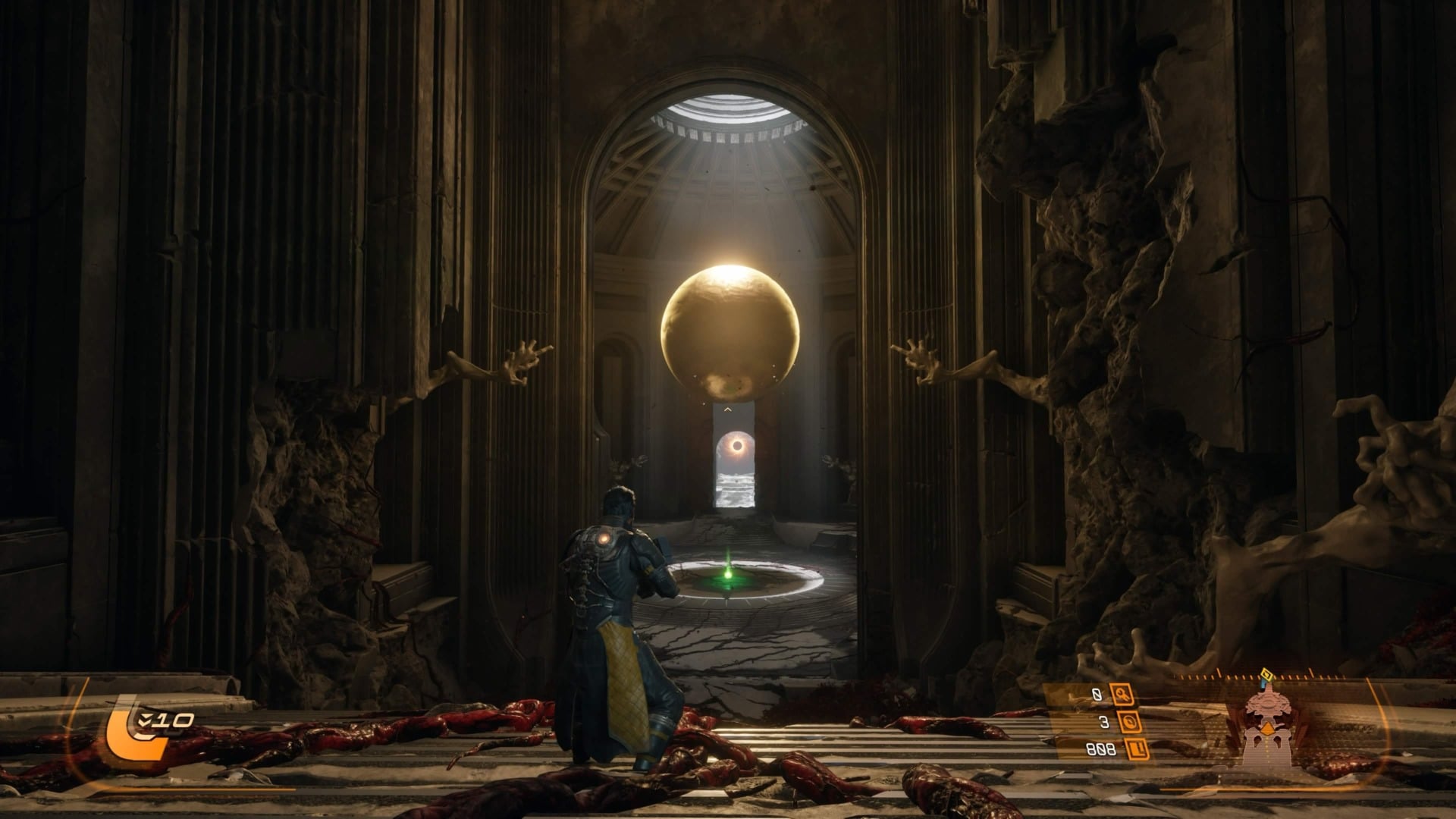
Unlike Returnal, there are no consumables to use mid-battle, and currency is used solely to buy permanent stat upgrades in the hub area between runs. Combat-wise, the biggest change is making defense into a more active playstyle. Blue projectiles can be absorbed into your shield (which also powers your support weapon), and you eventually get the ability to parry red projectiles. Swapping from shield to main or power weapon to parry while dashing and grappling around the battlefield creates a fun rhythm, further helped by the different weapons on hand. Most have auto-targeting built in, but others come without that function, so if you want to add some extra challenge, look for guns with the red symbol in the UI.
Actually, there’s a suite of modifiers players can set before going out on a run. These weren’t used during most of the review process, but they’re designed to give players a break, within reason—you can ratchet up the toughness to your liking, but things can’t be tuned to make the game overly easy. On its own, the game’s difficulty is tough to judge; again, if you’ve played Returnal (especially recently, as I did), you’ll have a head start on someone coming in cold. At its worst, it can feel like the game thinks there are two players instead of one—Returnal got a co-op update post-launch, and don’t be surprised if this does, too—and is tuned too much with that foresight in mind.
Several of these issues are exacerbated when it’s time to activate the eclipse. In practice, it functions as a built-in modifier and a requirement for each region as a way to reach their boss. It’s here where yellow projectiles become more prominent: they don’t just chip at your health; they also corrupt it and block you from fully recovering it until you fire off your power weapon to clear the yellow on your health bar. Late in the game, the eclipse provides a way for you to access areas previously gated off in earlier regions with a new traversal ability, which leads to some platforming sections that are as twisty and elaborate as they are occasionally a bit much.
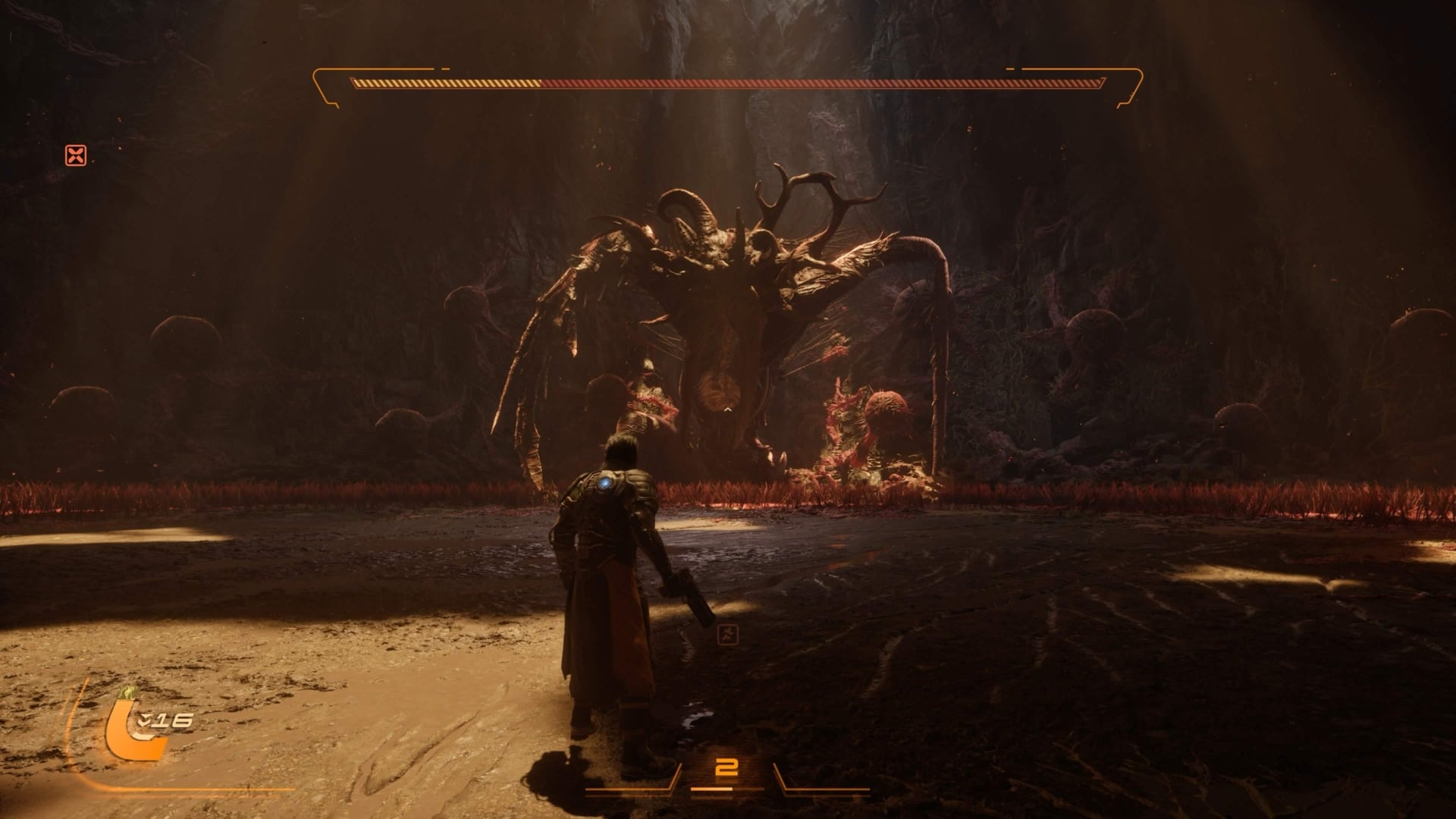
“A bit much” may be an apt description for the eclipse overall. It’s a cool idea, and the altar of hands and subsequent transition animation creates an appropriate sense of dread. But with repeat runs in a particular region, it’ll start to feel like a crutch the game uses to extend its length. (Dying or returning to a region means reactivating the eclipse and repeating the process of getting to a boss, which gets Not Fun pretty quickly.) Each gated encounter goes on for one or two waves too long, exacerbated by larger enemies with cheap hits like closing the distance between you a bit too well or teleporting around and creating dome shields to block gunfire. It’s frustrating as it is challenging, not helped by the occasional environmental hazard that, similarly, becomes overused.
Where Saros’ gameplay is well put together and satisfying, its narrative has visible cracks. The mysteries of Carcosa and what happened to the Echelon crews that previously visited are intriguing, as is the gradual erosion of the Echelon IV team and the protagonist, Arjun Devraj. Carcosa always feels like a planet where something went wrong, and the tense atmosphere persists, even before the eclipse comes into the picture.
Is this the right kind of story for a roguelike? That’s the question running through my mind; it’s decently told, and the cast eventually sells the gradual madness their characters go through well enough. With how the game’s structured, though, things may not land because getting to its more intriguing revelations requires powering through moments where the characters feel too cold or at a distance from the player. That things are always unsettling may also make it unclear what’s an intentional choice on Housemarque’s end and what may have gone wrong on a writing or performance level.
The game’s personal horror story doesn’t feel as fully formed as its cosmic side. Whereas Returnal’s lead Selene was constantly curious about the world and her place in it, Arjun is more single-minded, the reasons for which gradually unfurl over the course of the story. At first, his dour nature feels typical, neither good nor bad, just a byproduct of this kind of story. What the game ends up being about and how he relates to it helps breathe some life into him, but its interrogations of him feel confused in some aspects and underdeveloped in others. It may be easier to reach this story’s endpoint than Returnal, but Housemarque hasn’t quite figured out how to make PlayStation’s cinematic house style fit with its own gameplay-focused sensibilities.
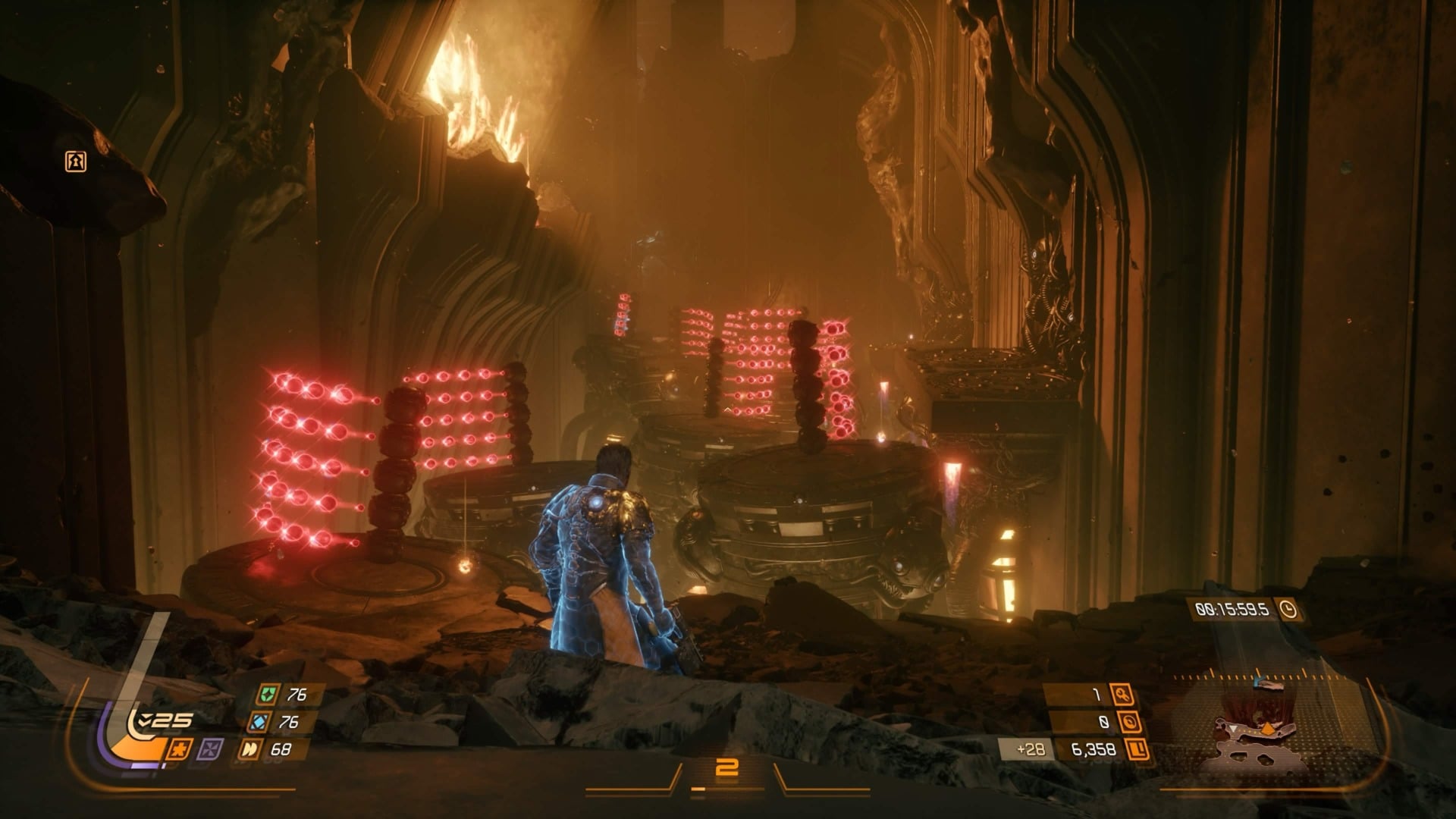
That gameplay is Saros’ real meat and potatoes and where Housemarque truly delivers. The studio knows what it’s good at and mostly succeeds in its ambitions to create both another strong roguelike and a worthy follow-up to Returnal. For all its worse impulses, it’ll get its hooks in the right kind of player and take them on one run after another.
Saros releases April 30 for PlayStation 5.
Want more io9 news? Check out when to expect the latest Marvel, Star Wars, and Star Trek releases, what’s next for the DC Universe on film and TV, and everything you need to know about the future of Doctor Who.

