


As late as 1974, it was a crime to have visual differences. Called “unsightly beggar ordinances” (and later named the “ugly laws”), these grotesque regulations made it illegal for those with disabilities to “expose himself or herself to public view,” or they’d be met with fines and arrests for no other reason than demonstrating some type of visible impairment. It’s a stark contrast to Disability Pride Month, which honors what makes people unique. It’s also one of the reasons why Maya Moore—an amputee, model, and disability advocate—refuses to hide.
“If there aren’t clothes offered for people that are disabled or beauty products or things that we as a society deem ‘necessary’ to go out into the public sphere and feel like your most confident self, it says something about where we think people with disabilities belong,” she tells Who What Wear. It’s no secret that fashion and beauty play a significant role when it comes to challenging societal norms, and Moore champions these shifts in both subtle and outspoken ways. She dresses to accentuate her disability, providing endless style inspiration on her thriving social media accounts, she stars in countless fashion and beauty campaigns, and she works with many of those brands behind the scenes on inclusive marketing plans, all with the hope that people with disabilities can see themselves in an industry that so often equates “chic” with being white, thin, and able-bodied.
Embracing public perception hasn’t always been easy. “When I was wearing a prosthetic arm after my amputation, I was very much in an era where I wanted to cover up,” she shares. “From clothes to makeup, basically everything I was putting on my body externally was to distract from the fact that I was disabled.” Now? Beauty has become a vehicle for unapologetic self-expression. Whether she’s decorating her scars in rhinestones or carefully protecting them with sunscreen, Moore amplifies this version of herself—a version that, in her words, is “the most confident and comfortable in [her] disabled body as [she’s] ever been.”
Ahead, discover Moore’s personal relationship with beauty, what the industry can (still) do better when it comes to accessibility, and the luxurious, ergonomic essentials that help her feel absolutely seen.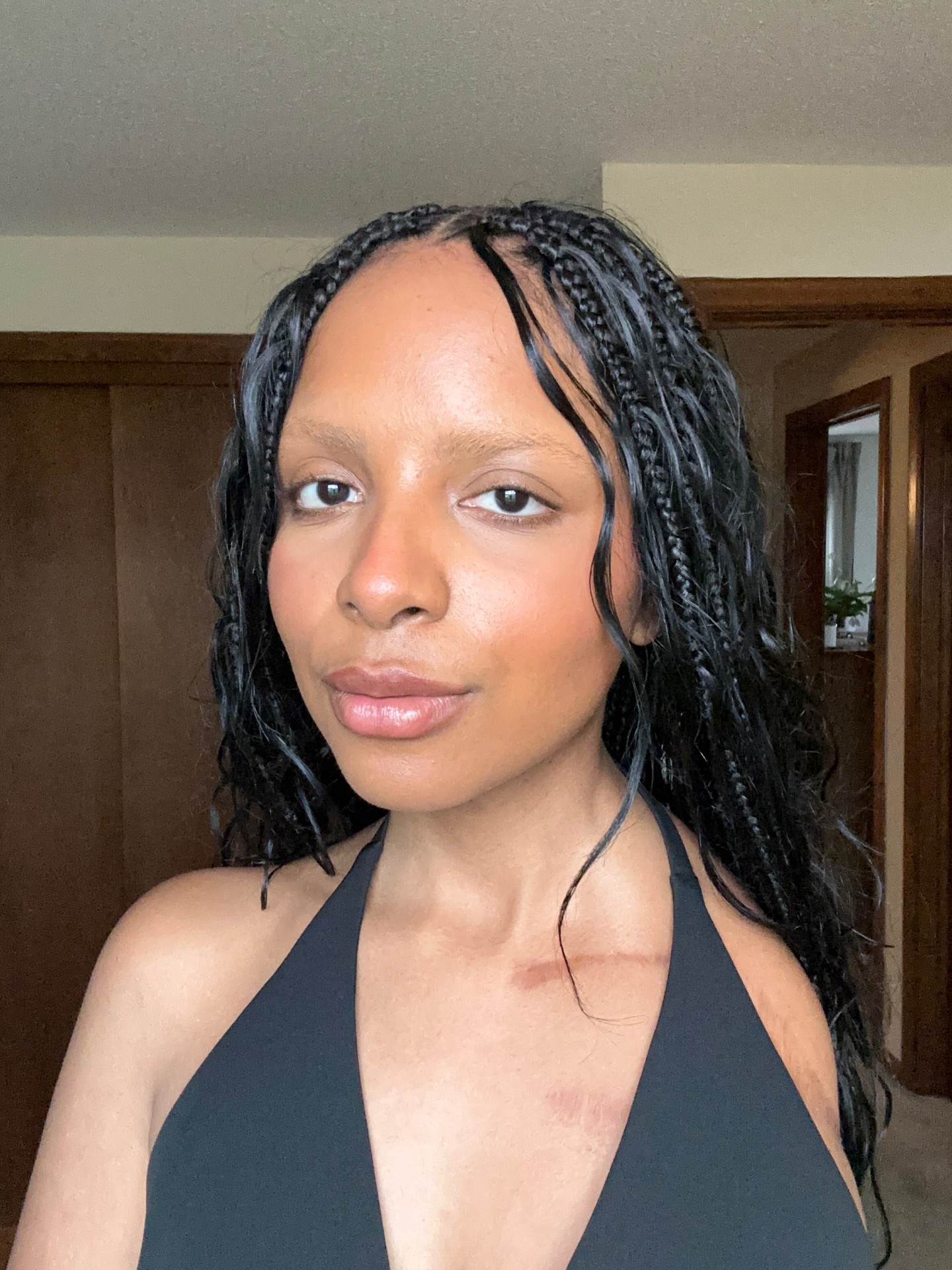
To start, what is your current relationship to beauty, and how has that evolved over the years?
I’m a millennial, so I definitely was a victim of really heavy-handed makeup at one point. [Laughs] I think that my journey with makeup has definitely evolved with my self-image. I realized I was wearing heavier makeup to cover up versus having fun with it. Now, as I’ve come into my own a little bit more and have been more comfortable with my sense of self and disability, I wear [makeup] to have fun, but I also don’t freak out or panic when I’m going out of the house with a bare face or very minimal makeup.
In high school, I would not leave the house without full concealer, foundation, blue eye shadow, mascara… My eyebrows were super filled in, [but] now, I like to play and experiment with looks a little bit more. As I’ve also come into my identity as a Black woman, a queer woman, a disabled woman, I’ve really leaned into ease and comfort as well as expression.
When I was wearing a prosthetic arm after my amputation, I was very much in an era where I wanted to cover up. … From clothes to makeup, basically everything I was putting on my body externally was to distract from the fact that I was disabled. Now, I just love playing and experimenting, whether I’m doing a photo shoot or just leaving the house. It’s taken [out] a lot of the worry of how somebody’s going to perceive me. It’s more about how I feel about myself.
It’s Disability Pride Month, which, as we know, is meant to honor and celebrate what makes people unique. I feel like beauty has a natural role to play in that. I’m curious what you think—what role does beauty play in helping people feel seen?
I think beauty is a vehicle to show just how diverse and vast we are as a community. A lot of times, we get put into this very narrow category where we’re seen as a monolith. We vary. [We] have a spectrum of taste and interests and styles like everyone else, so I think that beauty is an amazing vehicle to show that we all love showing up in the world as our best self. Beauty is a way that we express to people who we are.
Some people will say that [beauty] is trivial, but think about disability history and the ways that disabled people—as late as the ’70s—were restricted from entering public arenas. If there aren’t products that disabled people can wear or access that allow them to go out into the world as their most authentic self, then [it’s hard to] participate in social arenas, go out, and do all of the things that make life worth living.
Explore More:

