


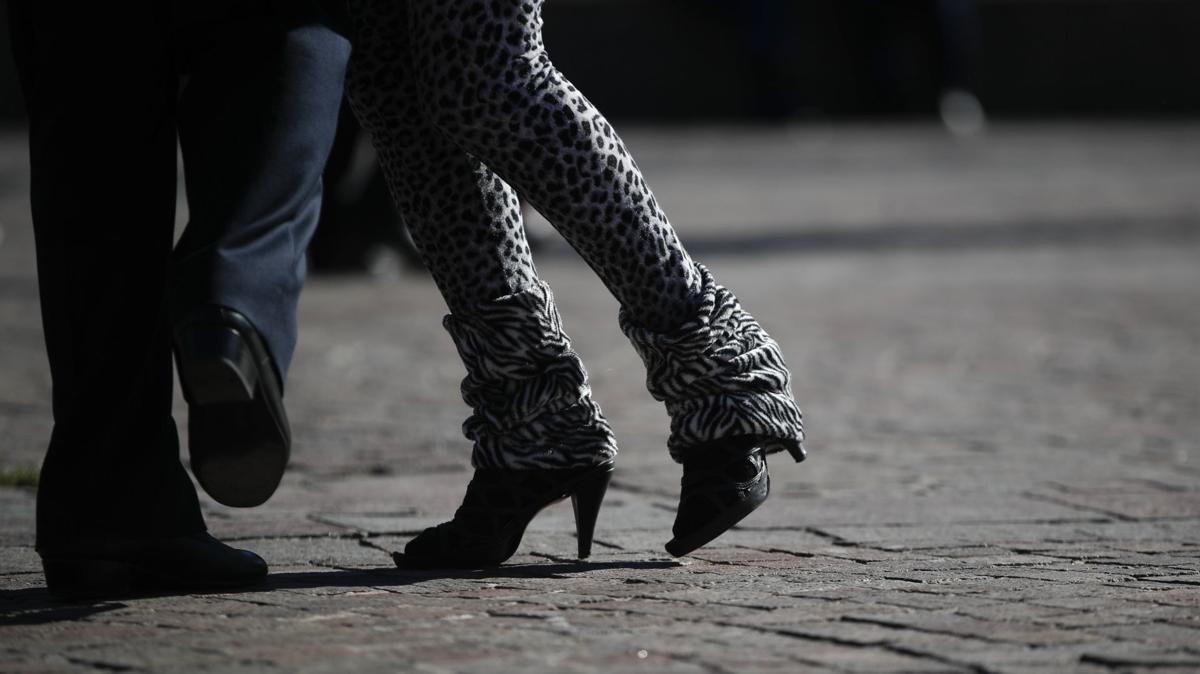
The tango industry, which thrives on close physical contact and exchanging partners, is especially vulnerable to COVID restrictions.
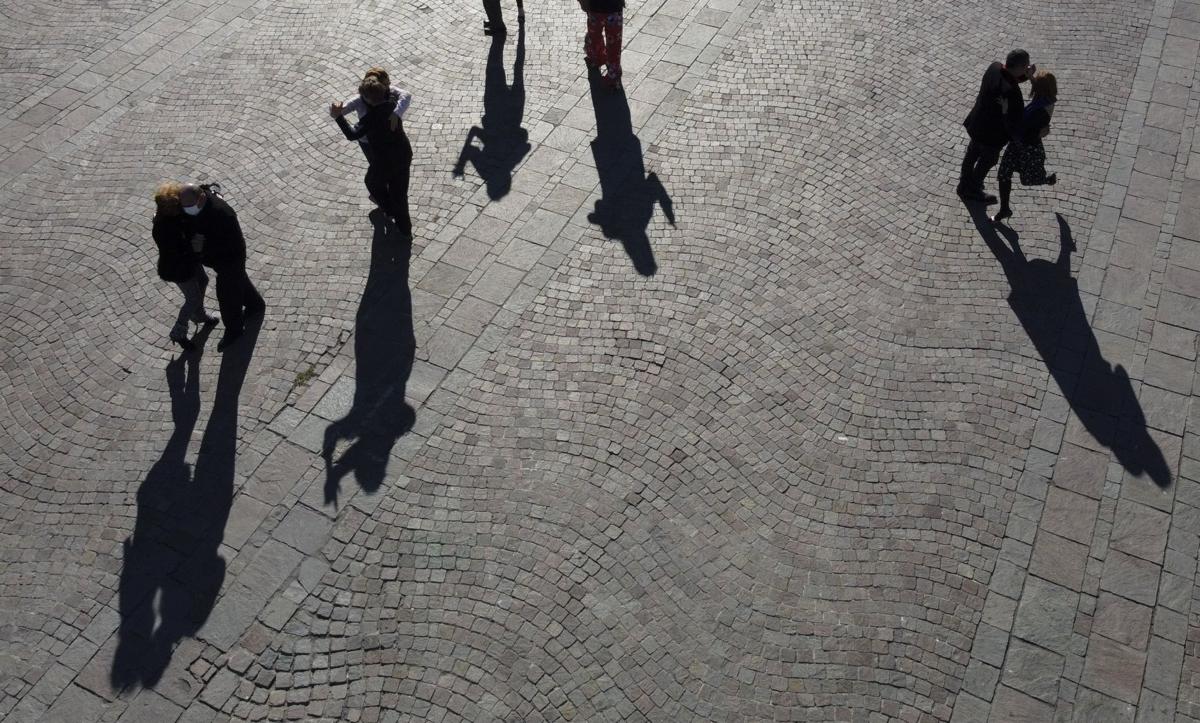
Couples dance the tango during a demonstration demanding they be allowed to practice in open spaces amidst ongoing restrictions due to surging new coronavirus caseloads, in Buenos Aires, Argentina, Saturday, May 29, 2021. Since the pandemic hit the country, tango, an essential part of Argentine culture, has been suspended to try to stop the wave of COVID-19 infections. (AP Photo/Natacha Pisarenko)

Couples dance the tango during a demonstration demanding they be allowed to practice in open spaces amidst ongoing restrictions due to surging new coronavirus caseloads, in Buenos Aires, Argentina, Saturday, May 29, 2021. Since the pandemic hit the country, tango, an essential part of Argentine culture, has been suspended to try to stop the wave of COVID-19 infections. (AP Photo/Natacha Pisarenko)

Since the coronavirus pandemic hit Argentina, tango has been suspended to try to stop the wave of infections of the virus, which has claimed 90,000 lives in the country. Couples recently poured into the streets of Buenos Aires to dance the tango, an essential part of the nation’s culture, as a way to protest for permission to perform in open spaces.
BUENOS AIRES, Argentina — In a huge ballroom in a Buenos Aires basement, the tables are stacked. On the orchestra stage, the piano lid is closed near unplugged speakers and billboard images of tango celebrities.
The empty, dark dance floor at the Viruta Tango Club is a symbol of the pandemic-induced crisis facing dancers and musicians of an art form known for close physical contact and exchanging partners.
Like other venues of its kind, the Viruta club has been closed since March 8, 2020, around the time that Argentine authorities decreed a strict quarantine in hopes of reducing the spread of COVID-19. The club used to host hundreds of tango dancers from Wednesday to Sunday.
“For those of us who make a living from tango, our self-esteem is on the floor,” said Horacio Godoy, a dancer, historian and club organizer who walked across the Viruta dance hall, which, when in full swing, recreated the atmosphere of the 1940s era when tango became a wildly popular entertainment.
“We are more emotionally than financially bankrupt,” Godoy said.
Equally damaging has been the closing of borders, preventing the arrival of tourists, the main source of financing for the local tango industry. Tango tours abroad have also been canceled as Argentina continues to suffer high coronavirus caseloads more than a year after the pandemic began. There have been more than 90,000 confirmed deaths from COVID-19 in the country.

